



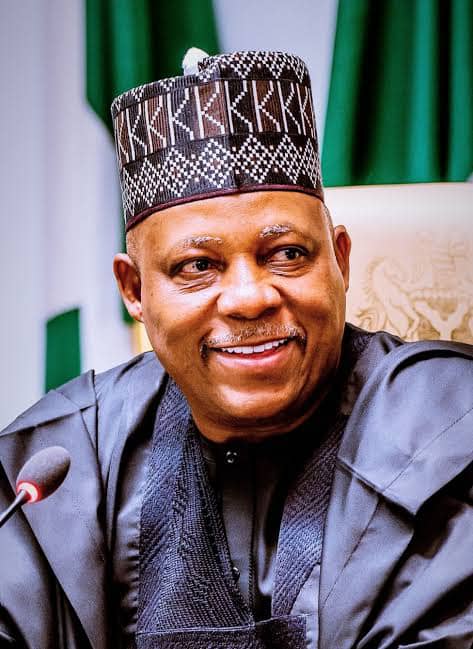
2027: Danger looms, as Shettima escapes attack in Lafia APC rally

By Onu Okorie
The violent disruption of the All Progressives Congress (APC) presidential campaign rally in Lafia, Nasarawa State, where more than 40 people were reportedly injured and several others declared missing, is another disturbing warning of the dangers confronting Nigeria’s democracy ahead of the 2027 general elections.
What should have been an opportunity for political mobilisation, democratic engagement and the peaceful expression of political support descended into violence, exposing the growing culture of intolerance, political desperation and hostility threatening the country’s democratic foundations.
The incident, which occurred during a rally attended by Vice President Kashim Shettima, reportedly erupted when some youths dressed in APC regalia began chanting slogans in support of the Social Democratic Party (SDP) governorship candidate and former Inspector-General of Police, Adamu Abubakar.
The development allegedly angered supporters of the APC governorship candidate, Aliyu Wadada, triggering confrontations between opposing groups of youths.
The situation reportedly deteriorated into violent clashes, with dangerous weapons allegedly brandished, security operatives deploying tear gas and dignitaries fleeing for safety. The organisers were eventually forced to terminate the rally.
Beyond the immediate injuries, destruction and confusion, the Lafia incident raises a fundamental question about Nigeria’s democratic future: How can a country successfully conduct credible, peaceful and acceptable elections in 2027 when political disagreement is increasingly turning into physical confrontation?
The violence in Lafia should not be dismissed as another isolated confrontation between rival political supporters. It represents one of the dangerous actions capable of undermining the credibility of the 2027 general elections and gradually destroying Nigeria’s democratic culture.
Elections are supposed to provide citizens with the opportunity to freely choose their leaders. Political rallies are supposed to be platforms for presenting ideas, persuading voters and demonstrating popular support.
However, when political gatherings become battlegrounds, opposing political opinions are treated as acts of provocation, and supporters resort to violence to establish political superiority, democracy begins to lose its meaning.
The greatest danger is that such incidents could become normalised as the 2027 elections approach.
If political supporters cannot peacefully tolerate opposing slogans at a campaign rally, what guarantees that they will accept opposing candidates, campaign activities or electoral outcomes during the general elections?
Nigeria cannot afford to enter another election cycle in which political loyalty becomes a justification for intimidation, violence and the destruction of human lives.
POLITICAL INTOLERANCE: THE ENEMY WITHIN
One of the most troubling aspects of the Lafia incident is the reported confrontation between rival groups allegedly supporting politicians within the same political environment.
It demonstrates how personal political ambitions, factional rivalries and struggles for political dominance can become more important than the collective interest of citizens.
The Nasarawa State Government subsequently condemned the violence and alleged links between some suspected perpetrators and prominent political figures, including former governor Senator Umaru Tanko Al-Makura and former Inspector-General of Police Adamu Abubakar.
However, such allegations must be subjected to transparent and credible investigation. No individual should be condemned without evidence, and nobody should be shielded from accountability because of political influence.
The directive for the Department of State Services to investigate the incident is therefore important. Nigerians deserve to know who sponsored, organised or participated in the violence and whether any political actors or security personnel contributed to the breakdown of law and order.
Justice must be based on evidence, not political affiliation.
Another major concern is the role of security agencies in managing political gatherings.
Security institutions have a constitutional responsibility to protect lives, maintain public order and guarantee the rights of citizens, irrespective of their political affiliations.
They must not become instruments for intimidating political opponents, suppressing legitimate political expression or protecting the interests of particular political factions.
The deployment of security operatives at political rallies must be guided by professionalism, neutrality and respect for fundamental human rights.
The 2027 elections will require security agencies that are trusted by all political parties and citizens. Any perception that security institutions are working for particular political interests could further weaken public confidence in the electoral process.
Nigeria’s political history has repeatedly demonstrated the destructive consequences of political violence.
Political thuggery discourages peaceful participation, frightens voters, threatens electoral officials and creates an environment in which intimidation can replace democratic persuasion.
When young people are recruited into political confrontations, they become instruments in struggles whose consequences they may carry for the rest of their lives.
The tragedy is that many of those who sustain injuries, lose their lives or face criminal prosecution during political violence are ordinary citizens and young people, while the political actors whose interests they defend may remain far removed from the immediate consequences.
Nigerian politicians must understand that political power is temporary, but the destruction caused by violence can affect communities and families for generations.
The Independent National Electoral Commission (INEC), political parties, security agencies, traditional rulers, religious leaders and civil society organisations must begin treating incidents such as the Lafia violence as serious threats to the country’s democratic future.
Political parties must discipline members who encourage violence, publicly condemn political intimidation and ensure that their campaign activities are conducted peacefully.
Security agencies must investigate political violence without fear or favour and prosecute offenders in accordance with the law.
INEC must also work with relevant stakeholders to promote peaceful campaigns and strengthen confidence in the electoral process.
Most importantly, political leaders must demonstrate responsible leadership by discouraging inflammatory statements, rejecting the use of armed supporters and respecting the constitutional rights of political opponents.
The Lafia incident should serve as a national wake-up call.
Nigeria’s democracy is bigger than the APC, PDP, SDP or any other political party. It is bigger than individual politicians, governorship ambitions and presidential aspirations.
A democracy in which citizens are afraid to express political preferences is already in danger. A democracy in which political opponents cannot coexist peacefully is gradually losing its foundation.
The 2027 general elections should be about ideas, competence, accountability, economic recovery, security and the welfare of Nigerians, not bloodshed, intimidation and political supremacy.
The reported injuries and missing persons from the Lafia rally must not become another forgotten episode in Nigeria’s long history of political violence.
One violent political rally may not destroy a democracy overnight, but repeated acts of intolerance, impunity, political thuggery and institutional compromise can gradually destroy the very foundations upon which democracy stands.
Lafia has sounded an alarm. Nigeria must listen before the 2027 elections turn that warning into a national tragedy.
The ballot must remain more powerful than the bullet, and political disagreement must never become a death sentence.