



Civil Society Groups Threaten Mass Action Against LASWARCO


Lagos Borehole Crackdown: Civil Society Groups Threaten Mass Action Against LASWARCO

By Onu Okorie
A coalition of civil society organisations, community groups and trade unions has threatened coordinated mass resistance across Lagos State if the government moves to seal domestic boreholes or criminalise residents who drill wells for household water supply.
The coalition, under the umbrella of the Our Water Our Right Africa Coalition (OWORAC), accused the Lagos State Water Regulatory Commission (LASWARCO) of misinterpreting the Lagos State Environmental Management and Protection Law of 2017 by threatening residents with property sealing and criminal prosecution for extracting groundwater without government authorisation.
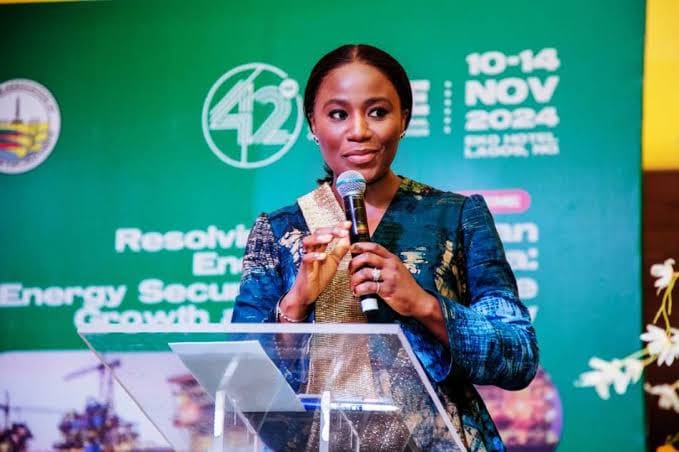
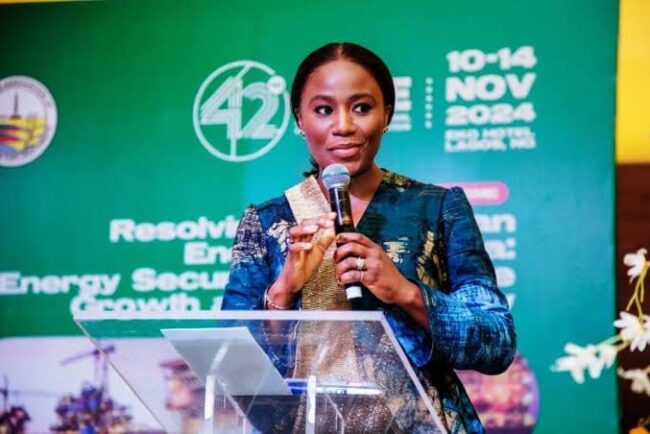
The warning follows a statement attributed to LASWARCO’s Executive Secretary, Oluwabukola Adeyemo, cautioning residents that drilling boreholes and extracting groundwater without state approval is illegal. The Commission had also introduced a dedicated reporting hotline, encouraging residents and community leaders to report unauthorised borehole drilling and water extraction.
However, OWORAC, a network comprising more than 50 national and regional organisations and community groups, insisted that the law explicitly exempts domestic boreholes from licensing requirements.
Citing Section 253(1) of the 2017 law, the coalition said residents could construct or extend wells and boreholes within residential premises without obtaining a licence, provided the water extracted was necessary for household domestic use.
It also referenced Section 259(2), which, according to the coalition, restricts licensing requirements to boreholes intended for commercial and industrial purposes.
The groups accused LASWARCO of deliberately overlooking these provisions in its public pronouncements, thereby creating unnecessary panic and encouraging hostility among residents struggling to access water.
“By deliberately omitting these statutory exemptions from its public threats and threatening indiscriminate crackdowns, LASWARCO has overstepped its bounds, creating needless panic among already suffering residents,” the coalition stated.
The coalition questioned the government’s decision to threaten households over domestic boreholes when public water infrastructure has allegedly failed to provide adequate coverage across the state.
According to figures cited by the groups from the Lagos Water Corporation, the public water network has approximately 34,424 registered connections, representing about 1.03 per cent direct coverage in a megacity with more than 20 million residents.
Even under the corporation’s broader estimate that these connections serve multiple households and cover approximately 8.3 per cent of residents, the coalition argued that more than 91 per cent of Lagos residents remain without access to the public water network.
It described the situation as evidence of decades of government neglect, pointing to the poor operational performance of major waterworks at Iju, Adiyan and Ishasi.
The groups also criticised Section 252 of the 2017 law, which they said shields the Lagos Water Corporation from liability for damages or compensation arising from the failure or interruption of public water supply.
“A government that actively absolves itself of the constitutional duty to deliver water cannot legitimately turn around to criminalise and extort citizens who were forced to become their own mini-water authorities and service providers despite paying heavy taxes to the state,” the statement added.
The coalition further highlighted the worsening water crisis in communities affected by environmental contamination, including Baruwa, Iludun and Ajegunle, where petroleum pipeline pollution has allegedly compromised underground water sources.
It also identified parts of the Lekki coastal corridor as vulnerable to groundwater contamination arising from poor drainage, inadequate wastewater management and saline intrusion.
According to the groups, residents in affected communities are forced to spend substantial amounts purchasing water from private vendors, further worsening the financial burden on low-income households.
The coalition noted that in communities where groundwater remains usable, residents have developed informal water-sharing arrangements, including extending household taps to neighbouring compounds and pooling resources to power borehole pumps.
Rather than criminalising such arrangements, the groups urged the state government to recognise and support community-led water distribution systems.
They argued that these initiatives demonstrate the capacity of residents to organise and provide essential services through cooperation and collective responsibility.
The statement also accused LASWARCO of applying double standards in its regulatory approach, alleging that multinational companies extracting large volumes of groundwater for commercial purposes have received more lenient treatment than ordinary residents.
The coalition recalled that during regulatory engagements with Nigerian Bottling Company, Guinness Nigeria and FrieslandCampina WAMCO in late 2024, LASWARCO reportedly acknowledged spending more than seven years engaging the companies through diplomatic discussions despite outstanding compliance issues.
“It is unconscionable that the state could spend years patiently negotiating with multinational corporations guzzling millions of litres for private profit, yet threaten task forces, property sealings and criminal charges against ordinary citizens drawing water for their pots and buckets,” the groups said.
The coalition also expressed concern that the proposed enforcement measures could weaken community water systems and pave the way for private water schemes and prepaid metering arrangements.
Describing access to water as a fundamental human right, the groups rejected what they termed an exclusionary system in which residents would be forced to pay private operators to access an essential necessity.
DEMANDS TO LAGOS GOVERNMENT
To address the controversy, OWORAC called on LASWARCO to immediately clarify its position and publicly acknowledge that the 2017 law exempts domestic boreholes and wells from licensing requirements.
It demanded assurances that residential properties would not be sealed and that residents would not face harassment or prosecution for drilling boreholes intended solely for household use.
The coalition also urged the state government to abandon plans to privatise the Lagos Water Corporation and instead prioritise universal access to safe and affordable public water supply.
Other demands include redirecting regulatory enforcement towards high-volume commercial water extractors and industrial polluters, rehabilitating existing waterworks and ensuring equitable water distribution across communities.
The groups further called for governance reforms within the Lagos Water Corporation to guarantee transparency and give workers, community representatives, trade unions and civil society organisations a direct role in the management of the utility.
THREAT OF MASS RESISTANCE
In a strong warning to the state government, the coalition called on Community Development Associations, youth councils, labour unions, artisans, market women and neighbourhood networks across Lagos to remain vigilant and mobilise against any attempt to seal domestic boreholes.
It warned that any entry into residential communities by LASWARCO officials or armed task forces to demand permits or shut down household boreholes would trigger coordinated legal action, public protests and mass resistance across the state’s local government areas.
“The state is formally put on notice that any attempt by LASWARCO or armed task forces to enter residential communities, demand illegal permits, or seal domestic boreholes will be treated as an unlawful provocation and met with immediate legal, public, and coordinated mass resistance across every community in Lagos until the social contract of universal public water delivery is fully restored,” the statement declared.
The statement was endorsed by 25 representatives of civil society organisations, community associations, labour unions and social movements.
Among the signatories are Adewale Ojo, Chairman of the Committee for the Defence of Human Rights (CDHR), Lagos State; Dagga Tollar of the Movement for Socialist Alternative; Zikora Ibeh of Corporate Accountability and Public Participation Africa (CAPPA); Okechukwu Nwanguma of the Rule of Law and Accountability Advocacy Centre (RULAAC); and Gbenga Komolafe, General Secretary of the Federation of Informal Workers Organisation of Nigeria (FIWON).
Other signatories include representatives of the Ajegunle People’s Movement, Oworo Youth Forum, Iludun Town Association, Women Advocate Research Documentation Centre and several labour organisations.
The coalition maintained that the government should address the longstanding failure of public water infrastructure rather than threaten residents who have resorted to domestic boreholes to meet their basic household needs.
Editorial note: Before publication, it would be advisable to obtain LASWARCO’s response to the allegations and independently verify the cited statutory provisions and water coverage figures. This will strengthen the report’s balance and credibility.