


Nigeria’s oil output rises by 600,000bpd as reforms boost investor confidence – NNPC

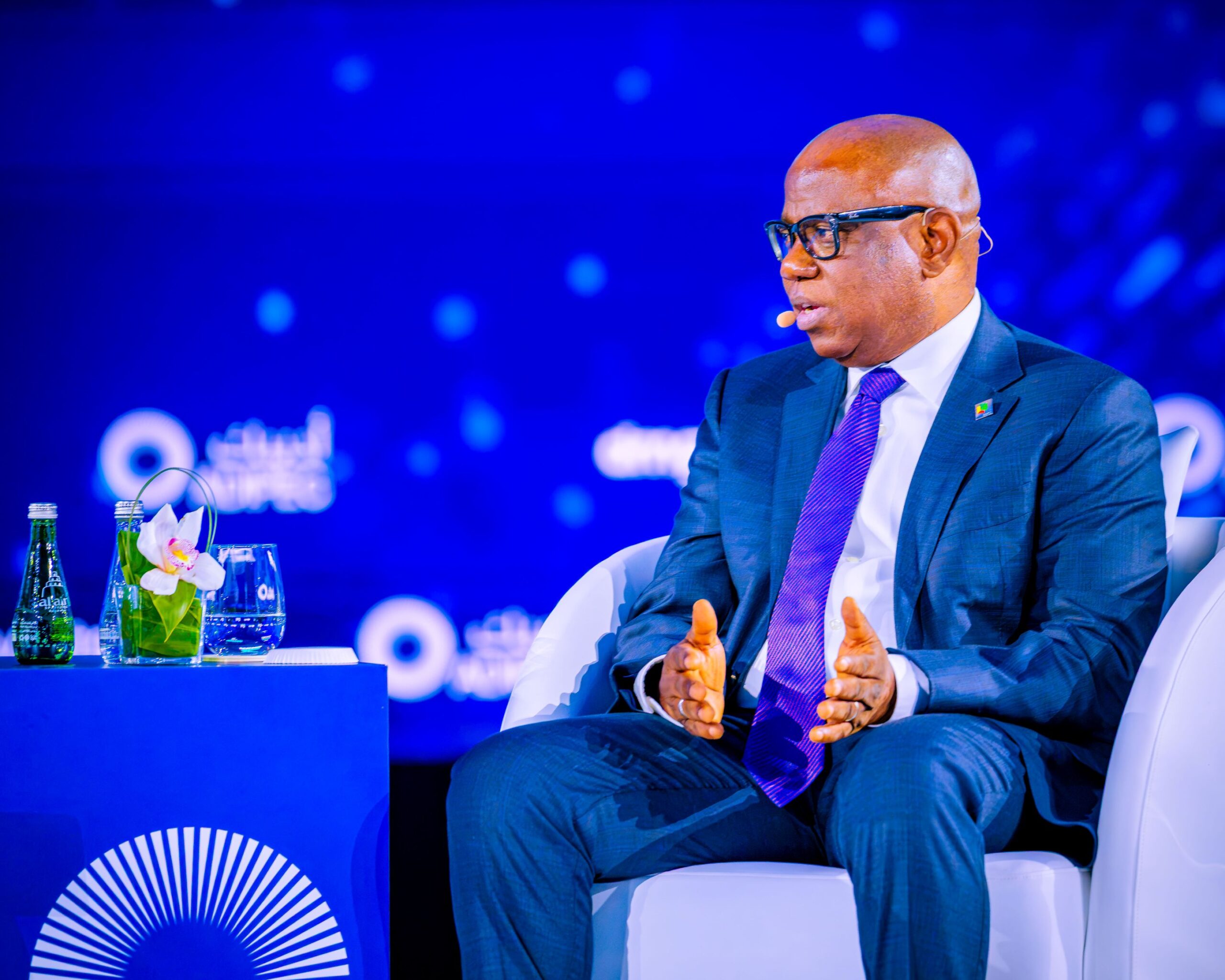
Nigeria’s oil output rises by 600,000bpd as reforms boost investor confidence – NNPC

By Onu Okorie
Nigeria’s oil production has increased by 600,000 barrels per day (bpd), from about 1.2 million bpd to 1.8 million bpd, following reforms in the petroleum sector, the Nigerian National Petroleum Company Limited (NNPC) has said.
The increase, according to the national oil company, signals an improvement in Nigeria’s investment climate and strengthens its capacity to attract international capital into the oil and gas industry.
Group Chief Executive Officer of NNPC Limited, Engr. Bashir Bayo Ojulari, disclosed this on Tuesday at the 2026 Abu Dhabi International Petroleum Exhibition and Conference (ADIPEC) in Abu Dhabi, United Arab Emirates.
Speaking during an Energy Talk session titled “Nigeria’s Reform Agenda: Competing for Energy Capital”, moderated by John Defterios, Chairman, MENA, APCO, Ojulari attributed the production growth to the implementation of the Petroleum Industry Act (PIA) 2021, improved investment conditions, better investment decisions and stronger collaboration between NNPC and its industry partners.
He said the company was targeting production of two million barrels per day by 2027, stressing that achieving the ambition would require sustained investment in existing assets, protection of current production and accelerated execution of new projects.
According to him, the current production level of 1.8 million bpd represents an important milestone rather than the end of the country’s production recovery efforts.
“The figure of 1.8 million barrels per day is a stage in a journey towards our objective. We are concentrating on the basics, which are maintaining our infrastructure, protecting base operations and executing the projects that will take production higher,” he said.
Ojulari’s remarks suggest that the next phase of Nigeria’s petroleum sector reforms will be measured increasingly by the ability to sustain production growth, deliver outstanding projects and translate improved investor confidence into actual capital inflows.
On domestic energy supply, the NNPC chief said the removal of petrol subsidy had been accompanied by the expansion of compressed natural gas (CNG) infrastructure as part of efforts to reduce dependence on petrol and lower transportation costs.
He disclosed that more than 400 CNG conversion centres had been established across the country, while over 1,000 trucks involved in the transportation of petroleum products were now operating on CNG.
He also announced progress in critical gas infrastructure, including the completion of the Obiafu-Obrikom-Oben (OB3) gas pipeline in August 2026.
The Ajaokuta-Kaduna-Kano (AKK) gas pipeline, he added, is expected to deliver gas to Abuja before the end of the year to support electricity generation, data centres and industrial development.
On regional energy integration, Ojulari disclosed that countries participating in the Nigeria-Morocco Gas Pipeline project had aligned and executed the necessary agreements.
He also said Nigeria, Algeria and Niger had reached alignment on the development of the Trans-Saharan Gas Pipeline, which is expected to strengthen regional gas connectivity and expand access to international markets.
The NNPC chief further revealed that the company was targeting national gas production of 10 billion standard cubic feet per day (Bcf/d) by 2027 and 12 Bcf/d by 2030.
He said the targets would be supported by the development of domestic consumption and export markets to ensure that rising gas production translates into economic value.
On attracting foreign investment, Ojulari identified major projects, including TotalEnergies’ Ubeta, Shell’s Bonga South-West and Eni’s Zabazaba developments, as evidence of renewed international interest in Nigeria’s upstream petroleum sector.
He disclosed that commercial agreements covering approximately $20 billion in investments had been concluded, adding that NNPC was building new relationships with international partners, including the Abu Dhabi National Oil Company (ADNOC) and Chinese investors interested in Nigeria’s refinery sector.
The company is also engaging global oilfield service providers to expand technical and operational capacity within the country.
Ojulari said the NNPC board and management remained committed to delivering on the company’s projections and mandate given by President Bola Tinubu.
He explained that a baseline assessment of NNPC’s assets and infrastructure had provided management with a clearer understanding of the company’s portfolio, identifying areas of strength and those requiring urgent improvement.
He, however, stressed that the company’s credibility would ultimately depend on measurable performance rather than promises.
“Our track record will be judged by what is done and not by what is said,” he stated.
Reaffirming NNPC’s commitment to transparency and accountability, Ojulari cited the company’s two consecutive earnings calls as part of efforts to improve engagement with investors and other stakeholders.
The 2026 ADIPEC, held under the patronage of the President of the United Arab Emirates, Sheikh Mohamed bin Zayed Al Nahyan, and hosted by ADNOC, attracted more than 239,000 participants from over 170 countries.
The conference brought together energy ministers, chief executives, investors and technology leaders to deliberate on energy security, investment opportunities, technological innovation and the future of global energy supply.
NNPC’s latest production disclosure comes amid renewed efforts by Nigeria to reposition its oil and gas industry as a competitive destination for international energy investment through regulatory reforms, infrastructure development and stronger partnerships.