





NISO moves to cut grid risks, strengthen system operators

NISO moves to cut grid risks, strengthen system operators

By Onu Okorie
Nigerian Independent System Operator (NISO) has intensified efforts to improve the stability and reliability of Nigeria’s electricity grid, launching the second phase of a capacity development programme aimed at strengthening the competence of personnel responsible for real-time grid operations.
The initiative signals a shift towards placing greater emphasis on human capacity, operational discipline and preventive management as critical safeguards against disruptions in the national power system.
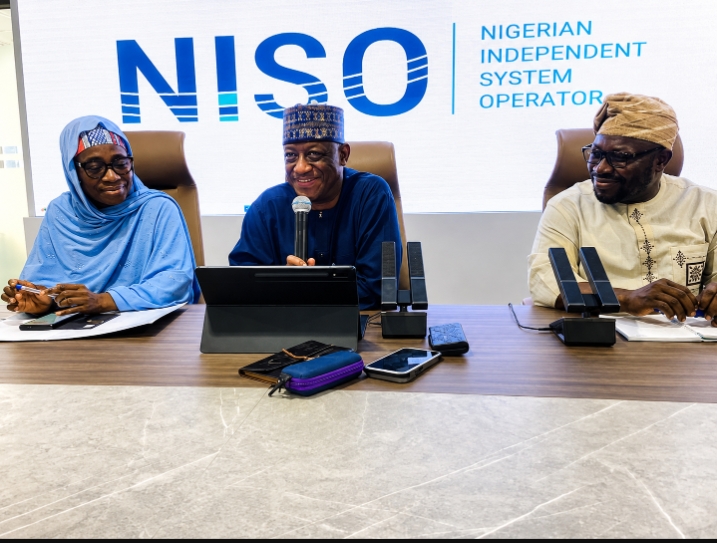
Declaring the training open in Abuja, NISO Managing Director/Chief Executive Officer, Engr. Abdu Bello Mohammed, said continuous professional development had become indispensable as the national electricity system grows increasingly complex.
He said system operators must possess not only technical knowledge but also sound judgement, discipline, teamwork and an unwavering commitment to safety because of the critical consequences of operational decisions on the national grid.
According to him, the programme is designed to establish a common operational culture built around professionalism, integrity, neutrality, reliability and continuous improvement.
Mohammed urged participants to strengthen their knowledge of the Grid Code, describing it as a fundamental standard governing the responsibilities and conduct of system operators.
He said the effectiveness of modern technologies deployed in the power sector would ultimately depend on the competence of the professionals operating them.
The NISO chief stressed that the training should go beyond classroom learning and translate into measurable improvements in the organisation’s control centres.
He also encouraged participants to actively exchange knowledge and experiences, assuring that NISO would continue to invest in the development of its system operators.
The Executive Director, System Operations, Engr. Nafisatu Ali, said the programme was particularly important because system operators occupy a critical position in the independent, transparent and coordinated management of the national grid.
She listed their responsibilities to include real-time grid management, coordination of electricity generation and power flows, load allocation, outage management, emergency response and maintenance planning.
Ali noted that the interconnected nature of Nigeria’s power system made effective coordination among control rooms essential to maintaining grid stability.
She therefore urged participants to deepen their expertise in voltage and frequency control, power-flow monitoring, outage management, real-time balancing of generation and demand, as well as coordination between control centres.
She also called for a stronger learning culture around system disturbances and near misses, saying such incidents should be treated as opportunities to identify weaknesses, improve operational knowledge and prevent recurrence.
The Executive Director, Finance and Corporate Services, Babajide Ibironke, said the programme must produce measurable value for both NISO and its personnel.
He disclosed that participants would be required to transfer the knowledge acquired during the programme to their respective teams in accordance with NISO’s knowledge-sharing policy.
The development comes as the reliability of the national grid remains closely linked to the quality of real-time decisions taken by system operators. Beyond investments in infrastructure and technology, the programme underscores the growing importance of skilled personnel capable of detecting emerging risks, balancing the system and responding quickly to disturbances.
For NISO, the broader objective is to build an operational workforce capable of supporting a more stable, secure and economically managed electricity market as Nigeria continues its transition towards a more independent and professionally coordinated electricity system.











