





Bille gas crisis sparks fresh calls for action as CAPPA unveils documentary

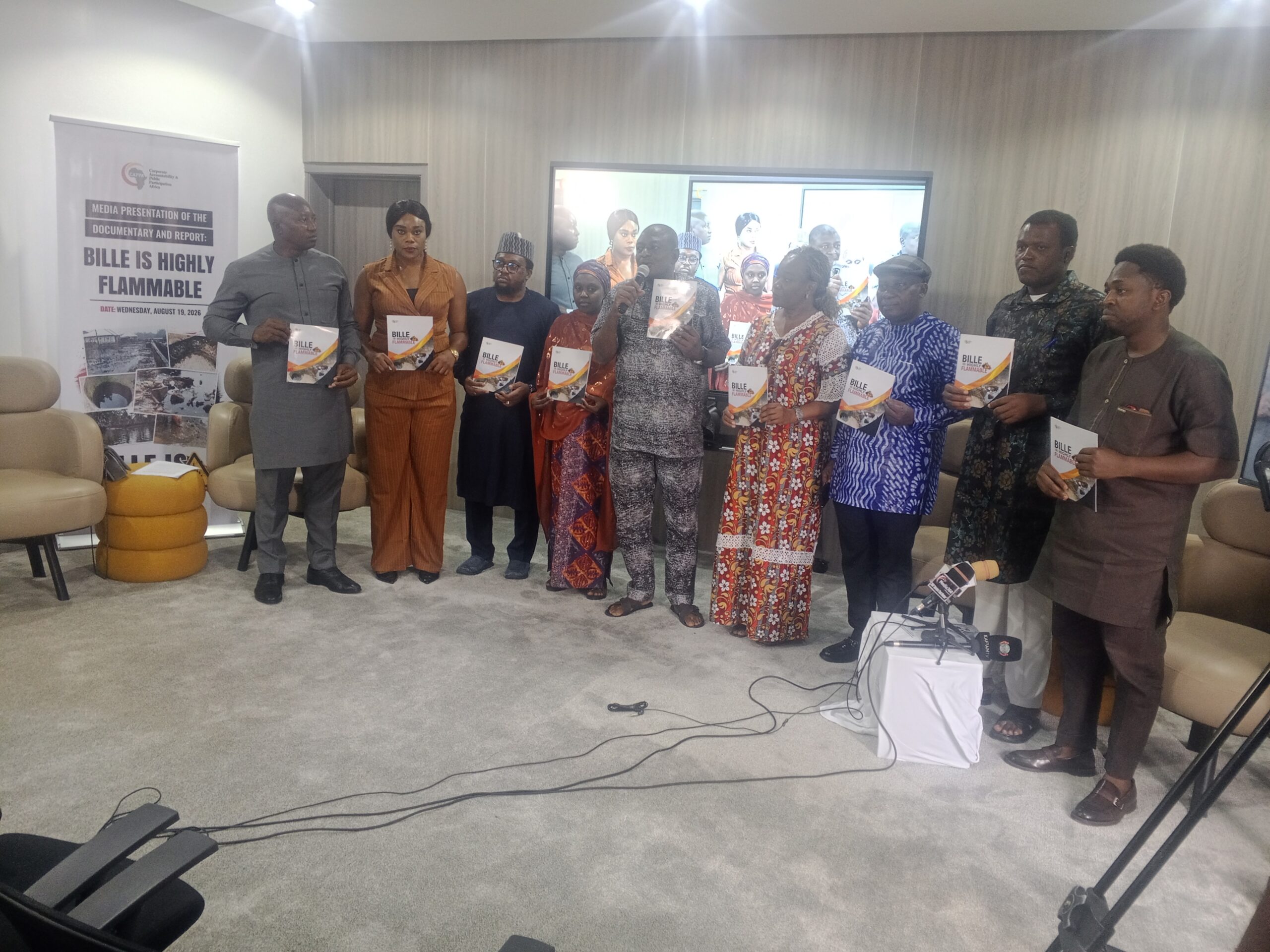
Bille gas crisis sparks fresh calls for action as CAPPA unveils documentary

By Onu Okorie
Corporate Accountability and Public Participation Africa CAPPA has called for urgent government action over a growing environmental and public health crisis in Bille, Rivers State, following the presentation of a new documentary and report titled “Bille Is Highly Flammable.”
Speaking at the media presentation in Abuja on Wednesday, CAPPA Executive Director, Akinbode Oluwafemi, described the situation in the island community of Bille, in Degema Local Government Area, as a major environmental emergency that has disrupted livelihoods, education and access to safe water.
According to Oluwafemi, residents have reported gas emissions from wells, compounds, creeks, mangrove swamps and school premises since October 2025. Community members have also complained of polluted air, contaminated groundwater, fires and health challenges, including respiratory problems, vomiting and skin irritations.
He said a CAPPA field visit to the community in July revealed widespread fear among residents, many of whom worry about the possibility of gas ignition during routine household activities.
The documentary highlights the difficulties faced by residents in obtaining safe drinking water. Oluwafemi noted that despite being surrounded by water, many households now depend on sachet water supplies because local water sources are considered unsafe. He said the cost of purchasing water has become a heavy financial burden for families.
CAPPA said investigations by agencies including the National Oil Spill Detection and Response Agency NOSDRA, the Nigerian Upstream Petroleum Regulatory Commission NUPRC, and relevant federal ministries reportedly found elevated levels of methane, hydrogen sulphide and carbon dioxide in affected areas, alongside groundwater contamination and deteriorating air quality.
While acknowledging emergency assistance already provided, including sachet water and a fire truck donated by NNPC Ltd, the organisation argued that temporary measures alone cannot resolve the underlying problem.
CAPPA expressed concern that the fire truck was not operational during its visit because there was no trained operator or emergency crew assigned to it.
The organisation called for the public release of all test results, a comprehensive audit of oil and gas infrastructure in Bille, continuous access to safe water, free medical screening and treatment, and support for affected schools and livelihoods.
CAPPA also urged authorities to develop a coordinated response plan with clearly defined responsibilities, deadlines and reporting obligations, while ensuring that residents are actively involved in decisions affecting their future.
Oluwafemi appealed to the media to keep attention focused on the community’s plight and hold relevant institutions accountable for their commitments.
“Bille’s story is about public health, human dignity, environmental justice, corporate accountability and the responsibility of government to protect its citizens,” he said.
Speaking during the occasion Timothy Agunbiade, Vice President of the Bille Kingdom Youth Federation, who provided a community perspective on the issues raised in the documentary said that there’s need for urgent government intervention in the matter to avoid further loss of lives and property.
According to him, “we are calling for an urgent holistic response to the plight of our people. The gas leakage has almost paralyzed economic activities in the community. Our people cannot go fishing any longer because of the pollution and harzard the gas leakage has brought to the community.”
He disclosed that the Shell’s divestment and transfer of onshore assets (such as parts of the Nembe Creek Trunk Line and OML 18 facilities) left behind poorly decommissioned or abandoned infrastructure. Reports revealed that tens of kilometers of old, replaced pipelines remained filled with stagnant crude oil due to unfulfilled decommissioning liabilities.
“Residents of Bille have faced severe environmental emergencies, including underground/subterranean emissions of toxic gases and gas leaks linked to deteriorating, unmaintained oil and gas assets. This has contaminated local waterways, ruined fishing and livelihoods, and posed major health and explosion risks.” He stated.
The youth leader also claimed that the population of the communities are more than 70,000 people against the earlier 10000 people believed. He further said that there has been fire outbreak in four occasions in the community but only God helped to restore normalcy.
The community leader who accused the three tiers of government of neglect said that the people can no longer engage in fishing, as the mainstay of the source of livelihood in the area. He said that the N100 million given to the community by the state government cannot go anywhere to pecify the suffering of the people. He also claimed that the environmental degradation has brought strange sickness to the people. He also lamented that the children are no longer attending school because of the harzard.
The programme also featured interventions from civil society leaders, including Celestine Akpobari, founder and team lead of the Miideekor Environmental Development Initiative; Joyce Brown, Director of Programmes at the Health of Mother Earth Foundation; and Botti Isaac, Programmes Coordinator at Social Action.
In his intervention Celestine Akpobari said the situation has gotten to a point where the civil society need to take action similar to what was done in the case of Ogoni community when the Ministry of Environment was piqued. He said that such action will easily draw attention of concerned authorities to the Bile community. “Since late 2025, residents have reported strange gas bubbling through rivers, swamps, water pumps, and residential boreholes in Bile” he said. He also lamented that high concentrations of methane gas have turned local water sources black and triggered dangerous localized fire outbreaks while families who rely on fishing and local wetlands have been forced to abandon their traditional trades due to poisoned waters.











