





Police inducts commissioners into conflict management institute after strategic communication training

Police inducts commissioners into conflict management institute after strategic communication training

By The Editor
Nigeria Police Force has intensified efforts to strengthen leadership, strategic communication and conflict resolution among its senior officers with the induction of Commissioners of Police into the Institute of Conflict Management and Negotiation Analysts ICMNA. The Commissioners also completed a two-day executive training programme before their induction.
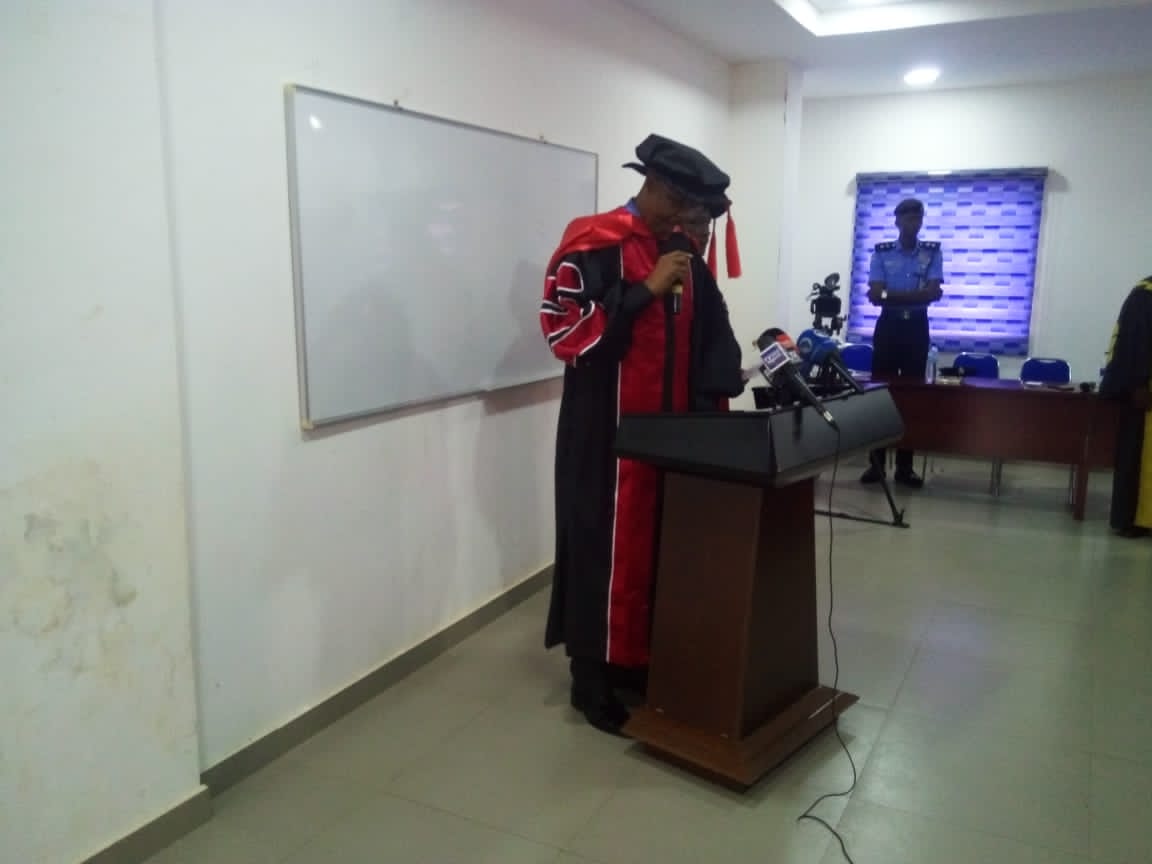
The induction ceremony, held in Abuja, brought together members of the Police High Command, the Governing Council of the Institute and Commissioners of Police from across the country.
Delivering the induction address on behalf of the President and Governing Council of the Institute, Deputy Inspector-General of Police in charge of Training and Development, Isyaku Mohammed, said the programme marked a significant milestone in promoting professional excellence, ethical leadership and strategic conflict management within the Nigeria Police Force.
He noted that the training, themed “Enhancing Strategic Communication, Media Relations, Thought Leadership, Emotional Intelligence, Public Relations and Excellence in the Nigeria Police Force,” was designed to equip police leaders with the skills required to meet the demands of modern policing.
According to him, effective law enforcement now extends beyond operational competence to include the ability to communicate strategically, manage conflicts professionally, negotiate wisely and build public confidence.
Mohammed said the competencies acquired during the programme were consistent with the Institute’s mandate of promoting conflict prevention, mediation, negotiation and sustainable peacebuilding.
He explained that strategic communication helps prevent unnecessary conflicts, while sound media relations promote transparency, credibility and public trust.
He added that thought leadership encourages institutional reforms, emotional intelligence strengthens decision-making under pressure, while effective public relations enhances collaboration between the police and the communities they serve.
The DIG said the successful completion of the programme qualified the commissioners for admission into the Institute as Certified Conflict and Negotiation Professionals (CPs).
He stressed that the induction was more than the conferment of professional titles, describing it as a commitment to serve as ambassadors of peace, ethical leadership, constructive dialogue and professional excellence.
“As members of the Institute, you are expected to uphold the highest standards of integrity, professionalism, accountability, confidentiality and continuous learning while promoting peaceful conflict resolution and responsible leadership in the discharge of your duties,” he said.
Mohammed noted that although the senior officers had spent decades resolving conflicts and negotiating complex security challenges, the training formalised their experience within a recognised professional framework.
“They have learnt more strategies on how to handle negotiations. Their knowledge has also been streamlined to solve problems. Certainly, a course like this will improve the capacity of Commissioners of Police,” he said, adding that younger officers and those who did not participate in the maiden edition would undergo similar training in the future.
Speaking after the event, the Force Public Relations Officer, CSP Anyete Okukun Inyedu, said the Inspector-General of Police, IGP Olatunji Disu, initiated the programme to strengthen the Force’s communication capacity as political activities gather momentum ahead of the next general elections.
He said the Nigeria Police, as the country’s lead internal security agency, must be adequately prepared to communicate effectively during the election period.
According to him, participants underwent practical exercises, classroom sessions and presentations aimed at redefining and upgrading communication strategies across police commands nationwide.
“This training is the first of its kind and is intended to build the communication capacity of Commissioners of Police and prepare them to manage public information more effectively during the election cycle,” he said.
The Commissioner of Police for Kogi State, Naziru Belle Kankarofi, described the programme as timely, saying it had opened a new chapter in strategic communication for police leadership.
He said the quality of the curriculum and resource persons had equipped commissioners with the skills required for crisis communication and improved public engagement.
“The training has placed commissioners and other strategic officers in a position where they can effectively handle crisis communication and better understand society’s expectations of the police,” he said.
Similarly, the Commissioner of Police for Ebonyi State, Hope Uromwa Okafor, said the programme exposed participants to gaps in existing communication strategies and introduced them to emerging tools, including artificial intelligence.
He pledged to replicate the training for officers in his command, saying the knowledge gained would improve not only communication but also policing operations.
“We have learnt that we must engage not only with the media but also directly with the public we serve. We have also been exposed to the application of artificial intelligence in policing. This induction gives us added motivation to perform better,” he said.
The induction is expected to strengthen the capacity of senior police officers in conflict management, negotiation and public engagement as the Force seeks to enhance professionalism and public confidence in policing across the country.











