





Finance Minister inaugurates advisory committee to drive economic reform outcomes

Finance Minister inaugurates advisory committee to drive economic reform outcomes

By Onu Okorie
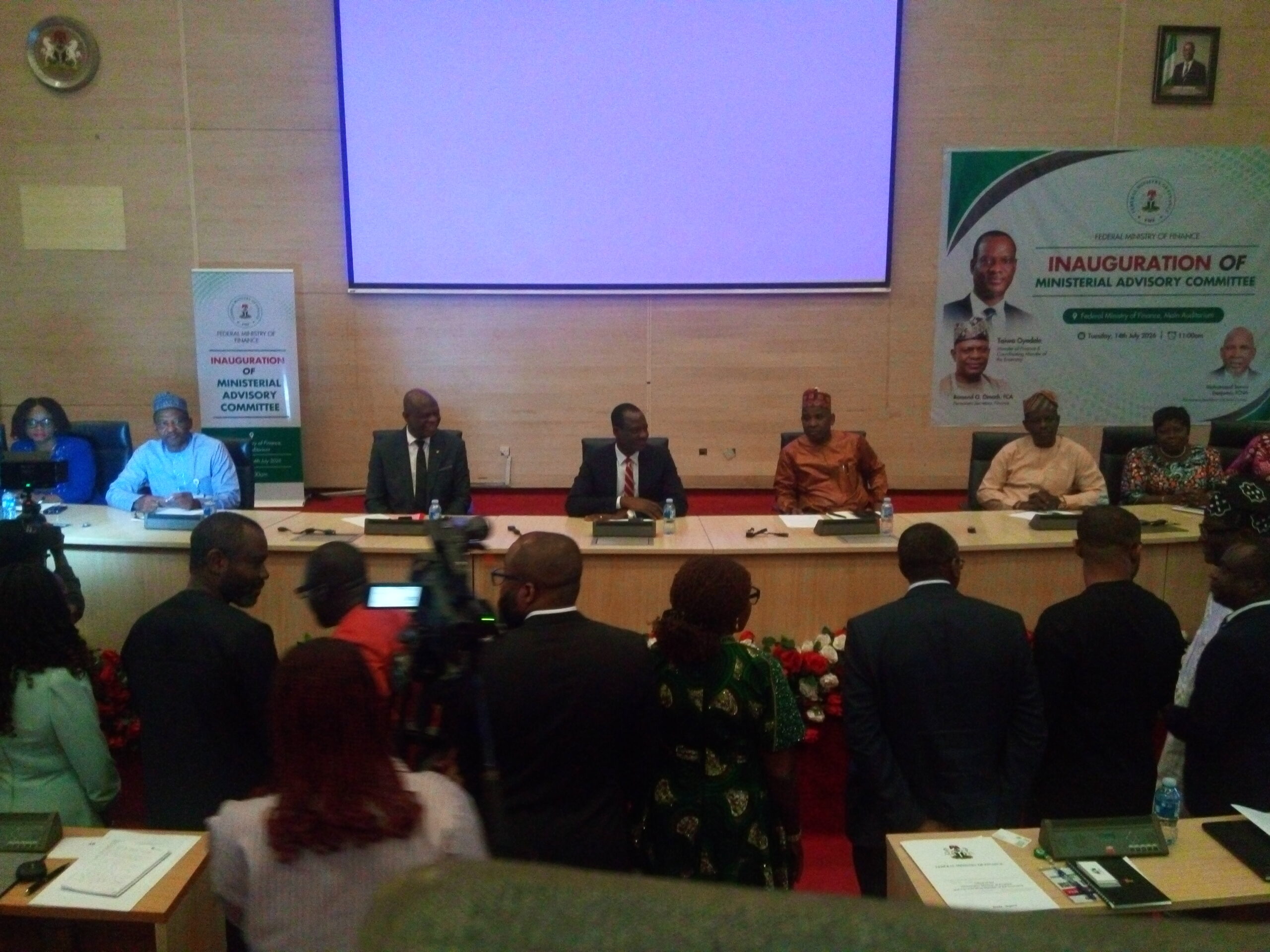
Minister of Finance and Coordinating Minister of the Economy, Mr. Taiwo Oyedele, on Tuesday inaugurated a Ministerial Advisory Committee to provide independent, evidence-based policy advice aimed at ensuring Nigeria’s ongoing economic reforms translate into tangible improvements in the lives of citizens.
Speaking at the inauguration ceremony in Abuja, Oyedele said the committee marks a new approach to governance anchored on a “public policy-private partnership,” bringing together experts from the private sector, academia and other professional fields to strengthen economic decision-making.
The minister said the administration of President Bola Ahmed Tinubu had undertaken some of the country’s most far-reaching economic reforms over the past three years, including the removal of fuel subsidy, the unification of the foreign exchange market and comprehensive tax reforms.
While acknowledging that the reforms were difficult, Oyedele maintained they were necessary to place Nigeria on a sustainable fiscal path, stressing that the focus must now shift from policy formulation to delivering measurable benefits for Nigerians.
“We want to move from reform to results,” he said, adding that the true success of government policies should be judged not merely by improved macroeconomic indicators but by practical outcomes such as job creation, lower inflation, exchange rate stability, increased business investment and improved living standards.
“The true measure of reform is the number of jobs created, inflation declining, the naira stabilising, businesses investing with confidence and the number of lives improved,” he stated.
According to the minister, the complexity of Nigeria’s economy requires rigorous analysis before major policy decisions are implemented to minimise unintended consequences.
He explained that the committee would provide independent external advice by identifying policy risks, analysing the second and third-order effects of reforms, introducing global best practices and evaluating how government policies affect businesses and communities.
“This committee exists to provide independent, evidence-based and constructive external counsel. We need you to think through the second and third-order effects of our policies, identify vulnerabilities before they become crises and help us understand whether our reforms are actually reaching factories, markets and communities,” Oyedele said.
He clarified that the committee would not exercise executive authority or duplicate the responsibilities of existing government institutions but would function strictly in an advisory capacity, with its recommendations informing ministerial decisions and policy advice to President Tinubu.
Oyedele outlined four strategic pillars that will guide the committee’s work. They include providing data-driven economic policy advice to support job creation, productivity growth, revenue optimisation and the administration’s target of achieving seven per cent annual real Gross Domestic Product growth while building a $1 trillion economy by 2030.
Other areas of focus include strengthening public financial management through improved fiscal governance, enhanced revenue generation, prudent expenditure management and transparent public financial reporting; promoting stronger coordination among ministries, agencies, sub-national governments and the private sector; and ensuring that reforms deliver tangible benefits for businesses and citizens.
“A fiscal reform that looks flawless on paper but fails to improve conditions for Nigerian businesses is not reform; it is disguised bureaucracy,” the minister said.
He challenged members of the committee to remain independent, objective and courageous in carrying out their responsibilities, urging them to provide evidence-based recommendations rather than politically convenient advice.
“We do not need this committee to validate what we have already decided. We need you to challenge our assumptions, point out the trade-offs we may be overlooking and tell us the truth we may not want to hear. Fact-based disagreement is not a weakness; it is an advantage,” he said.
The minister also urged the committee to engage closely with manufacturers, exporters, entrepreneurs and ordinary Nigerians to ensure government policies address real economic challenges.
He reiterated that sustainable economic transformation cannot be achieved by government alone, calling on the organised private sector to complement government efforts through investment, innovation, job creation and enterprise development.
“The government’s role is to clear the path by creating predictable policies, macroeconomic stability and a functioning rule of law. The rest depends on your investment, your hiring and your willingness to take risks,” Oyedele added.
Earlier, the Permanent Secretary of the Federal Ministry of Finance, Raymond Omenka Omachi, described the inauguration as a significant step towards strengthening fiscal governance and improving economic policymaking through informed external engagement.
He said the committee comprises economists, public finance experts, development practitioners, governance professionals and business leaders whose collective expertise would provide strategic guidance on fiscal reforms, public financial management, government efficiency, stakeholder engagement and economic coordination.
According to Omachi, the committee will also help ensure that ongoing economic reforms produce measurable improvements in the lives of Nigerians while boosting public confidence in the government’s reform agenda.
Following the inauguration, members of the advisory committee took the oath of office, pledging to carry out their duties faithfully, uphold the highest standards of integrity and professionalism, avoid conflicts of interest, maintain confidentiality and provide objective, independent advice in the national interest.











