





CBN mulls new Payment System Vision 2028, says Cardoso

CBN mulls new Payment System Vision 2028, says Cardoso

By Onu Okorie
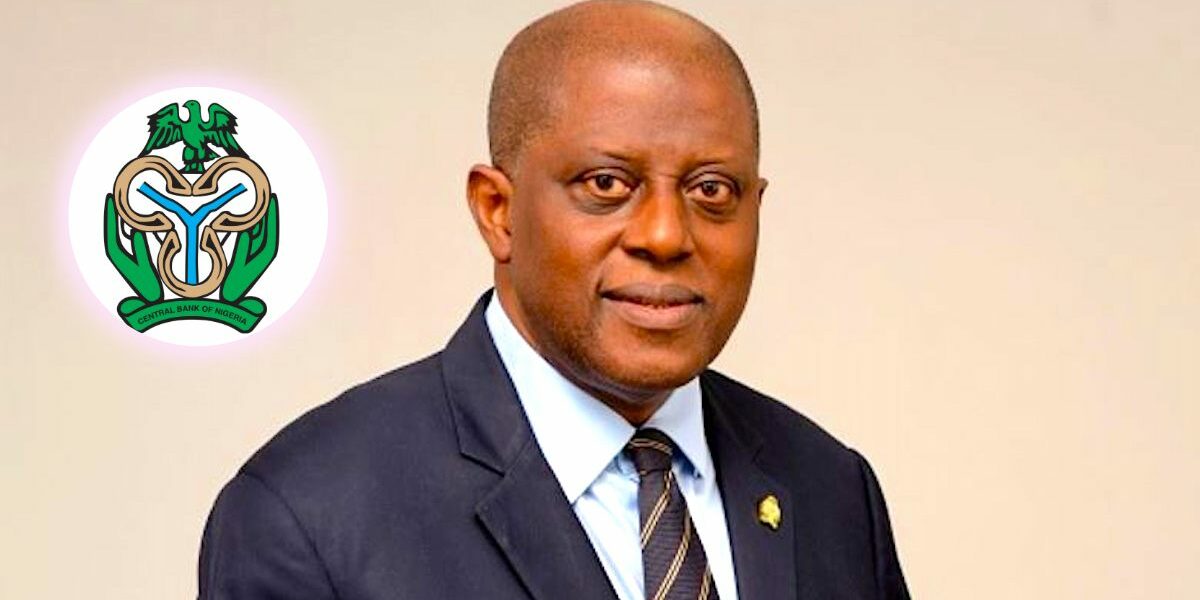
The Governor of Central Bank of Nigeria CBN Mr. Olayemi Cardoso has disclosed that the apex bank is concluding work on the new Payment System Vision 2028, developed in close collaboration with industry stakeholders and built around five strategic priorities aimed at boosting innovation, strengthening system resilience, and advancing financial inclusion. He stated this during the 2026 G-24 Technical Group Meetings in Abuja.
According to him, “at the Central Bank of Nigeria, we have systematically modernized our regulatory and supervisory frameworks to keep pace with the rapidly evolving digital financial landscape.
“We strengthened operational oversight of switching and payment infrastructure providers, enhanced agent banking regulations to better address AML/CFT risks, and significantly improved interoperability across payment channels to support efficiency and scale.”
He explained that across the world, cross‑border payments are becoming the backbone of the international monetary and financial system. For G‑24 economies, inefficiencies in these systems translate directly into higher remittance costs, costly FX transactions, fragmented settlement processes, and barriers to MSME participation in global trade.
“Improving cross‑border payments, therefore, is not simply a technical reform, it is a macroeconomic and development priority. The channels through which capital, remittances and trade flows move, now form a critical part of global financial stability architecture. Today, cross‑border payments remain too slow, too costly, and too fragmented, especially for developing economies.” He said.
The CBN Governor also said that as the global remittance corridors costing over 6.0 percent, settlement lags of several days, and compliance burdens that exclude MSMEs, millions remain disconnected from global opportunity. Digital innovation now presents a historic opportunity to correct these frictions.
This underscores why the overarching theme— ‘Mobilizing finance for sustainable, inclusive, and job rich transformation’, is not only timely but perfectly suited to the moment.
At the heart of this transformation lies a simple, yet powerful truth: an economy cannot be more inclusive than its payment system. If people cannot move money easily, affordably, and safely, across towns, borders, and continents, then they cannot fully participate in modern economic life.
“Modern payments infrastructure, instant payment systems, interoperable digital platforms, distributed ledger technology, and robust digital identity frameworks, can: Reduce transaction costs for remittances and trade Shorten settlement times Improve transparency, compliance, and auditability Expand access for households and MSMEs traditionally excluded from the formal financial system.” He stated. He said that the interoperable digital systems also strengthen the transmission of monetary policy, expand financial inclusion, and reduce informality, if designed with resilience and strong governance.
Speaking further on the happening around the world he said that India’s Unified Payments Interface UPI now linked with Singapore and the UAE, has slashed remittance costs and enabled ubiquitous real‑time settlement. Brazil’s PIX, adopted by over 70% of adults within two years, is being integrated into cross‑border pilots across Latin America.These examples demonstrate what is achievable for G‑24 members, including lower costs, better liquidity, stronger SMEs, job creation, and deeper regional integration.
“Nigeria’s experience demonstrates that this potential can be realized through deliberate and sustained policy action.” He said.
He also said that the central part of the agenda is improving the cross‑border payments environment, where Nigeria has made concrete, measurable progress.To deepen regional integration, the CBN introduced the simplified KYC/AML requirements for low‑value cross‑border transactions to encourage broader participation in PAPSS. This has eased transaction processes for Nigerian SMEs by reducing paperwork and enabling faster, more seamless intra‑African trade payments. We have also embraced fintech innovation to drive the next generation of secure, instant cross‑border payments. According to him, “Our Regulatory Sandbox now allows payment‑focused fintechs to test new cross‑border solutions under close CBN supervision, ensuring innovation proceeds without compromising stability.”
In June 2025, Nigeria launched the National Payment Stack the next‑generation real‑time payment system built on ISO 20022 messaging and designed to support multi‑currency and cross‑border transactions.
“We have also strengthened our AML/CFT frameworks in line with FATF guidelines, requiring strict dual‑screening of cross‑border transactions to mitigate risks.
“On remittances, we worked with domestic and international stakeholders in 2024 to remove long‑standing bottlenecks and expand efficient corridors.
“This has led to the introduction of new instruments such as the Non‑Resident Nigerian Ordinary Account NRNOA for remittances and family support, the Non‑Resident Nigerian Investment Account NRNIA for diaspora investments, and the Non‑Resident BVN platform to allow Nigerians abroad to open and service accounts digitally.” He stated.











