




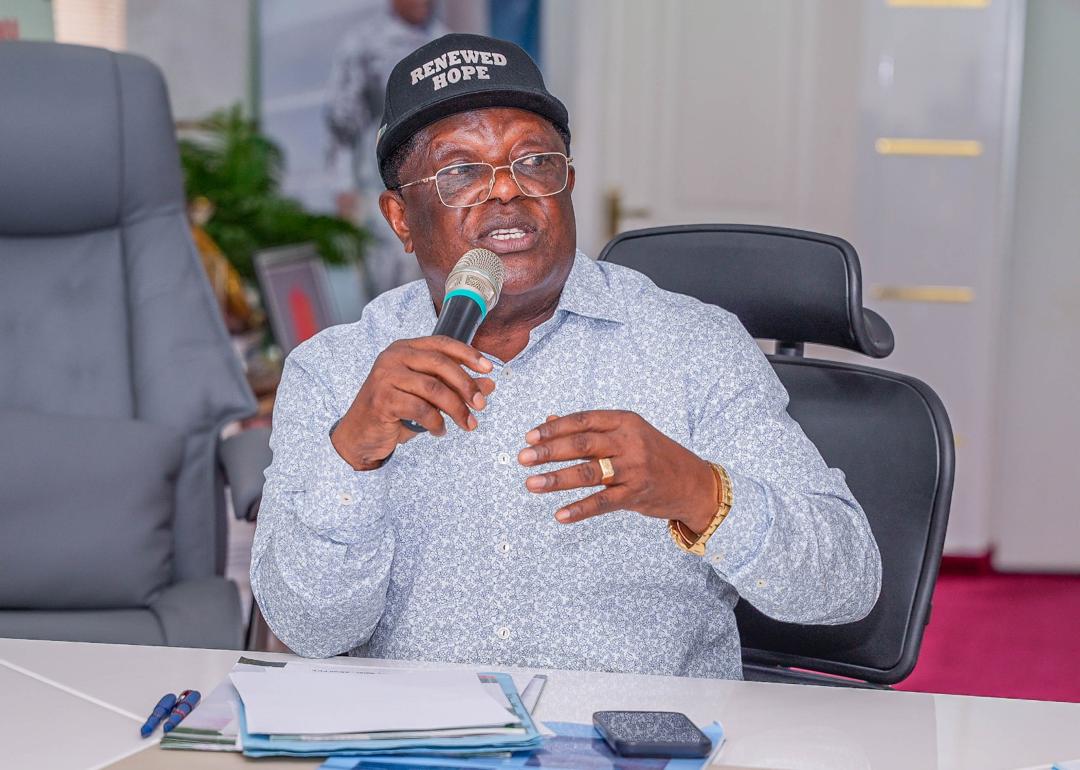
Umahi gives contractors three weeks to fix failed federal highways ahead of christmas

By Onu Okorie
The Federal Government has given contractors handling major highway projects across the country a three-week deadline to restore failed sections of federal roads, as the Ministry of Works moves to prevent worsening transportation difficulties during the forthcoming Christmas and New Year festivities.
Minister of Works, Senator David Umahi, issued the directive on Friday, warning that contractors would no longer be allowed to concentrate on permanent construction works while other sections of the same highways remain impassable and expose motorists to avoidable hardship.
The directive signals a shift towards emergency road maintenance and improved highway accessibility, with the ministry prioritising immediate interventions over the pace of ongoing construction projects as increased passenger and freight movements approach.
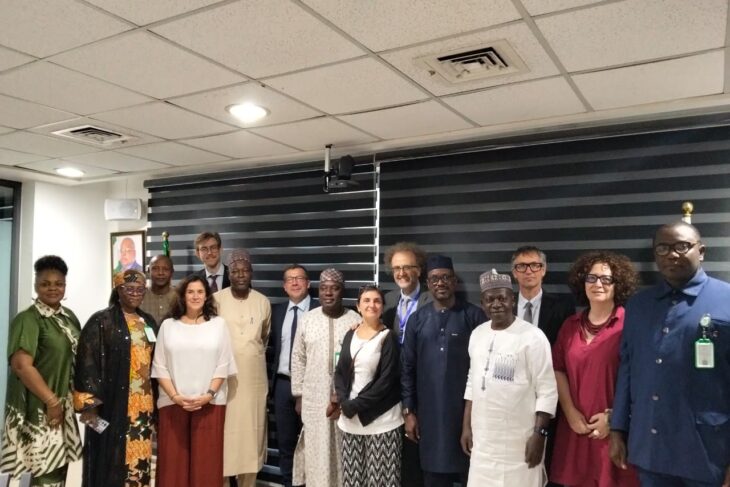
At a strategic meeting with the ministry’s Coordinating Directors for Highways, Construction and Rehabilitation, Bridges and Design, as well as Zonal Directors, Umahi instructed Federal Controllers of Works and Engineers’ Representatives to return to the field immediately and ensure that critical highways are motorable within three weeks.
He said the immediate objective was to guarantee safer and uninterrupted movement of people, goods and services, insisting that the condition of existing road sections must not be sacrificed on the altar of permanent construction targets.
Under the new directive, field officers are expected to identify and remove failed portions of roads, fill potholes and deploy appropriate temporary rehabilitation measures, including sharp sand, stone base, cement stabilisation, binder and wearing courses, depending on the severity of the damage.
Umahi expressed dissatisfaction with situations where contractors focus on designated construction sections while motorists continue to struggle through adjoining portions of the same highways.
He maintained that the ministry’s responsibility was not limited to delivering new infrastructure but also ensuring that existing federal roads remain accessible throughout the construction process.
Among the highways listed for urgent intervention are Zaria–Funtua–Gusau–Sokoto, Mararaba–Keffi, Abuja–Lokoja, Kano–Katsina, Keffi–Makurdi, Makurdi–Enugu, East-West Road, Benin Bypass, Benin–Warri, Benin–Asaba, Warri–Oleh, Kano–Shuwarin and Bauchi–Gombe.
The minister also singled out major highways in the South-East, directing immediate rehabilitation of the Enugu–Port Harcourt, Enugu–Aba, Abakaliki–Enugu, Abakaliki–Gojia and Aba–Port Harcourt roads.
The intervention comes against the backdrop of persistent concerns over the condition of federal highways, particularly routes connecting major commercial centres, state capitals and agricultural production areas.
With the festive season traditionally triggering increased inter-state travel, the ministry is seeking to reduce the risks of accidents, prolonged journeys, vehicle damage and disruptions to the movement of essential commodities.
Umahi acknowledged that the Federal Government inherited numerous failed roads requiring substantial reconstruction, but noted that funding constraints and the scale of infrastructure challenges made it necessary to combine permanent construction with practical emergency interventions.
He consequently directed contractors handling the affected projects to cooperate with ministry officials and execute the required palliative works without allowing construction schedules to undermine the immediate safety and convenience of road users.
Contractors who fail to comply with the directive are to be reported immediately for appropriate sanctions.
Field officers face performance test
Beyond the three-week deadline, Umahi introduced a monitoring framework that places greater responsibility on the ministry’s Zonal Directors, Federal Controllers of Works and project supervisors.
He directed the officers to personally inspect affected highways and submit comprehensive reports detailing the condition of each road, work already executed, outstanding challenges, contractors’ commitments and interventions required.
A dedicated WhatsApp platform will also be established to facilitate real-time reporting and coordination among the ministry’s field officers.
Reports submitted through the platform must contain the names of responsible officers, project locations, contractors, identified challenges and recommendations for resolving outstanding problems.
To underscore the seriousness of the assignment, Umahi announced that he would begin visits to the various zones from Monday to assess compliance and evaluate the performance of supervising officers.
He also introduced special awards for zones that demonstrate outstanding performance, describing the initiative as a means of promoting accountability and healthy competition within the ministry.
The minister assured the Zonal Directors that logistical support, including accommodation, vehicle hire and fuelling, would be provided to enable them to carry out the assignment effectively.
He stressed that the exercise should not be interpreted as a punitive measure against field officers but as a collective responsibility to improve road conditions and reduce the difficulties faced by Nigerians.
Emergency interventions to bypass bureaucratic delays
In another significant aspect of the directive, Umahi ordered immediate reporting and intervention on failed road sections without contractors currently working on them.
Responding to a question from the Deputy Director, Highways, North-East, Mr Berida Onayesemi, on how to handle such locations, the minister said the absence of an existing contractor should not become an excuse for allowing dangerous road conditions to persist.
He specifically identified bridges at risk of collapse and roads that have been completely cut off as emergencies requiring immediate attention rather than delays associated with administrative procedures.
According to him, the ministry would engage competent contractors to handle such situations while securing the necessary approvals and funding from President Bola Tinubu.
The position suggests that the ministry intends to establish a more responsive emergency maintenance mechanism, particularly for infrastructure failures capable of disrupting critical transportation corridors.
Umahi reiterated that the Federal Government, under President Tinubu, remained committed to improving road infrastructure nationwide, urging all supervising officers to demonstrate urgency, dedication and accountability.
He warned that there would be no excuses for failure to implement the directive, particularly as the country approaches the festive season and the early-year electoral period.
However, the effectiveness of the intervention will depend on how quickly the ministry translates the three-week deadline into measurable improvements on the affected highways. While palliative works could provide immediate relief, the durability of the roads will ultimately depend on proper drainage, quality control, sustained maintenance and completion of the permanent rehabilitation projects.
For motorists and transport operators, the immediate expectation is straightforward: safer roads, fewer failed sections and reduced travel difficulties during one of the busiest periods of the year.