




Seplat links corporate governance to access to financing

Seplat links corporate governance to access to financing
By Onu Okorie
Seplat Energy Plc has identified weak investor confidence and inadequate corporate governance as critical issues that businesses must address to attract structured financing and unlock long-term investment opportunities in Nigeria’s energy sector.
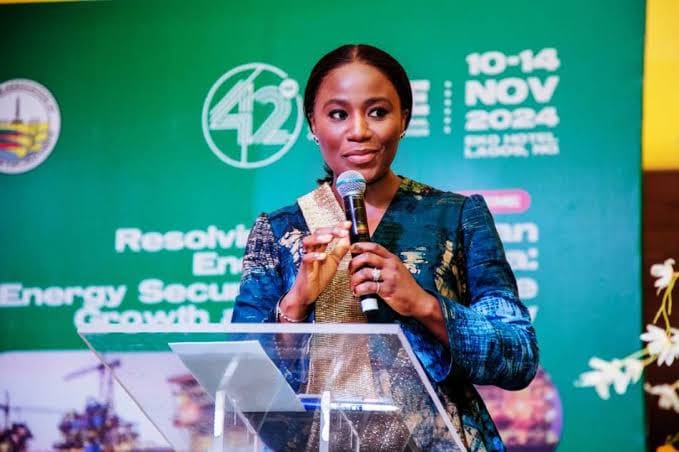
The company’s Chief Financial Officer and Executive Director, Eleanor Adaralegbe, said transparency, credible management and early engagement with financiers were essential to building the trust required to secure funding for business expansion.
Adaralegbe spoke during a panel session at the Olaniwun Ajayi Structured Finance Roundtable in Lagos, themed, “From Theory to Transactions: Overcoming Barriers and Scaling Structured Finance in the Nigerian Market.”
She explained that investors and lenders were more likely to commit capital to companies whose management teams demonstrated integrity, maintained strong governance structures and communicated their business objectives openly.
According to her, Seplat Energy’s experience has shown that confidence in its leadership and management has played a significant role in attracting financing for its operations.
“I think one of the most fundamental things for the success of structured financing is the management team. The role of a management team is unbelievable. I’ve found in my journey with the company that this has been one area where a lot of people have invested in us because they believe in the management team,” she said.
Adaralegbe said companies seeking financing should prioritise long-term relationships with financial institutions rather than focus solely on structuring transactions to secure immediate approvals.
She noted that Seplat Energy adopts a partnership approach by involving financiers in its processes and ensuring they understand the company’s objectives and proposed investments.
“At Seplat, we work with financiers as partners. We don’t try to package a deal so that they can approve it. We work with them to ensure there’s a general understanding of what we’re trying to achieve, and we carry them along in our process,” she said.
The CFO attributed the company’s ability to attract funding from local and international lenders and investors to its governance standards, financial discipline and transparent operating model.
She said these practices had helped Seplat Energy establish a strong presence in debt and capital markets while maintaining prudent leverage levels and raising funds to support its operational expansion and strategic investments.
Adaralegbe also stressed that corporate governance should be viewed as a business growth strategy rather than merely a regulatory requirement.
“The quality of our governance, the strength of our management team and our willingness to engage openly with stakeholders have enabled us to build credibility in the market. Governance is not just a compliance exercise; it is a strategic enabler that gives investors and lenders confidence to support long-term growth,” she said.
She further highlighted the influence of Seplat Energy’s dual listing on the Nigerian Exchange Limited and the London Stock Exchange, noting that compliance with the requirements of both markets had strengthened the company’s institutional framework.
According to her, the disclosure and governance obligations associated with its London listing, in particular, helped instil greater discipline in its business operations.
“The regulators and listing authorities helped shape us as a company because we had to meet listing requirements in both Nigeria and London. There was a discipline that we had to build into how we operated as a business, and that really helped us,” she said.
Adaralegbe also acknowledged the role of the Securities and Exchange Commission (SEC) in supporting market development and creating opportunities for financial innovation.
She said Seplat Energy’s engagement with the commission had contributed to initiatives that enabled the company to achieve some of its business objectives.
Meanwhile, the Director-General of the SEC, Dr. Emomotimi Agama, called for stronger collaboration among regulators, legal practitioners, issuers, investors and other market participants to deepen Nigeria’s capital market and expand access to structured financing.
Agama, who delivered the roundtable’s keynote address, said stakeholders needed to work collectively to address regulatory challenges and develop solutions that would make the market more effective.
“We must work together. There is nothing wrong with our law firms identifying challenges in regulation and proposing ways to improve the regulatory framework. We must make this market better together because it is for the benefit of all of us,” he said.
He reaffirmed the commission’s commitment to protecting investors while encouraging innovation, adding that an appropriate balance between regulation and market development was necessary to sustain confidence in Nigeria’s structured finance market.
The discussions highlighted the importance of credible institutions, effective regulation and cooperation between businesses and financiers in mobilising capital for investment and supporting sustainable growth in Nigeria’s energy sector.