






PTDF: As Nigeria’s oil, gas sector seeks private capital for next phase

As drilling activity rises and private investment expands across the petroleum value chain, stakeholders say infrastructure, financing, skills, policy stability and commercialisation will determine whether Nigeria can turn its energy resources into sustained economic value during PTDF Journal Summit in Abuja: writes Presidentstrides Editor Onu Okorie.
Nigeria’s petroleum industry is entering a new phase in which increased crude oil production and growing private-sector participation are being matched by a more urgent question: can the country build the infrastructure, institutions, skills and investment ecosystem required to convert its energy resources into lasting economic value?
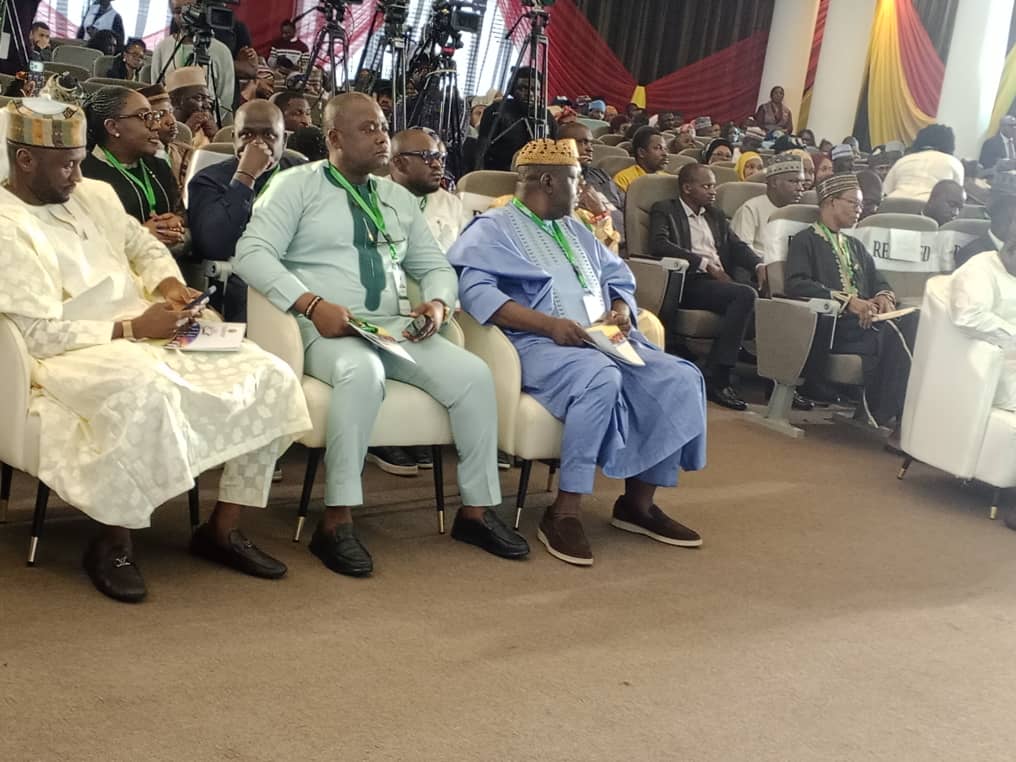
At the inaugural Petroleum Technology Development Fund PTDF Journal Summit in Abuja, government officials, regulators, industry operators, researchers and lawmakers offered a broadly shared assessment: private capital will be indispensable to the next stage of development, but investment will only follow where infrastructure, regulation, financing and market conditions provide sufficient certainty.
The PTDF Executive Secretary, Prof. Shuaibu Aliyu, explained that the summit was designed to bridge another important gap, the distance between research and real-world industry application.
Aliyu said Nigeria needed appropriate policies, technical capacity, technology, research and stronger collaboration among government, industry and academia.
Investment and infrastructure alone, he argued, would not be sufficient.
With opportunities expanding across refining, gas development and processing, transportation and other parts of the value chain, he said research must be directed towards solving practical industry problems.
The PTDF Journal, he explained, was established as a platform for disseminating research findings, technical innovations, industry experiences and professional knowledge across the petroleum value chain.
As a peer-reviewed, open-access publication, the journal is intended to connect researchers, academics, industry professionals and policymakers and help translate knowledge into innovation, industry practice and evidence-based policy.
The summit was intended to take that mission a step further by moving discussions beyond academic publication towards dialogue, collaboration and practical solutions.
Aliyu said PTDF was particularly interested in ensuring that research outputs progressed from publication to practical application, intellectual property development and commercialisation.
He also called for stronger partnerships between research institutions and industry so that research and innovation would respond directly to the needs of the petroleum sector.
The Minister of State for Petroleum Resources Oil, Heineken Lokpobiri, said the number of active oil rigs in Nigeria had increased from about 14 to more than 60 under the administration of President Bola Tinubu, with crude oil production rising to more than 1.7 million barrels per day.
Lokpobiri, represented at the summit by his Technical Adviser, Downstream, Emmanuel Sinime, attributed the development to ongoing reforms in the petroleum industry, which he said were restoring investor confidence, improving regulatory certainty and creating conditions for increased private-sector investment.
He also said Nigeria had attracted more than $10 billion in foreign direct investment in recent years, while indigenous operators now accounted for more than half of the country’s crude oil production.
But the minister cautioned that increased upstream activity could not, by itself, guarantee sustainable growth.
The gains in drilling and production, he said, must be accompanied by adequate infrastructure, efficient transportation and storage systems, increased refining capacity and competitive markets capable of delivering value to consumers and investors.
The emergence of the Dangote Petroleum Refinery and the expansion of modular refineries such as Waltersmith and Aradel, he noted, demonstrate what private-sector investment can achieve in the downstream segment.
Lokpobiri also pointed to reforms in domestic gas pricing, efforts to ensure fair and non-discriminatory access to pipelines, depots and terminals, and initiatives to develop a West African refined-products pricing benchmark. Such measures, he said, were intended to create transparent and competitive midstream and downstream markets capable of attracting private investment.
Infrastructure deficits, regulatory uncertainty, logistics difficulties, market volatility, exchange-rate movements and high transportation costs continue to constrain investment, according to the minister. He stressed the need to strike a balance between effective regulation and the ability of businesses to operate, attract capital and create jobs.
Gas as the industrial bridge
For the Minister of State for Petroleum Resources Gas, Ekperikpe Ekpo, the same challenge applies to Nigeria’s vast gas resources.
Ekpo said government could not develop the gas sector alone, arguing that private capital, technical expertise and innovation were essential to unlocking the sector’s potential.
He identified infrastructure gaps, high financing costs, project-development risks, regulatory bottlenecks and inadequate access to reliable energy infrastructure as major impediments confronting investors.
The Petroleum Industry Act, he said, had provided an important framework for improving regulatory certainty, strengthening institutional governance and encouraging investment in the midstream and downstream sectors.
But legislation, he suggested, must be complemented by sustained investment and effective implementation.
Ekpo linked the challenge to the Federal Government’s Decade of Gas initiative, which seeks to use natural gas as a catalyst for industrialisation, job creation, energy security and economic diversification.
Achieving that ambition, he said, would require sustained investment in gas processing, transportation and distribution, as well as liquefied petroleum gas, compressed natural gas, petrochemicals and other gas-based industries.
He called for deeper collaboration among government, private investors, financial institutions, technology providers and other stakeholders, alongside policy consistency, efficient regulation, improved security of critical infrastructure and innovative financing mechanisms.
The minister also emphasised the importance of indigenous technological capacity, local manufacturing and a skilled workforce capable of supporting the industry’s expansion.
The industry’s challenge, however, is not only about infrastructure and finance.
For the keynote speaker, Oladapo Filani, Managing Director and Chief Executive Officer of Waltersmith Petroman Oil Limited, Nigeria must move beyond the conventional model of training professionals without creating sufficient opportunities for them to apply their expertise.
Filani noted that PTDF had sponsored more than 15,639 scholars across various programmes and institutions and supported more than 50,000 research projects.
But the next phase, he argued, should focus on retaining and deploying that expertise.
“The challenge is no longer simply to produce skilled Nigerians, it is to retain that expertise, create opportunities to apply it and to convert knowledge into technology, businesses and economic value,” he said.
Filani identified three interconnected challenges confronting the midstream and downstream sectors: infrastructure and reliability constraints; human-capital and technical-capability gaps; and financing, commercial viability and investment uncertainty.
These problems, he said, reinforce one another.
Limited gas-processing and evacuation infrastructure, pipeline integrity concerns, inadequate storage and terminals, distribution constraints, refining-support infrastructure and product-logistics challenges all affect operating costs, asset utilisation and the economics of investment.
His prescription is a stronger partnership between PTDF and private operators.
While PTDF can address human-capital and technical-capability gaps, Filani said private investors could provide the infrastructure and commercialisation required to turn knowledge and natural resources into economic value.
He called for an industry-led competency-development model that identifies the skills and capabilities Nigeria will need over the next five years.
He also advocated an integrated energy ecosystem in which gas supports power generation, refining, fertiliser production, petrochemicals, compressed natural gas, liquefied natural gas and gas-based manufacturing.
Shared infrastructure, including pipelines, gas-processing facilities, storage, power generation and logistics systems, would also be critical, he said.
The need for a supportive policy environment was echoed by the legislature. The Chairman of the Senate Committee on Petroleum Resources, Upstream, Senator Eteng Williams, commended PTDF for its contribution to human-capital development and the training of generations of professionals who have contributed to the petroleum industry.
He said full implementation of the Petroleum Industry Act had created a framework intended to encourage private capital in gas processing, refining, petrochemicals and distribution.
Williams maintained that the private sector remained essential for infrastructure development and the deployment of capital and technology, while government had a responsibility to provide an appropriate policy and legislative environment.
He urged participants to focus on practical questions around investor confidence, infrastructure development, domestic refining capacity, employment, technology transfer and broader economic opportunities.
The lawmaker also called for stronger collaboration among policymakers, industry leaders and researchers in developing practical recommendations for the sector.
Similarly, Ajilo Umar, Deputy Chairman of the House Committee on Petroleum Resources (Training Fund/PTDF), urged government to provide policy stability, the National Assembly to provide sound legislation and oversight, and financial institutions to make long-term capital available to the industry.
The different perspectives presented at the PTDF Journal Summit converge on a central proposition: Nigeria’s petroleum challenge is increasingly less about whether the country possesses resources and more about whether it can build the ecosystem needed to exploit those resources efficiently and sustainably.
The rise in drilling activity and crude production cited by the government points to increased upstream activity. The growth of private refining and gas projects demonstrates the willingness of investors to participate when viable opportunities emerge.
But the speakers also identified a chain of constraints that could limit the impact of those gains — from pipelines, storage and transportation to financing, skills, technology, regulation and market certainty.
For government, the task is to deepen reforms, maintain policy consistency and create a regulatory environment that gives investors confidence.
For the private sector, the opportunity lies in deploying capital, technology and commercial expertise to infrastructure, refining, gas processing and distribution.
For PTDF and the academic community, the challenge is to ensure that research and human-capital development produce solutions that can be deployed commercially.
And for lawmakers and financial institutions, the focus is on legislation, oversight and access to long-term capital.
Ultimately, the summit’s message was not that any single institution can solve Nigeria’s petroleum-sector challenges. Rather, the future of the industry will depend on how effectively government, private investors, researchers, financiers and skilled professionals work together.
As Nigeria seeks to translate rising oil production and abundant gas reserves into industrial growth, the decisive measure may be whether the country can move from simply producing energy resources to building the infrastructure, businesses, technologies and human capabilities that allow those resources to generate enduring value at home.











