





I take responsibility for Lagos-Calabar highway procurement, says Umahi

I take responsibility for Lagos-Calabar highway procurement, says Umahi

By Onu Okorie
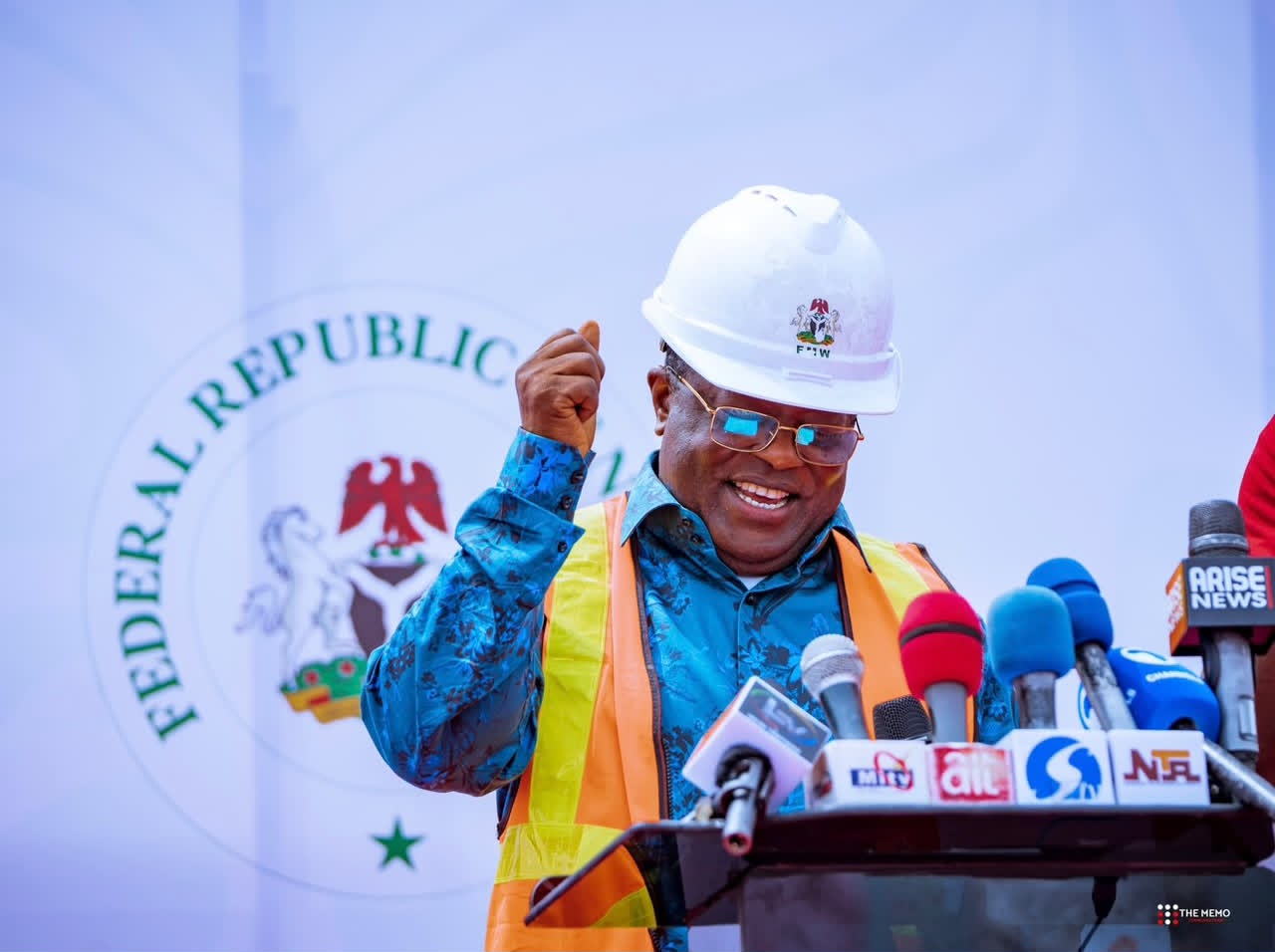
Minister of Works, Engr. David Umahi, has taken personal responsibility for the Federal Government’s decision to adopt a special procurement process for the Lagos-Calabar Coastal Highway, saying the choice was driven by the technical demands of the project and not political considerations.
Umahi, who spoke on Channels Television’s Sunday Politics, said President Bola Tinubu never directed him to award the multi-billion-naira project to Hitech Construction Company, despite questions surrounding the contractor’s relationship with individuals close to the President.
“I take responsibility,” the minister said repeatedly when pressed on who authorised the procurement process.
According to Umahi, the coastal highway presented unusual engineering challenges because it passes through swamps, coastal terrain and areas exposed to ocean activity. He said these conditions required a contractor with specialised experience rather than an ordinary procurement approach.
The minister said the decision to engage Hitech was based on its technical capacity and track record, citing the development of Eko Atlantic as an example of the type of specialised engineering required to tackle coastal challenges.
“The President never asked me to give [the project] to Hitech,” Umahi said, dismissing suggestions that Tinubu’s relationship with the company’s owners influenced the award.
He maintained that major government contracts were subject to established procurement procedures, including scrutiny by the Bureau of Public Procurement.
Umahi also sought to explain the high cost of the coastal highway, arguing that the project involved considerably more than laying asphalt across relatively stable ground.
He said engineers had encountered sections requiring deep excavation, the removal of unsuitable materials and their replacement with sharp sand to achieve adequate consolidation.
In some areas, he explained, the filled sections had to remain untouched for up to a year to allow the ground to settle naturally before further construction could take place.
The project also includes a 25-metre corridor filled to accommodate a future railway line, which the minister said was incorporated into the overall cost.
Umahi disclosed that several sections of the highway had already been procured, including Sections One, Two, Three, Three-B and Four, with other portions at different stages of development.
Section Four, covering about 62 kilometres, is currently about 30 per cent complete, he said, while Section Five, covering roughly 80 kilometres in each direction, has also been secured.
The minister said Tinubu had additionally approved the realignment of the highway between Ondo and Edo states to connect with the East-West route.
According to him, the realignment would require parts of the highway to be raised above existing flood levels, while the difficult terrain could require bridges stretching for several kilometres.
Umahi also pushed back against criticism that the Tinubu administration had failed to deliver projects of its own.
He listed road and bridge projects across several states which he said had been completed or were approaching completion, including projects in Abuja, the South-East, Gombe, Bauchi, Plateau and Adamawa.
The minister said a large proportion of the Ministry of Works’ current portfolio consisted of projects inherited from previous administrations.
“About 80 per cent” of projects being handled by the ministry, he said, were inherited, while about 20 per cent were initiated by the Tinubu administration.
He argued that the government’s infrastructure record should therefore be assessed against both inherited and newly initiated projects.
Umahi also disclosed that several of the administration’s major infrastructure projects were being delivered through an Engineering, Procurement, Construction and Financing arrangement.
Under the model, he said, the Federal Government would provide about 30 per cent of the funding, with external financing institutions expected to provide the remaining 70 per cent.
He cited Deutsche Bank’s involvement in financing part of the Lagos-Calabar Coastal Highway, saying the financing proposal had undergone scrutiny covering environmental impact assessments, resettlement plans, procurement procedures and project costs.
The minister linked the coastal highway to other major corridors, including the proposed Sokoto-Badagry Superhighway, saying the broader objective was to create an interconnected national transport network.
Such a network, he said, would improve the movement of people and goods while supporting economic activity across different regions.
On the wider economic reforms of the Tinubu administration, Umahi acknowledged that Nigerians had faced significant hardship but argued that the measures were necessary to address what he described as structural problems in the economy.
He questioned how long the country could have continued borrowing to finance fuel imports while maintaining what he described as a distorted foreign exchange regime.
“The reforms, they were not an easy reform. But they needed to be done to restore our nation,” he said.
The minister’s defence of the coastal highway comes as scrutiny of the project’s procurement, cost, financing and implementation continues, placing greater emphasis on the ministry’s justification for the process and on Umahi’s assertion that he—not the President—bore responsibility for the procurement decision.











