





FG tightens pressure on contractors as Niger Road projects lag

FG tightens pressure on contractors as Niger Road projects lag

By Onu Okorie
Federal Government has stepped up pressure on contractors handling major road projects in Niger State, warning that delays will no longer be tolerated as motorists continue to face difficult conditions along key transport corridors.
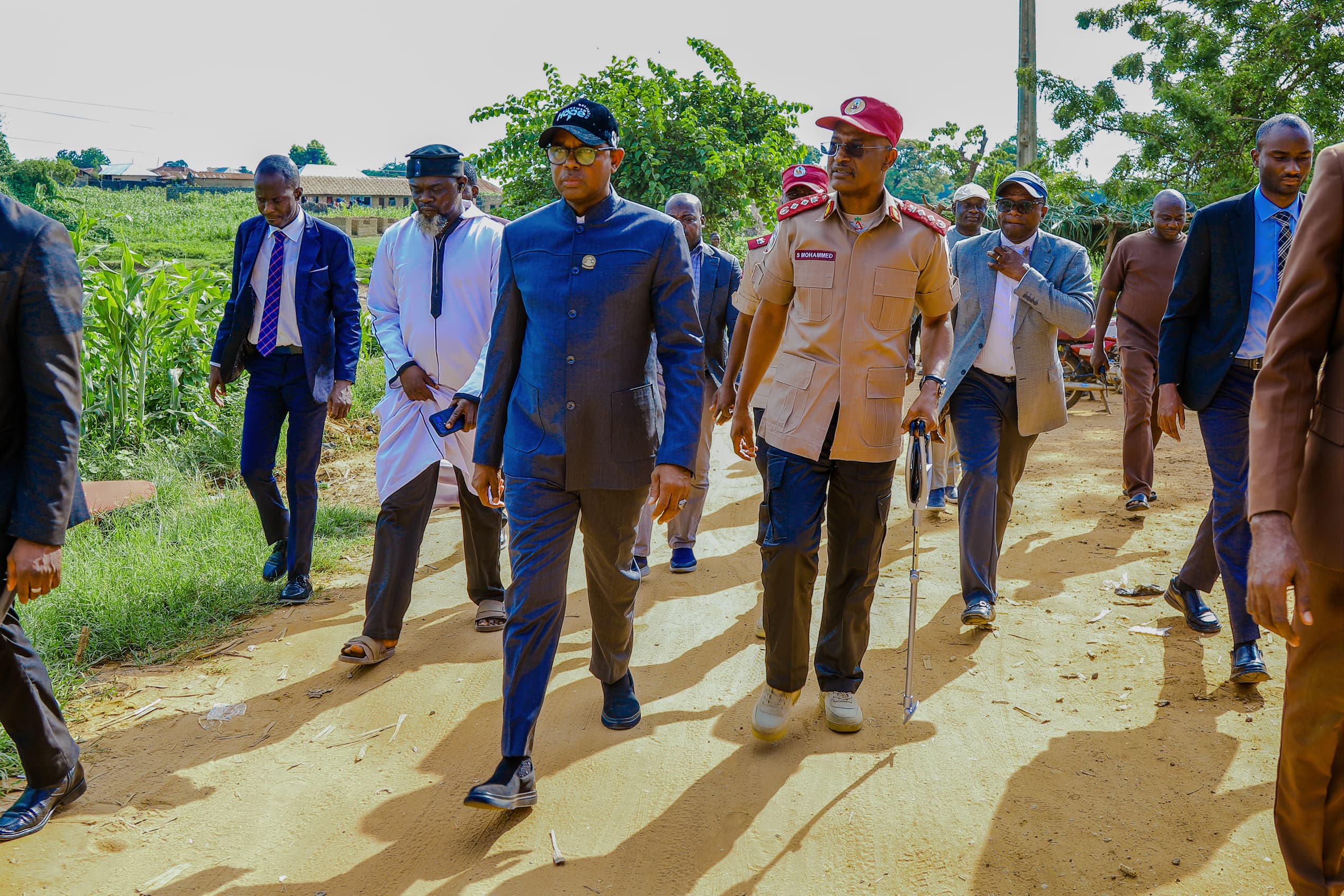
The warning came during an inspection of the Bida–Lapai–Lambata and Maje–Dikko road corridors on Thursday by the Minister of State for Works, Rt. Hon. Bello Muhammad Goronyo.
At the centre of the inspection was the Maje–Jazu Section II project, where the minister expressed concern that physical progress remained at about one per cent despite more than ₦10 billion having been released to the contractor as mobilisation.
The project, valued at approximately ₦90 billion, covers about 71.9 kilometres and includes the construction of 11 culverts and 11 bridges.
Goronyo said the level of work recorded was far below what the project schedule required, noting that the contractor should have achieved almost 16 per cent completion at this stage.
He said nearly six months had already elapsed from the 36-month contract period, making the slow pace of construction a major concern for the Federal Ministry of Works.
“The amount so far released to you as mobilisation is over ₦10 billion. Yet, the progress of work on site is not commensurate with the amount that has been advanced to you,” the minister told the contractor.
He directed CCECC Nigeria Limited to immediately increase its deployment of machinery, materials, manpower and technical personnel.
The minister also rejected the contractor’s explanation that prolonged traffic congestion caused by articulated vehicles between June and August had hampered construction activities.
Goronyo pointed out that the contract was awarded in February, questioning why significant progress had not been recorded before the traffic problems became pronounced.
The contractor subsequently assured the minister that it had the capacity and resources to accelerate the project, saying it expected to complete between nine and 10 kilometres by March next year.
Goronyo, however, said such output would still fall short of expectations given the overall length of the project.
Government moves to reopen troubled corridor
While expressing concern over the slow pace of permanent construction, the government is also pursuing immediate measures to restore traffic movement on sections of the road affected by deterioration, erosion and heavy articulated-vehicle traffic.
At the Maje–Dikko section, the minister acknowledged improvements following an earlier 48-hour directive issued to the contractor to restore passability.
The Managing Director of Trunkroad Consortium Nigeria Limited, Isaac Abeka, said the company responded by deploying additional workers, equipment and construction materials.
He said failed portions of the road had been filled with stones, rocks and boulders before stone-base materials were spread and graded.
Drainage channels were also opened to improve the movement of water away from the roadway, while additional equipment was deployed to areas still considered difficult.
According to Abeka, the intervention had eased the major gridlock and allowed traffic to move towards Lambata and Dikko.
Goronyo nevertheless ordered the contractor to maintain round-the-clock operations at critical locations and increase its deployment of equipment and materials.
He said the ministry would continue daily monitoring of the corridor, either personally or through senior officials.
Inherited projects under renewed scrutiny
The inspection also brought renewed attention to the government’s approach to inherited road projects.
The approximately 123.4-kilometre Bida–Lapai–Lambata road is being executed under the Presidential/NNPC Tax Credit financing arrangement.
The minister said the Federal Government had inherited several road projects across the country and was working to revive them rather than abandon them.
He said the Bida–Lapai–Lambata corridor was particularly important because of its role in transporting agricultural produce, goods and people across Niger State and neighbouring areas.
Because of the volume of articulated traffic, the project was designed with continuously reinforced concrete pavement intended to provide greater durability.
However, with motorists currently facing difficult travelling conditions, the government plans to combine temporary repairs with the eventual permanent reconstruction.
At the Lambata–Lapai corridor, the Director of Construction and Rehabilitation, Engr. David Yiltong Dechi, said the contractor for the permanent rehabilitation had indicated its readiness to mobilise.
He warned, however, that extensive earthworks during the rainy season could temporarily worsen some portions of the road.
The ministry therefore recommended immediate palliative works using boulders, stone-base materials, graders and bulldozers to keep the road motorable until conditions become more favourable for permanent construction.
Truck operators urged to observe loading limits
The Federal Road Safety Corps also linked road safety and pavement durability to the behaviour of heavy-duty vehicle operators.
The Corps Marshal, Mallam Shehu Mohammed, sympathised with motorists over the condition of the corridor but urged truck owners and drivers to avoid overloading.
He said excessive loading had implications for road safety, vehicle condition and the durability of road pavements.
The Senior Special Assistant to the President on Transportation, Prince Adetokunbo Ademola, said the physical inspection demonstrated the Federal Government’s attention to the corridor and its efforts to implement the President’s directive.
The President of the National Association of Road Transport Owners, Alhaji Yusuf Lawal Othman, also appealed for patience from motorists as remedial and reconstruction works continue.
With the rainy season still affecting construction conditions, the immediate challenge for the government is to keep the roads passable while pushing contractors to deliver permanent works.
For the Ministry of Works, the latest inspection has therefore shifted the focus from promises to measurable progress, with contractors facing renewed demands to match government funding and directives with visible work on the ground.











