





SEC targets household savings as capital market enters new growth phase

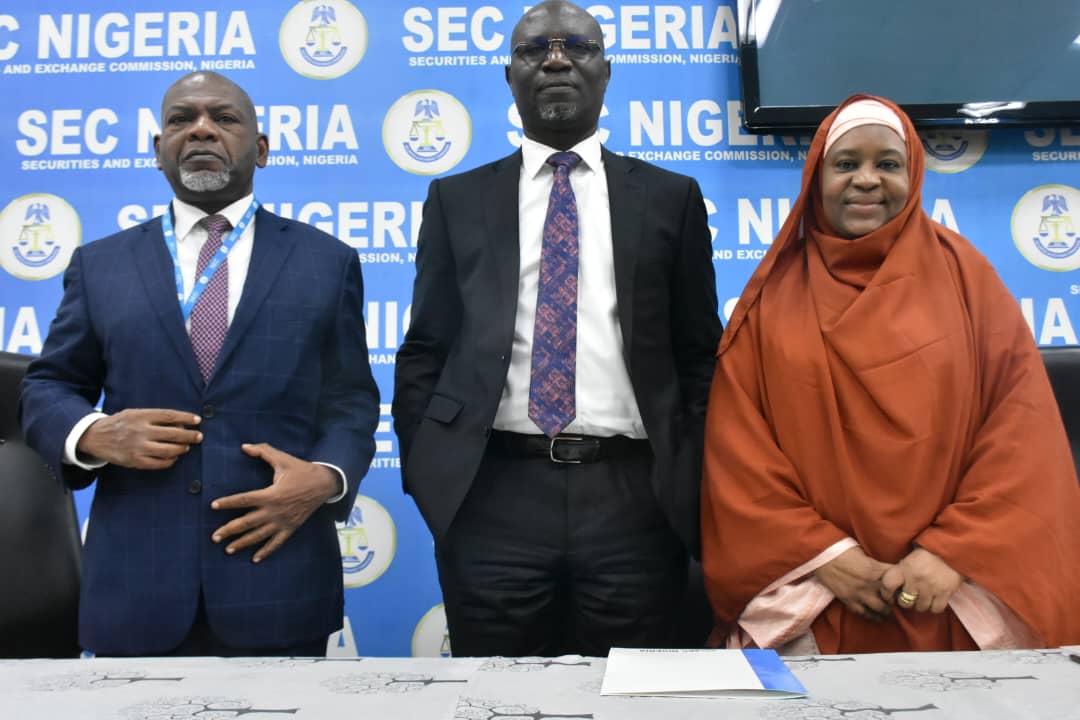
SEC targets household savings as capital market enters new growth phase
By Onu Okorie
Federal Government is set to unveil a new National Savings Scheme as part of efforts to channel more household savings into Nigeria’s capital market and expand the pool of domestic funds available for investment.

The initiative will be launched alongside the Nigerian Capital Market Master Plan 2.0 (NCMMP 2.0) at the 2026 National Capital Market Conference scheduled for October 19 at the Banquet Hall of the Presidential Villa, Abuja.
Vice-President Kashim Shettima will serve as Special Guest of Honour, while the Minister of Finance and Coordinating Minister of the Economy, Taiwo Oyedele, will be Chief Host. The Securities and Exchange Commission (SEC) Director-General, Emomotimi Agama, will host the conference.
The proposed savings scheme is expected to target Nigerians across different income groups, with the SEC positioning it as an inclusion mechanism designed to encourage citizens to save and invest for the future.
Agama said tax incentives would form part of the scheme, potentially giving lower-income earners additional room to save and invest.
“The National Savings Scheme is principally an inclusion tool: every Nigerian is given the opportunity to save, and those savings will be invested for the future,” he said.
Under the proposed arrangement, Nigerians earning below a specified income threshold could qualify for tax relief, a measure the SEC said would support participation and align the scheme with the Federal Government’s broader fiscal policy direction.
Domestic capital takes centre stage
The savings initiative comes as policymakers seek to expand the amount of domestic capital available to finance economic activity.
By encouraging households to move beyond conventional savings and participate in investment products, the government and the SEC hope to deepen the local investor base and create a larger pool of funds that can be deployed through the capital market.
The initiative also places greater emphasis on domestic savings at a time when policymakers are seeking to reduce reliance on external sources of financing.
The SEC said the National Savings Scheme and NCMMP 2.0 would provide a framework for mobilising domestic capital, increasing investor participation and directing savings towards productive investments.
10-year market roadmap unveiled
The conference will also mark the unveiling of NCMMP 2.0, which the SEC described as a 10-year strategy for the development of Nigeria’s capital market.
Agama said the master plan would provide a long-term framework for measuring progress, implementing reforms and guiding the growth of the market.
He added that the endorsement of the Vice-President would be important to the effective implementation of the strategy.
The master plan is expected to provide the policy direction for the capital market over the next decade, with stakeholders set to examine regulatory, fiscal and investment measures needed to improve the market’s depth and accessibility.
Committees to drive implementation
The October conference will bring together policymakers, regulators and private-sector stakeholders to deliberate on measures for deepening the capital market and expanding access to investment opportunities.
It will also feature presentations of reports from the Capital Market Committee Technical Working Groups.
The NCMMP 2.0 Project Steering Committee and the Capital Market Master Plan Implementation Committee are also expected to be inaugurated during the event.
The committees are expected to play roles in translating the new master plan from a policy document into specific reforms and measurable actions across the market.
With the National Savings Scheme and the 10-year master plan being unveiled at the same event, the SEC is positioning domestic savings mobilisation and wider investor participation as central elements of the next phase of Nigeria’s capital-market development.
The conference is therefore expected to provide the platform for stakeholders to examine how household savings can be converted into long-term investment capital while creating a broader and more inclusive market for Nigerians.











