






FG moves to replace 64-year-old grid control centre

By Onu Okorie
Federal Government has begun construction of a new ultra-modern National Control Centre for the Nigerian Independent System Operator (NISO) in Osogbo, Osun State, as part of efforts to modernise the management of the national electricity grid and reduce avoidable system disruptions.
The new facility is expected to replace the existing 64-year-old control centre, providing NISO with modern digital tools to monitor the national grid in real time and respond more quickly to faults, disturbances and other system events.
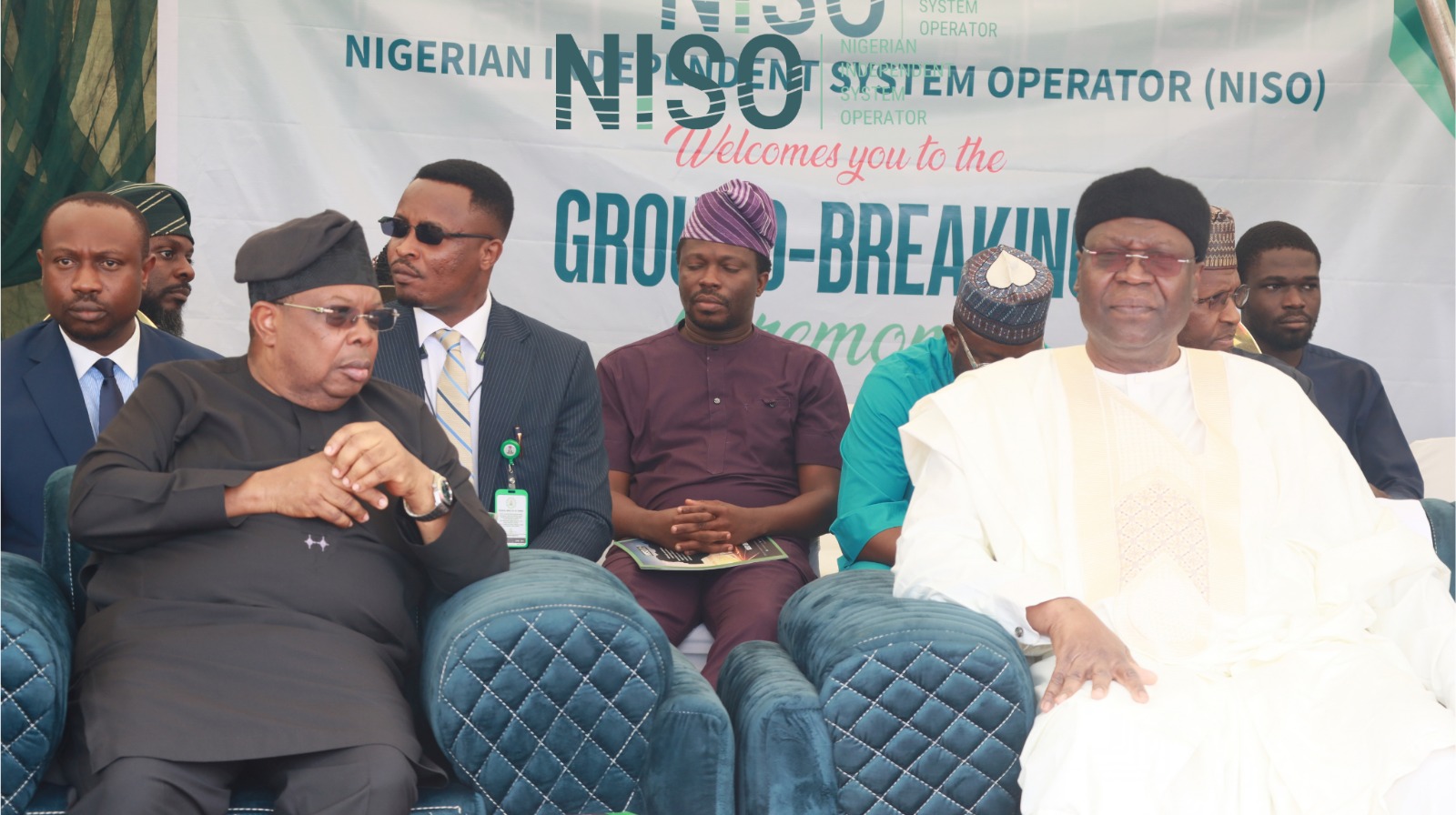
The groundbreaking ceremony was performed by Vice President Kashim Shettima, represented by the Special Adviser (Legal), Office of the Vice President, with the Minister of Power, Joseph Tegbe, in attendance.
The project marks a significant upgrade in Nigeria’s grid-control infrastructure at a time when the country’s electricity system is increasingly required to accommodate additional generation, renewable energy and regional power exchanges.
Tegbe said the new control centre would give NISO the visibility and operational capability required to manage the national grid more effectively, describing the investment as part of President Bola Ahmed Tinubu’s effort to address structural weaknesses in the electricity supply chain.
He said the centre, when completed, would deploy integrated Supervisory Control and Data Acquisition (SCADA), large-format displays and advanced analytics to enable system operators identify developing faults, plan preventive maintenance and optimise available generation and transmission capacity.
According to the Minister, the facility will also strengthen NISO’s ability to respond to system disturbances, support the integration of renewable energy and improve Nigeria’s coordination within the West African Power Pool.
It will equally incorporate enhanced physical and cyber-security measures to protect critical national electricity infrastructure.
Tegbe said the immediate benefit expected by consumers and businesses was improved coordination of the grid, which could help reduce avoidable outages and contribute to a more dependable electricity supply.
He, however, noted that the control centre would not by itself resolve all challenges within the power sector, stressing that reliable electricity also depended on adequate gas supply to generating plants, properly maintained transmission assets and functional distribution networks capable of delivering electricity to consumers.
The Vice President said reliable electricity remained central to the Tinubu administration’s Renewed Hope Agenda, describing power as a critical foundation for manufacturing, small businesses, healthcare, education and job creation.
He said the control centre represented an important point in protecting the reliability of the national grid, adding that Nigeria could not operate a modern interconnected electricity system with outdated tools.
Also speaking, NISO Managing Director/Chief Executive Officer, Engr. Abdu Bello Mohammed, said the new centre would significantly improve the system operator’s visibility of the national grid and strengthen coordination during system disturbances.
Mohammed said upgraded telemetry, SCADA and automatic metering would provide NISO with better-quality operational data, enabling faster and better-informed decisions.
He added that improved data would also strengthen electricity market settlement while enhancing the security and resilience of the national power system.
The NISO chief executive said the facility would position the organisation to meet the technical demands of the West African power system and improve Nigeria’s participation in the regional electricity market.
He stressed that technology must be matched with human capacity, saying NISO was developing skilled operators capable of running the new facility in line with international standards.
The ceremony was attended by the NISO board and management, members of the National Assembly Committees on Power, leadership of electricity distribution companies, representatives of the Osun State Government, industry stakeholders and community leaders.
The new control centre is therefore expected to serve as a critical nerve centre for the next phase of Nigeria’s grid modernisation, providing operators with the real-time information and analytical capability required to manage a more complex electricity network.











