





Nigeria can become West Africa’s oil pricing hub, says S&P Global

Nigeria can become West Africa’s oil pricing hub, says S&P Global

By Our Correspondent
Nigeria is positioned to emerge as a major oil and refined-products pricing hub in West Africa as the expansion of domestic refining reshapes regional petroleum markets, S&P Global Energy has said.
Executive Director, Strategy and Benchmarks, S&P Global Energy, Joel Hanley, said the emergence of the Dangote refinery and growing petroleum-product exports from Nigeria had created an opportunity for the country and the wider West African region to develop benchmarks that better reflect local market realities.
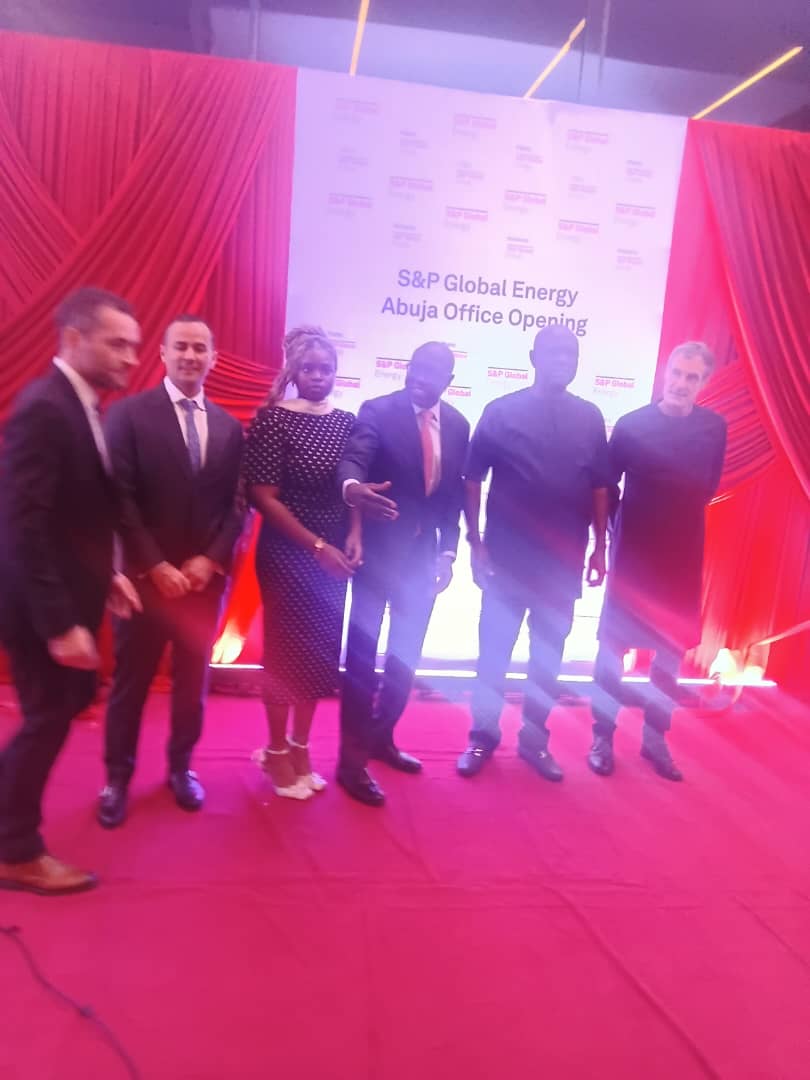
Hanley spoke against the backdrop of S&P Global’s engagement with Nigerian energy stakeholders in Abuja, where he explained the company’s role in providing market assessments, pricing data and analytics used by traders, investors and companies in their commercial contracts.
According to him, West Africa has historically relied heavily on European benchmarks for pricing petroleum products, despite significant differences between European and West African supply-and-demand conditions.
He said the changing structure of the regional market now made it increasingly necessary to develop pricing assessments centred on markets such as Lekki, Lagos and Lomé.
“I’m a big believer that West Africa has the opportunity to be a pricing hub. It’s already an energy hub. Dangote has changed everything,” Hanley said.
He noted that the emergence of large-scale petroleum-product supplies from the Dangote refinery was altering the traditional flow of products into West Africa.
“For many years we’ve seen the pricing linked. People have been pricing their cargoes coming into West Africa from European assessments, European benchmarks,” he said.
While acknowledging that European benchmarks remain important, Hanley said they primarily reflect European market conditions.
He therefore argued that benchmarks based on West African transactions would provide a more representative measure of the economic value of petroleum products traded within the region.
Hanley pointed to the growing cargo flows from Lekki and Lagos, alongside the established role of Lomé as a regional trading centre, as evidence of the changing market structure.
Nigeria moving from price taker to price maker
Senior Reporter, West Africa Refined Products at S&P Global Energy, Matthew Tracy Cook, said Nigeria was transitioning from being predominantly a price taker to becoming increasingly influential in regional petroleum pricing.
Cook said the development of the Dangote refinery had fundamentally altered West Africa’s refined-products market, with Nigeria now supplying a substantial proportion of the region’s gasoline and jet-fuel requirements.
“West Africa has been highly dependent on international benchmarks and international supply for its fuel needs, its gasoline, diesel, jet fuel. But with the development of the Dangote refinery, that has all changed,” he said.
According to Cook, the refinery’s output accounts for more than half of West Africa’s gasoline needs and close to 100 per cent of its jet-fuel requirements, illustrating the scale of the transformation.
He said S&P Global’s pricing assessments were being developed to reflect the new supply channels emerging from West Africa.
Among the benchmarks highlighted were assessments reflecting the offshore Lomé market and FOB West Africa, including FOB Dangote pricing.
Cook said the development represented a major shift from the historical pattern in which petroleum products were predominantly shipped from Europe into West Africa.
“What we’re doing with the data, the pricing and the analytics that we have available here is we’re representing that massive shift where Nigeria is transitioning from a pure price taker to more of a price maker,” he said.
Local benchmarks gain importance
Cook said locally relevant price assessments could improve transparency and enable traders and investors to better understand regional supply, demand, arbitrage opportunities and cargo flows.
He explained that S&P Global’s assessments are informed by bids and offers from market participants, allowing traders to participate directly in the formation of regional benchmarks.
He said this represented a significant departure from the traditional system where pricing benchmarks were largely shaped by transactions and market information generated outside West Africa.
“Now what we’re doing is we’re providing data that is much closer to home in Nigeria,” Cook said.
He added that transparent local data would enable market participants to better understand how petroleum-product flows were developing between Nigeria and other West African markets.
Subsidy return could affect free-market development
Hanley also disclosed that discussions at an S&P Global event in Lagos showed significant opposition among some market participants to any return of fuel subsidy.
He stressed that the position was not his personal political judgment but a reflection of views expressed during the industry discussions.
“There was quite a deep-seated feeling against the return to subsidy,” he said.
According to him, some traders and marketers believe subsidies could complicate the development of a free and transparent petroleum market.
He said the growing number of entrepreneurs, marketers and traders operating across Nigeria and the wider West African region could be affected if subsidy mechanisms again distorted market prices.
Hanley said a return to subsidy could therefore have implications for efforts to establish West Africa as a major centre for petroleum trading and price discovery.
Lokpobiri pledges closer collaboration
Minister of State for Petroleum Resources (Oil), Senator Heineken Lokpobiri, said the Federal Government regarded its relationship with S&P Global as strategically important to Nigeria’s energy sector.
Lokpobiri welcomed the company’s decision to deepen its engagement with Nigeria, saying the country would continue to play an active role in the global energy landscape.
“S&P Global is very strategic to our energy sector. We have an existing relationship, and we are committed to ensuring that Nigeria does not take that relationship for granted,” he said.
The minister said he was pleased that S&P Global had brought its engagement to Abuja and expressed the government’s readiness to work closely with the company.
He said Nigeria would not be left behind in the evolving global energy market and would continue to position itself to take advantage of developments in the sector.
Pricing implications for Nigeria
The emergence of locally relevant benchmarks could have wider implications for Nigeria’s petroleum market, particularly as domestic refining expands and the country becomes an increasingly important supplier to neighbouring markets.
The removal of petrol subsidy has already exposed domestic pump prices more directly to international oil-market conditions, while growing domestic refining capacity is creating new opportunities for price discovery within the region.
Cook explained that petroleum remains a globally priced commodity and that market-based pricing inevitably reflects international supply-and-demand fundamentals.
He said the removal of subsidy had moved Nigerian petroleum pricing from an administratively suppressed level towards one more reflective of global market conditions.
He added that transparent regional benchmarks would allow buyers and sellers to determine prices based on actual market dynamics, with the marginal buyer and seller influencing the economic value of products.
The development of such benchmarks could consequently strengthen price discovery, improve transparency for investors and traders, and support Nigeria’s ambition to become a major petroleum trading and refining centre in Africa.











