





NISO tightens grip on grid stability, market discipline

NISO tightens grip on grid stability, market discipline

By Onu Okorie
Nigerian Independent System Operator NISO has stepped up efforts to strengthen the stability of the National Grid and impose greater discipline on participants in Nigeria’s electricity market, while accelerating investments in technology and system-control infrastructure.
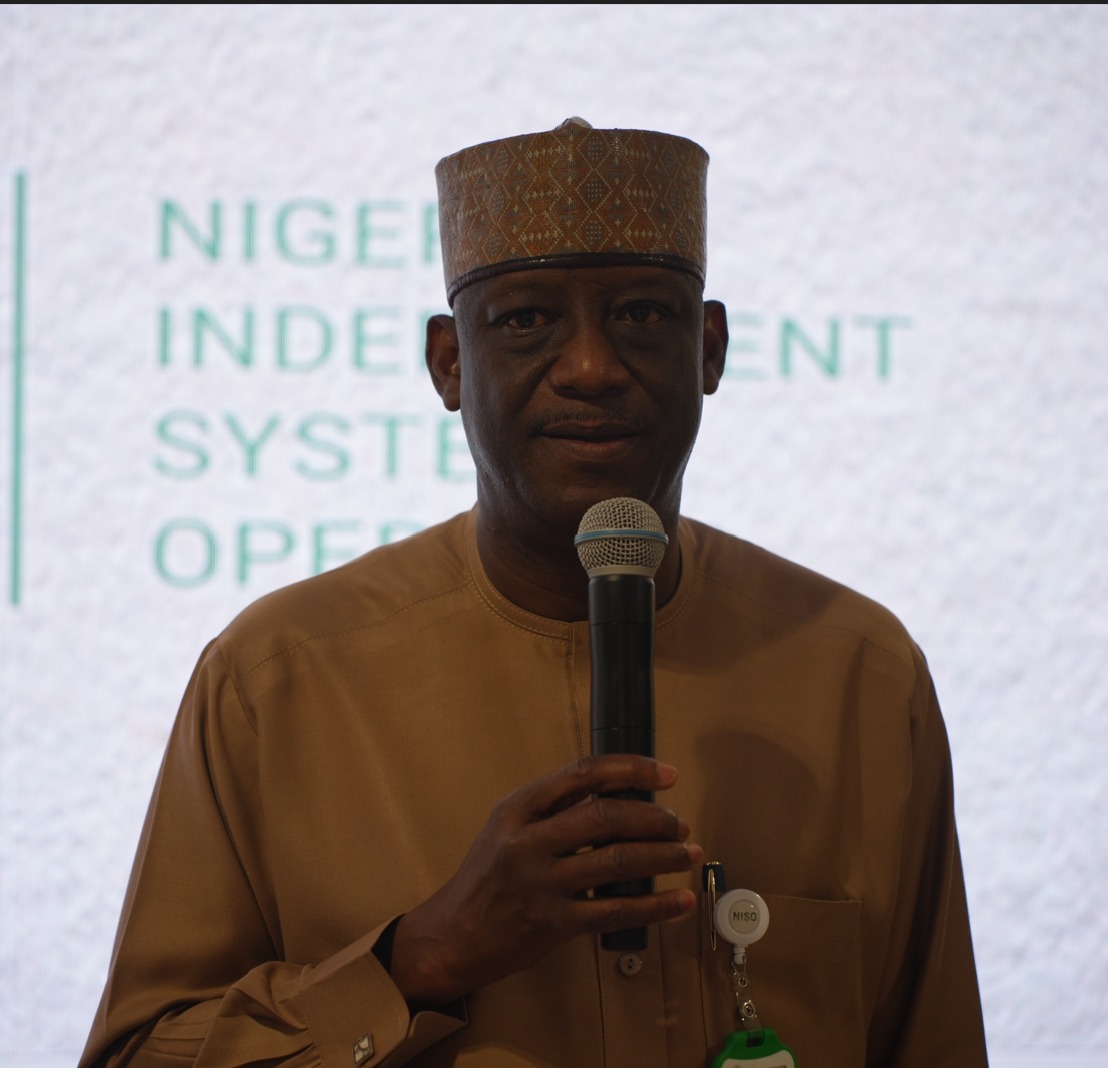
The Managing Director/Chief Executive Officer of NISO, Engr. Abdu Bello Mohammed disclosed this at a town hall meeting with staff, where he outlined the organisation’s achievements, ongoing reforms and management priorities.
Mohammed said NISO’s immediate focus was to improve the reliability and stability of the national power system, strengthen electricity-market liquidity and ensure that market participants complied with their financial and operational obligations.
A major component of the strategy, he said, was the deployment of modern technologies and infrastructure designed to give the system operator greater real-time visibility and control of the national grid.
According to him, NISO is constructing ultra-modern National Control Centres in Osogbo, Osun State, and Gwagwalada in the Federal Capital Territory, alongside the deployment of Supervisory Control and Data Acquisition (SCADA), Energy Management System (EMS), Automatic Generation Control (AGC), telemetry and Internet of Things (IoT)-based monitoring systems.
The investments, he said, would enhance real-time monitoring, operational efficiency and the ability of NISO to detect emerging threats to grid stability before they escalate.
Mohammed cited the detection of anomalies along the Shagamu–Ikorodu transmission corridor through IoT-based monitoring as an example of the benefits of improved system visibility, although investigations into the development remain ongoing.
He also described a successful synchronisation test involving Nigeria and 14 other African countries as a significant technical milestone capable of strengthening regional power-system coordination.
Market discipline
Beyond technical stability, the NISO chief placed strong emphasis on enforcing discipline in the electricity market, particularly amid continuing concerns over outstanding obligations by market participants.
He said the system operator had taken deliberate steps to improve the efficiency, stability and financial sustainability of the electricity market, including engagements and public hearings involving electricity distribution companies over outstanding market obligations.
Mohammed stressed that market participants must fulfil their obligations if the electricity industry is to achieve sustainable liquidity and operational stability.
He further warned that compliance with the Grid Code and Market Rules remained fundamental to the functioning of a healthy electricity market.
The development signals a stronger regulatory and compliance posture by NISO, with the system operator seeking to ensure that technical rules and financial obligations are not treated as optional requirements by participants.
NISO’s position is particularly significant as Nigeria continues to reform its electricity market and expand the role of state electricity markets and regulators. The organisation said it was engaging state electricity markets and regulators to improve coordination and support the emergence of more stable electricity markets.
Transmission expansion plan
Mohammed also disclosed that NISO had independently developed a Transmission Expansion Plan, which is currently being benchmarked against international standards.
The plan is expected to provide a structured basis for addressing transmission-system requirements and aligning Nigeria’s grid development with international best practices.
He said the various reforms were designed to position NISO as a data-driven and technology-enabled system operator and market administrator.
Staff welfare
While the technical and market reforms dominated the meeting, Mohammed also addressed internal concerns surrounding staff welfare and workplace relations.
He disclosed that management had approved a Conditions of Service, describing the document as an important institutional framework for staff matters.
According to him, staff welfare extends beyond salaries and allowances to encompass workplace conditions, professional development, career progression, recognition, fairness and effective communication.
He acknowledged concerns relating to workplace relationships, communication and management styles, urging management and employees to work together in building a healthier organisational culture.
He said employees should be able to raise concerns constructively and without intimidation.
The NISO management said the combined focus on grid reliability, market liquidity, regulatory compliance, infrastructure modernisation and staff welfare was intended to strengthen the organisation’s capacity to manage Nigeria’s increasingly complex electricity system.
The reforms, Mohammed said, ultimately seek to improve grid stability, strengthen market discipline and liquidity, and build a more technologically advanced and accountable electricity market administration.











