





Cardoso’s midas touch and Nigeria’s exchange-rate stability

Cardoso’s midas touch and Nigeria’s exchange-rate stability

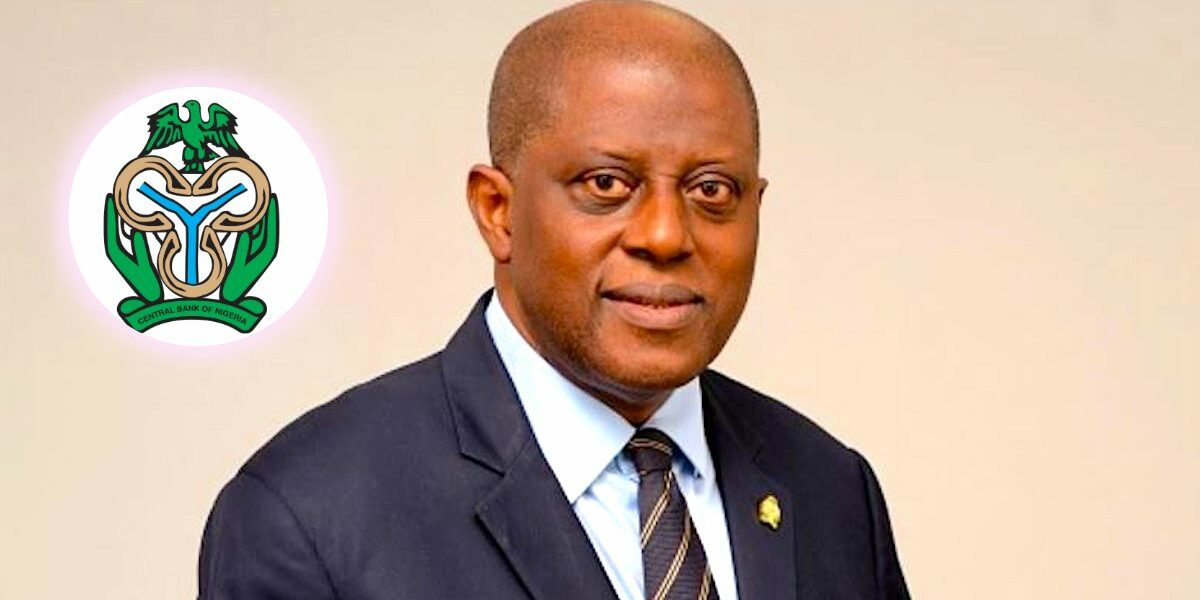
The appointment of Olayemi Cardoso as Governor of the Central Bank of Nigeria, CBN in October 2023 marked a significant change in Nigeria’s approach to foreign-exchange management, writes Onu Okorie: Excerpt.
The performance of the Nigerian naira has long been one of the most visible indicators of the country’s economic health and the effectiveness of monetary and foreign-exchange policy. Since the return to democratic government in 1999, successive governors of the Central Bank of Nigeria CBN have confronted the same fundamental problem: how to maintain exchange-rate stability in an economy heavily dependent on crude-oil exports, while ensuring adequate foreign-exchange liquidity for businesses, investors and households.
Rather than attempting to defend an administratively determined exchange rate through multiple intervention windows, as was the case with most of his predecessors the CBN, Governor Mr Olayeni Cardoso’s administration moved toward a more market-oriented system based on price discovery, transparency and greater flexibility.
An assessment of Cardoso’s achievements, therefore, should not be based simply on whether the naira has appreciated against the dollar. Indeed, the naira initially depreciated sharply after the reforms. However, a more meaningful assessment is whether the reforms have reduced distortions, narrowed opportunities for arbitrage, improved foreign-exchange liquidity, strengthened reserves and created a more credible and sustainable FX market. On these measures, there is considerable evidence of progress, although significant challenges remain.
It’s noteworthy to mention that the former CBN Governor, Mr. Godwin Emefiele bequeathed exchange-rate system that was increasingly fragmented on the current leadership of the apex Bank. Emefiele’s era at CBN operated different windows and imposed restrictions on access to official foreign exchange. The result was a growing gap between the official rate and the parallel-market rate.
By 2016, for example, the official/ interbank rate was around ₦305/$ while the parallel market rate reached about ₦418/$, a spread of approximately 37 percent. This divergence created opportunities for arbitrage, weakened confidence in the official exchange rate and made it difficult for businesses to determine the true cost of foreign currency.
The problem intensified between 2020 and 2023. The COVID-19 shock, declining oil production, foreign-investor outflows and persistent dollar demand placed additional pressure on the naira. The official rate moved from around ₦379/$ in 2020 to more than ₦460/$ by mid-2023, while the parallel market was considerably weaker.
Cardoso’s reform and the convergence of Naira
As Olayemi Cardoso inherited this complicated foreign-exchange environment, his central achievement has been the attempt to replace a fragmented and heavily administered FX market with a more transparent, market-driven system.
On 14 June 2023, shortly before Cardoso formally assumed office, the CBN introduced the willing-buyer, willing-seller model and began unifying the exchange-rate windows. Under the Cardoso administration, this policy was consolidated and developed into the Nigerian Foreign Exchange Market NFEM. The CBN describes the objective as eliminating market segmentation, improving price discovery and reducing arbitrage opportunities.
The immediate consequence was not an appreciation of the naira. Instead, the naira depreciated sharply because the official exchange rate had previously been maintained at a level that did not reflect underlying market conditions. The IMF estimated that the naira depreciated by roughly 100 percent, from ₦461/$ in May 2023 to about ₦900/$ by the end of 2023 following the unification of the FX windows.
This distinction is crucial. The initial depreciation should not automatically be interpreted as failure. In economic terms, the reform exposed the actual scarcity value of foreign exchange that had previously been hidden by administrative controls. In other words, the policy exchanged an artificially stable official rate for a more realistic market rate.
The real test of the policy is therefore convergence. Convergence means reducing the gap between official and parallel-market rates, allowing transactions to occur closer to a common market price and reducing incentives for rent-seeking and arbitrage.
The IMF observed that after the reforms, the parallel-market premium narrowed substantially, reaching approximately -5 percent by the end of February 2024. It also noted that the CBN had stopped rationing FX and abolished the previous list of import items excluded from official FX access. This represents a major structural improvement over the previous system.
Unification and greater transparency of the FX market
Perhaps Cardoso’s most important achievement is institutional rather than numerical. The CBN has moved away from maintaining several exchange-rate windows toward a unified market. The policy has made the exchange-rate formation process more transparent and reduced opportunities for individuals and businesses to obtain foreign currency at artificially different prices.
The CBN has also introduced the Electronic Foreign Exchange Matching System EFEMS and subsequently launched the Nigerian FX Code. The FX Code, formally launched in January 2025, establishes enforceable standards for ethical conduct, governance and transparency in the FX market.
These reforms matter because a functioning FX market requires confidence that prices are determined fairly and that market participants operate under clear rules.
Clearance of the foreign-exchange backlog
Another significant achievement has been the reduction of inherited FX obligations. The CBN reported clearing a verified backlog of about $7 billion. According to the Bank, this helped reduce volatility and restore confidence in the foreign-exchange market.
The importance of this achievement goes beyond the amount of dollars involved. A backlog of unpaid FX obligations creates uncertainty for banks, businesses and foreign investors. Clearing the obligations helps establish the credibility of the central bank as a counterparty.
Improvement in foreign reserves
The rebuilding of external reserves is another important indicator of progress. The IMF reported that Nigeria’s gross international reserves increased from approximately $40 billion at the end of 2024 to $46 billion at the end of 2025, while net international reserves increased from $23 billion to $35 billion.
The improvement continued into 2026. The IMF reported that gross reserves had reached approximately $49 billion on a 30-day moving-average basis by the end of March 2026, while the naira had appreciated by about 10 percent year-on-year against the dollar in March.
This is particularly significant because a credible currency requires adequate external buffers. Reserves enable the central bank to manage excessive volatility and meet legitimate external obligations without returning to the old system of widespread FX rationing.
Greater stability after the initial depreciation
The Cardoso era should be divided into two phases: the initial adjustment of 2023–24 and the subsequent stabilization. The first phase involved a dramatic depreciation as the exchange rate moved toward market-clearing levels. The second phase has seen considerably greater stability.
The IMF’s 2026 assessment concluded that reforms since 2023 had strengthened macroeconomic stability, rebuilt external buffers and improved FX-market functioning. It also classified Nigeria’s de facto exchange-rate regime as floating.
Moreover, on an end-of-year basis, the official exchange rate appreciated from about ₦1,535/$ at the end of 2024 to ₦1,435/$ at the end of 2025. This is important evidence that the reform process eventually moved beyond depreciation toward stabilization and partial recovery.
Nigeria remains highly dependent on oil and gas exports, while non-oil exports are still insufficient to provide a broad and dependable source of foreign currency. The IMF has also warned that Nigeria should reduce excessive dependence on short-term portfolio flows and continue improving the functioning of the FX market.
The CBN must therefore ensure that today’s relative stability is supported by stronger fundamentals: increased oil production, higher non-oil exports, greater foreign direct investment, improved productivity, fiscal discipline and stronger domestic production.
Conclusion
The history of the naira since 1999 demonstrates that exchange-rate management has always been a difficult task for the CBN. Under Joseph Sanusi, the currency depreciated moderately; under Soludo, it experienced a period of relative appreciation and stability; under Sanusi Lamido Sanusi, depreciation remained limited; while under Emefiele, the naira experienced its most dramatic decline and the FX market became increasingly fragmented.
Against this historical background, Governor Olayemi Cardoso’s major achievement should not be defined simply as “strengthening the naira.” His more important achievement has been reforming the mechanism through which the naira is priced.
The convergence of exchange rates, elimination of multiple FX windows, clearance of inherited FX obligations, improvement in reserves, introduction of EFEMS and the FX Code, and movement toward a floating and transparent FX regime represent substantial institutional reforms. The IMF’s assessments in 2025 and 2026 provide external support for the view that these reforms have improved macroeconomic resilience and FX-market functioning.
Therefore, Cardoso’s performance should be judged as a transition from artificial exchange-rate stability to market-based stability. The first stage was painful because it revealed the extent to which the naira had been overvalued under the previous system. The subsequent improvement in reserves and exchange-rate stability suggests that the reform is beginning to produce more sustainable results.
If the CBN can preserve transparency, maintain adequate reserves and allow genuine price discovery while avoiding excessive volatility, the Cardoso reforms could represent one of the most consequential changes in Nigeria’s foreign-exchange management since the return to democracy in 1999.











