





Umahi calls for proactive anti-corruption strategy, urges stronger institutional collaboration

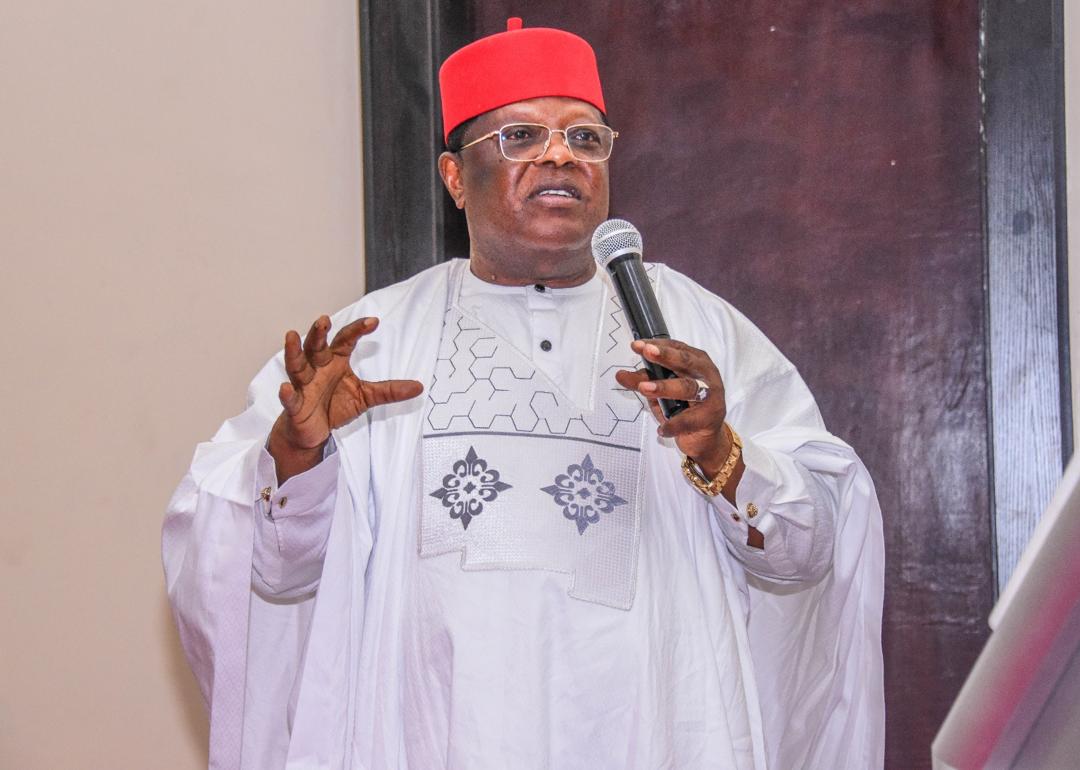
Umahi calls for proactive anti-corruption strategy, urges stronger institutional collaboration

By Onu Okorie
Minister of Works, Engr. David Umahi, has called for a shift toward proactive measures, stronger institutions, effective legislation, and responsible oversight in Nigeria’s fight against corruption, rather than a confrontational approach.
Speaking as keynote speaker at an interactive session themed “The Role of Parliamentarians in the Fight Against Corruption,” organized by the Independent Corrupt Practices and Other Related Offences Commission (ICPC) at its Abuja headquarters, Umahi called for closer cooperation between the Legislature, anti-corruption agencies, and public institutions to strengthen transparency, accountability, and good governance.
The Minister described corruption as one of the biggest barriers to national growth, warning that it erodes public confidence, weakens institutions, and siphons resources away from vital sectors such as infrastructure, health, education, agriculture, and social welfare.
He noted that lawmakers, through their roles in legislation, oversight, and representation, are uniquely positioned to drive transparency in public administration, and urged them to keep reviewing existing laws to close loopholes that enable corrupt practices.
On the handling of corruption petitions, Umahi advocated for a more evidence-based approach, saying anti-graft agencies should conduct preliminary verification before summoning officials for questioning — a move he said would guard against unwarranted reputational harm while keeping investigations fair and professional.
Drawing on his background as former Governor of Ebonyi State, Umahi pointed to prudent financial management, value engineering, due process, and transparent procurement as pillars of quality infrastructure delivery. He said the Federal Ministry of Works has embedded accountability measures such as rigorous project monitoring, closer ties with the National Assembly and anti-graft bodies, and ongoing training for engineers, adding that contracts are awarded strictly on competence and value for money under the Public Procurement Act.
He reaffirmed the government’s commitment to completing the Four Legacy Road Projects and other major road and bridge works nationwide under President Bola Tinubu’s Renewed Hope Agenda.
Also addressing the gathering, ICPC Chairman Dr. Musa Adamu Aliyu stressed the need for stronger legislative backing and institutional reform, while House Committee on Anti-Corruption Chairman Hon. Kayode Moshood Akiolu called for increased funding for anti-graft agencies. Representatives of the EFCC and the Bureau of Public Procurement also pledged deeper collaboration with Parliament to promote integrity in governance.
The session drew lawmakers, anti-corruption officials, policymakers, and development partners to discuss strategies for reinforcing institutional accountability nationwide.











