





The architect of fiscal reform: Taiwo Oyedele built for this moment

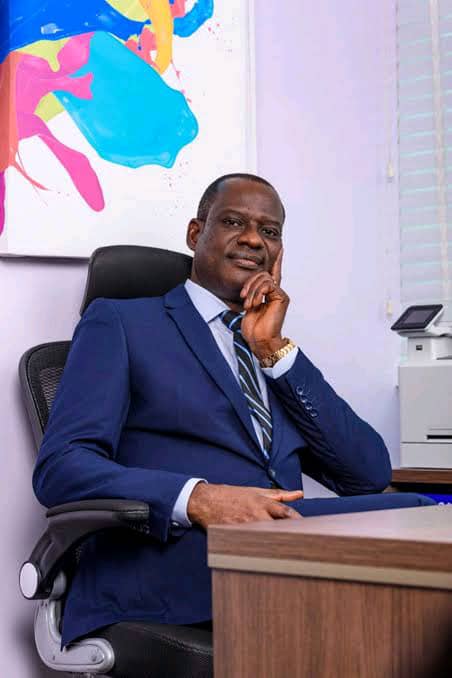
The architect of fiscal reform: Taiwo Oyedele built for this moment

From the classrooms of Yabatech to the boardrooms of PwC, from the Presidential committee room to the highest seat in Nigeria’s Ministry of Finance, the ascent of Taiwo Oyedele is not a story of luck. It is the story of a man who spent decades earning the position the nation now trusts him to occupy, writes Onu Okorie
When President Bola Tinubu signed the instrument appointing Taiwo Oyedele as Nigeria’s Minister of Finance and Coordinating Minister of the Economy on April 21, 2026, the announcement landed not with the shock of the unfamiliar, but with the quiet recognition of the inevitable. Here, at last, was the man who had for years been drawing the blueprint and handed the keys to the building.
Born on June 18, 1975, in Ikare-Akoko, Ondo State, Oyedele’s beginnings were the stuff of Nigerian middle-class aspiration, not privilege, but possibility. He would go on to obtain a Higher National Diploma in Accountancy and Finance from Yaba College of Technology, before pursuing a BSc in Applied Accounting at Oxford Brookes University. His intellectual formation would later be deepened at three of the world’s most consequential institutions: the London School of Economics, Yale University, and Harvard Kennedy School. These were not merely credentials. They were the furnace in which a distinctive economic philosophy was forged.
For more than a decade, Oyedele served as Fiscal Policy and Africa Tax Leader at PricewaterhouseCoopers (PwC), where he advised national governments, regional bodies, multilateral institutions, and multinational corporations on tax systems, revenue mobilisation, and economic transformation. He was, in the parlance of practitioners, an operator; a man who did not merely theorise about fiscal architecture but built it, brick by brick, in the real and often ungovernable terrain of African economies.
To understand Oyedele’s economic management philosophy, one must first understand how he thinks about taxation, not as a mechanical extraction of revenue, but as the fundamental expression of the relationship between citizens and the state. In May 2026, addressing the 28th Annual Tax Conference of the Chartered Institute of Taxation of Nigeria CITN, the newly minted minister declared that his vision was to build “a tax system that is globally relevant, economically competitive, socially equitable, and fiscally sustainable.” The phrase was not rhetorical flourish. It was a precise encapsulation of a coherent worldview.
At the core of Oyedele’s philosophy lies a conviction that a good tax system must simultaneously serve four masters: it must raise revenue efficiently; support economic growth; protect the most vulnerable members of society; and strengthen the bond of trust between government and the governed. This four-pillar framework guided every proposal his Presidential Fiscal Policy and Tax Reforms Committee produced. It is the lens through which he views the role of the state in economic life, active, purposeful, and responsive to the human consequences of policy.
Oyedele’s appointment as Chairman of the Presidential Committee on Fiscal Policy and Tax Reforms in 2023 was the pivotal chapter in his transition from expert adviser to national reformer. The committee’s work was monumental: it produced four landmark bills: the Nigeria Tax Bill, the Nigeria Tax Administration Bill, the Nigeria Revenue Service, Establishment Bill, and the Joint Revenue Board, Establishment Bill. All four were transmitted to the National Assembly in October 2024, passed into law, signed by President Tinubu, and scheduled for full implementation from January 2026. Together, they represent the most comprehensive overhaul of Nigeria’s fiscal architecture in a generation.
The reforms embodied Oyedele’s philosophy with precision. The fragmented landscape of Nigerian tax authorities, long criticised for inefficiency, duplication, and predatory multiple taxation, was consolidated into a single Nigeria Revenue Service, replacing the Federal Inland Revenue Service and several other bodies. The bottom 98 percent of income earners were relieved of tax burdens entirely or substantially. Small businesses were granted zero corporate income tax and VAT exemption. VAT was removed from essential goods and services such as food, education, and healthcare, directly targeting the cost-of-living pressures bearing down on ordinary Nigerians. Company income tax rates were put on a gradual reduction path, from 30 percent to 27.5 percent in 2025, and toward 25 percent thereafter, signalling to global investors that Nigeria was serious about becoming a competitive destination for capital.
Critically, Oyedele set an ambitious target: to raise Nigeria’s tax-to-GDP ratio to at least 18 percent within a defined timeframe, not by squeezing more from those already in the system, but by dramatically expanding the base of compliance, eliminating leakages, and deploying technology to close the gap between what is owed and what is collected.
The elevation of Taiwo Oyedele from committee chairman to cabinet minister to coordinating minister of the economy follows the logical grammar of his career. It was not a leap; it was a culmination. His ascent signals, as commentators have noted, a deeper shift in Nigeria’s governance instinct: a growing recognition that the problems besetting Africa’s largest economy are fundamentally technical, requiring technocrats with the depth to diagnose them and the courage to prescribe the cure.
Oyedele did not enter government through the revolving door of political patronage. He left a prestigious partnership at one of the world’s most respected consulting firms, voluntarily and deliberately to answer the call of public service. That choice alone speaks to a character formed not by ambition for position, but by conviction about purpose. As one observer put it at the time of his appointment: “The change we seek as a nation will come from those willing to step forward and answer the call to serve. Taiwo chose action over commentary.”
Upon assuming the full portfolio on April 23, 2026, following the handover ceremony with his predecessor Wale Edun, Oyedele was characteristically direct about his priorities. He described Nigeria as being at a “critical juncture” a country that had taken important steps to stabilise its economy, but which needed now to consolidate those gains and translate abstract reforms into the lived experience of ordinary citizens. Stability without prosperity, he implied, is an incomplete achievement.
The minister placed particular emphasis on fiscal coordination, the alignment of federal, state, and institutional actors to maximise the coherence and impact of economic policy nationwide. He equally stressed the indispensability of Public-Private Partnerships, arguing that innovation, investment, and efficiency cannot be summoned from government alone. And in one of his first substantive acts in office, he convened a meeting with contractors under the All-Indigenous Contractors Association of Nigeria to address outstanding payments, demonstrating a pragmatic attentiveness to the ground-level machinery of government expenditure that distinguishes the practitioner from the pure theorist.
His stated goal of mobilising domestic revenue stands as both an economic imperative and a philosophical statement. Nigeria, like much of sub-Saharan Africa, has long depended on extractive commodities, principally oil to fund the functions of government. Oyedele understands that this dependence is not merely a fiscal vulnerability; it is a structural deformation that insulates government from accountability to its citizens. When revenue flows from oil, governments need not reckon with taxpayers. When revenue flows from citizens, governments are compelled to serve them. Domestic revenue mobilisation, in Oyedele’s framework, is thus not a bureaucratic objective rather it is a democratic one.
Nigeria has had many Finance Ministers. Some were brilliant economists. Some were accomplished bankers. Some were trusted loyalists. Few have arrived at the position carrying, as Taiwo Oyedele does, an institutional memory of the reform they are now called to execute, having personally designed the architecture, shepherded the legislation through a contentious national assembly, and now been entrusted with its implementation.
His academic training at the LSE, Yale, and Harvard ensures he understands Nigeria’s challenges through the lens of global comparative economics. His professional formation at PwC, advising governments across Africa, ensures he understands those challenges as they manifest on the ground. His three years at the helm of the tax reform committee ensures he has built the relationships, the consensus, and the political capital needed to execute. And his personal character, the willingness to abandon lucrative private sector comfort for the uncertainty of public service and ensures that his motivations are not easily corrupted.
The test of any minister lies not in their credentials but in the condition of their country’s people. Nigeria’s millions who struggle daily against inflation, unemployment, and the indignity of poverty are not interested in elegant theory. They need the reforms to deliver jobs to multiply, goods to become affordable, government services to become reliable. Taiwo Oyedele knows this. He has said as much, repeatedly, in the language of a man who takes accountability seriously.
If experience is the qualification for leadership, if intellectual preparation is the foundation for effective governance, and if integrity is the currency of public trust, then Taiwo Oyedele does not merely deserve the position he occupies. He was built for it.











