





Prof Uwaleke 3rd Capital Market Colloquium: Nigerian Exchange Limited Capitalisation estimated at ₦97.9trin, says SEC DG Agama

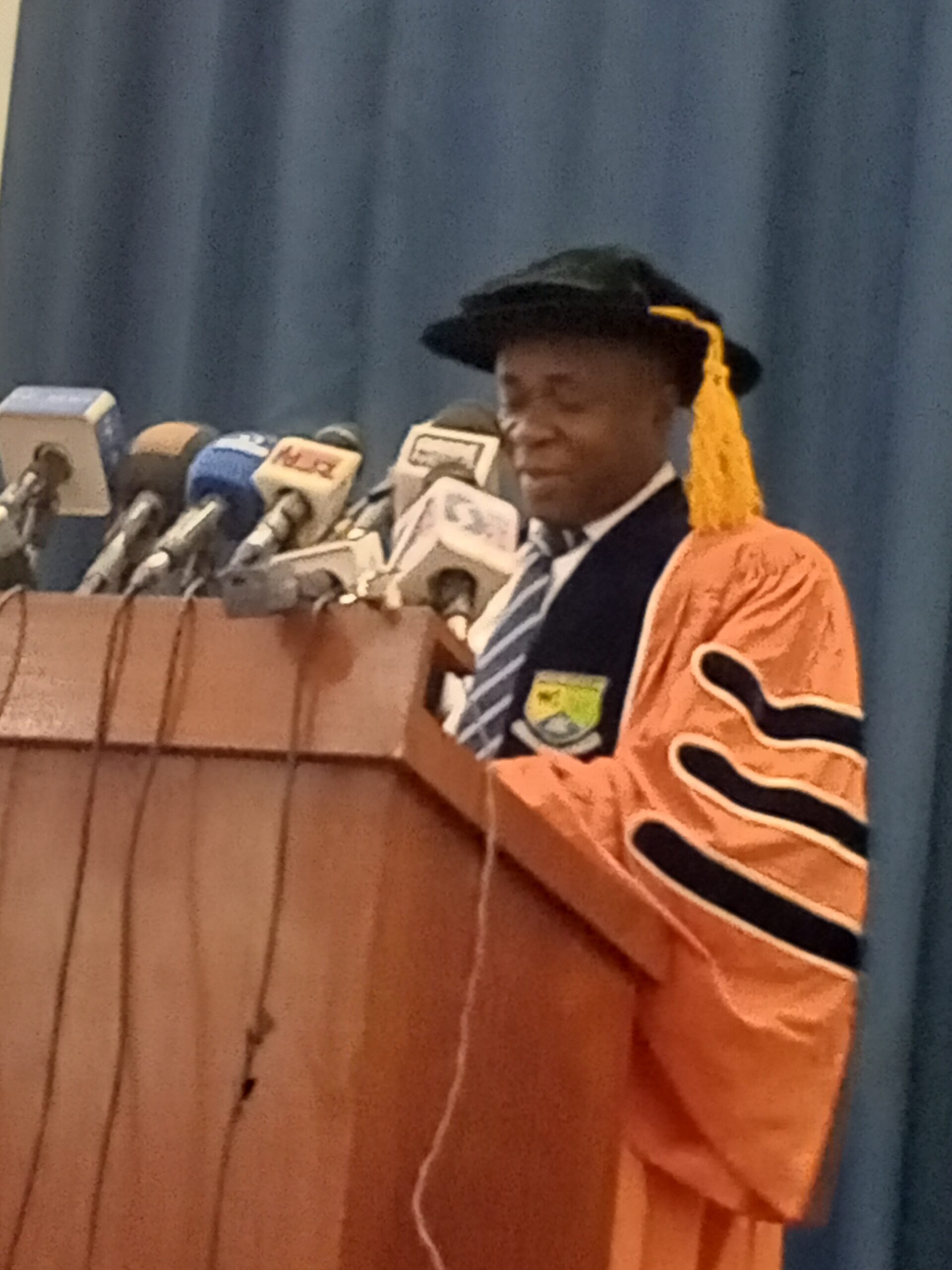
Prof Uwaleke 3rd Capital Market Colloquium: Nigerian Exchange Limited Capitalisation estimated at ₦97.9trin, says SEC DG Agama

By Onu Okorie
The Director-General of the Securities and Exchange Commission SEC, Dr. Emomotimi Agama, has disclosed that as at late 2025, the total market capitalisation of listed equities on the Nigerian Exchange Limited was estimated at about ₦97.9 trillion, reflecting strong equity price appreciation and renewed investor confidence in domestic securities.
He stated this yesterday during the opening remark at the 3rd Professor Uche Uwaleke Capital Market Colloquium in Abuja. According to him, “Nigeria’s capital market continues to serve as a major financial gateway in West Africa, supporting corporate financing, sovereign borrowing, and investment mobilisation.”
“Nigeria’s capital market has continued to play a strategic role in mobilising long-term finance for economic growth, fiscal sustainability, and infrastructure investment. Recent data show steady expansion in market size, improved regulatory reforms, and growing investor participation.”
He explained that in dollar terms, Nigeria’s total market capitalisation was estimated at approximately $76.6 billion in January 2026, up from about $69.2 billion in December 2025, indicating positive capital inflows and valuation recovery following macroeconomic adjustments.
Market performance indicators also show strong bullish momentum. By early 2026, the Nigerian All-Share Index had risen to well above 180,000 points, confirming continued growth in equity valuations and improved domestic liquidity conditions.
In addition to market expansion, Nigeria’s securities regulatory framework has undergone important reforms. In 2026, the Securities and Exchange Commission introduced significantly higher capital requirements across brokerage firms, asset managers, and digital-asset platforms in order to strengthen market resilience, improve investor protection, and enhance institutional capacity.
These reforms are expected to deepen the capital market, encourage consolidation among operators, and improve governance standards in line with global best practices. The measures also signal Nigeria’s commitment to building a more transparent and robust financial system capable of supporting Africa-wide economic integration.
Broader macro-financial indicators further reinforce the positive outlook. Nigeria’s external reserves and fiscal planning reforms between 2024 and 2026 have strengthened investor sentiment and macroeconomic stability, both of which are critical for sustained capital-market development.
These developments collectively position Nigeria’s capital market as one of the leading financial platforms in Africa for mobilising savings, financing infrastructure, supporting private-sector growth, and facilitating cross-border investment within the framework of the African Continental Free Trade Area.
Treasury reforms implemented over the past decade have strengthened fiscal transparency and public financial management, improving investor confidence in sovereign financial reporting.
The Treasury Single Account has consolidated government cash resources, enhancing liquidity management and reducing borrowing costs.
GIFMIS implementation has strengthened expenditure tracking and reporting efficiency across ministries, departments, and agencies.
IPSAS adoption has improved the credibility and comparability of public financial statements, aligning Nigeria’s reporting with global standards.
“These reforms collectively strengthen Nigeria’s ability to participate in regional financial integration and support continental capital-market development.” He stated.
Dr Agama who called for stronger integration of the Continent’s market remarked that the African capital markets have expanded steadily but remain shallow relative to global peers.
According to him, “by the end of 2024, African stock exchanges hosted approximately 1,141 listed companies, representing only about 2.6% of global listings, underscoring the continent’s limited market depth.
“Total market capitalisation across African exchanges is estimated at about USD 561 billion, reflecting both growth potential and structural financing gaps.
“More broadly, African bourses collectively account for roughly 2% of global market value, demonstrating that despite progress, the continent remains under-represented in global capital flows.”
He further said that the African Securities Exchanges Association (ASEA) continues to play a vital role in strengthening collaboration among exchanges and promoting cross-border trading initiatives.
“One notable reform initiative is the African Exchanges Linkage Project, which seeks to enable cross-border securities trading and enhance liquidity across participating markets.
“Importantly, Africa’s largest exchange, the Johannesburg Stock Exchange, alone accounts for a dominant share of continental market value, illustrating the concentration of capital in only a few financial hubs.”
Speaking on, he said that despite growing financial institutions, Africa continues to face structural savings and liquidity constraints.
And the continent’s savings rate is estimated at about 18%, compared with a global average of 36%, limiting the pool of domestic investment capital available for infrastructure financing.
_Nevertheless, African sovereign funds, pension funds, and central banks collectively manage close to USD 1 trillion in assets, demonstrating that domestic capital exists but requires stronger intermediation channels.” He said.
Dr Agama said that Trade integration under AfCFTA is gradually improving regional trade structures.
But the Intra-African trade still accounts for a relatively small share of total trade compared to Europe or Asia, yet AfCFTA is projected to boost trade volumes through tariff reductions, logistics reforms, and digital trade facilitation.
He also asserted that the long-term success of AfCFTA depends not only on tariff reductions but on the development of integrated capital markets capable of financing supply chains, industrial parks, logistics corridors, and cross-border infrastructure.
The SEC boss reiterated that Africa’s infrastructure financing needs run into hundreds of billions of dollars annually, yet public budgets alone cannot bridge this gap.
“Capital markets must therefore become the primary platform for mobilising long-term infrastructure finance through bonds, infrastructure funds, and public-private partnerships.” He said.
While stressing that Innovation is is currently redefining how markets operate, he said that digital trading platforms, fintech integration, blockchain settlement systems, and cross-border payment frameworks are reducing transaction costs and expanding market access.
“For Africa, digital finance offers a historic opportunity to leapfrog legacy systems and create fully integrated financial ecosystems; To future-proof Africa’s economic integration, three priorities must guide policy:”
“First, deepen capital markets through improved regulation, investor protection, and cross-border listing frameworks; second, strengthen public financial management systems to sustain investor confidence and sovereign credit credibility; Third, expand infrastructure financing instruments to mobilise domestic institutional investors.” He stated.











