





Nigeria accounts for 35% of illicit flows from Africa – NEITI

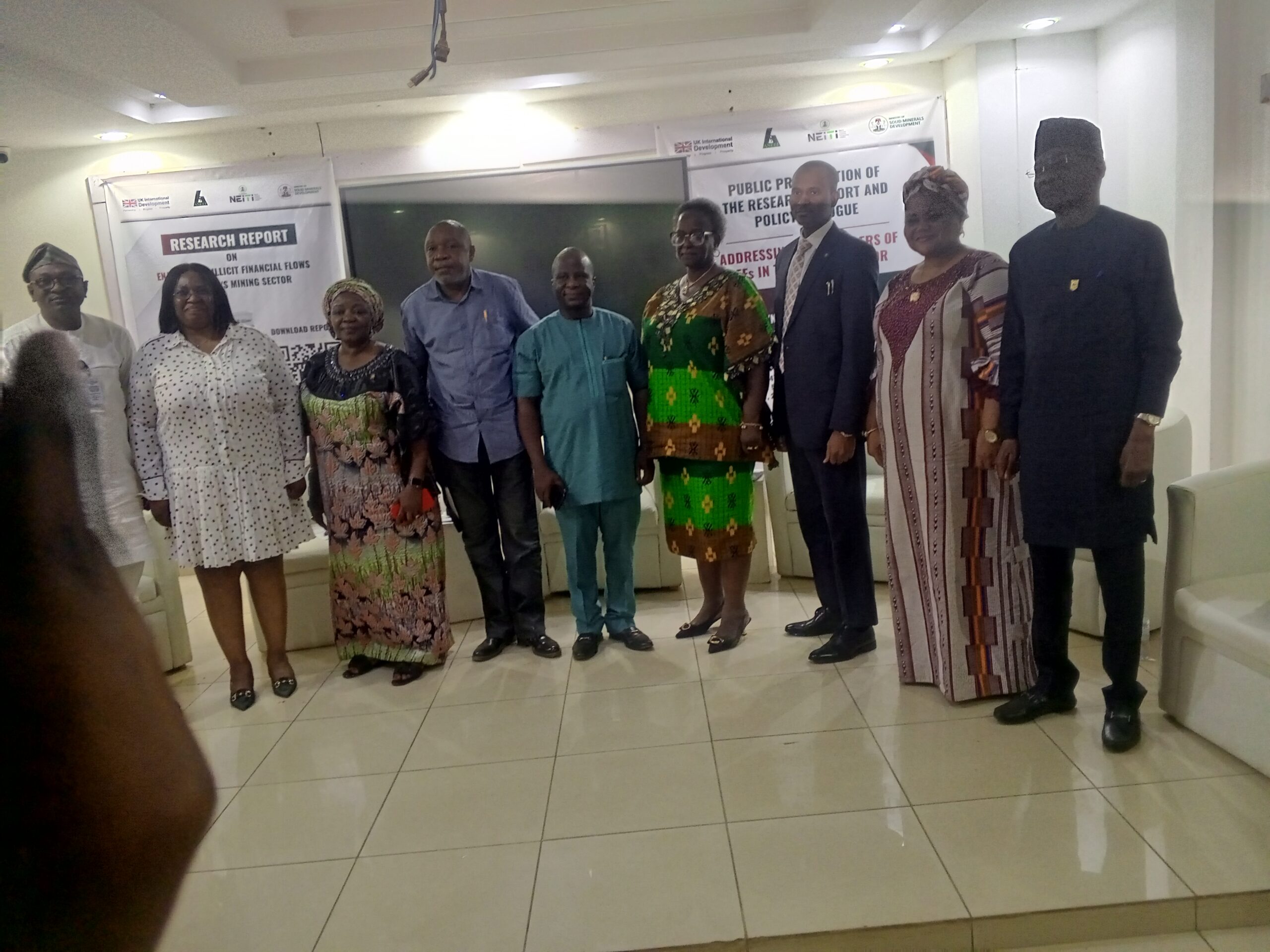
….assures of institutional support, partnership for transparency, accountability, data-driven reforms

Nigeria accounts for 35% of illicit flows from Africa – NEITI
….assures of institutional support, partnership for transparency, accountability, data-driven reforms
By Onu Okorie
The Executive Secretary of the Nigeria Extractive Industry Transparency Initiative NEITI Musa Sarkin Adar has disclosed that the African Union estimates that Nigeria accounts for thirty-five percent of all illicit flows from Africa.
The NEITI Boss stated this at the public presentation of research report and policy dialogue on addressing illicit financial flow IFFs in Nigeria’s solid minerals sector held in Abuja yesterday
He added that ninety-three percent of these illicit flows occur through the extractive industry.
According to him, “to address this problem, we must continue to generate reliable data for policymakers.
This is why I commend your effort and commitment in this project.”
“I want to reassure you of NEITI’s institutional support and partnership to ensure that transparency, accountability, and data-driven reforms remain at the heart of Nigeria’s solid minerals development agenda.”
Sarkin Adar explained that the research aims to present key findings and policy recommendations on illicit financial flows in Nigeria’s solid minerals sector, provide a national platform for multi-stakeholder dialogue, identify critical policy, legal, and institutional reforms to strengthen transparency and accountability, and promote synergy for coordinated anti-Illicit Financial Flows actions.
“These objectives align closely with NEITI’s mandate to promote transparency and accountability in the management of Nigeria’s extractive resources.” He said.
The Executive Secretary also said that the report also underscores the limited integration of solid minerals data across government institutions, including mining regulators, revenue authorities, and border agencies.
“This weakness reduces the effectiveness of monitoring and enforcement and weakens the state’s ability to detect and prevent illicit financial practices.
“As we engage with the findings and recommendations of this study, NEITI looks forward to working with the African Network to ensure that the outcomes of this dialogue translate into concrete reforms.
“Our shared goal is to build a solid minerals sector that is transparent, well-governed, and capable of contributing meaningfully to Nigeria’s economic development.”
He said that the relevance of the research is further reinforced by Nigeria’s commitment to implementing the 2023 EITI Standard, which places stronger emphasis on addressing corruption risks and illicit financial flows in extractive industries.
The Standard calls for enhanced transparency across the entire extractive value chain, including license allocation, beneficial ownership disclosure, production and export data, revenue collection, and inter-agency data sharing.In particular, the 2023 EITI Standard recognises that transparency is a critical tool for exposing the structural weaknesses and opacity that enable illicit financial flows.
It encourages countries to use EITI disclosures to identify risks, inform reforms, and strengthen collaboration among oversight institutions. He said that the NEITI has continued to align its reporting and policy engagement with these requirements, especially in the solid minerals sector, where governance gaps remain pronounced.











