





Nigeria signed 28 new oil field development plan in 2025 alone, says Lokpobiri

Nigeria signed 28 new oil field development plan in 2025 alone, says Lokpobiri

By Onu Okorie
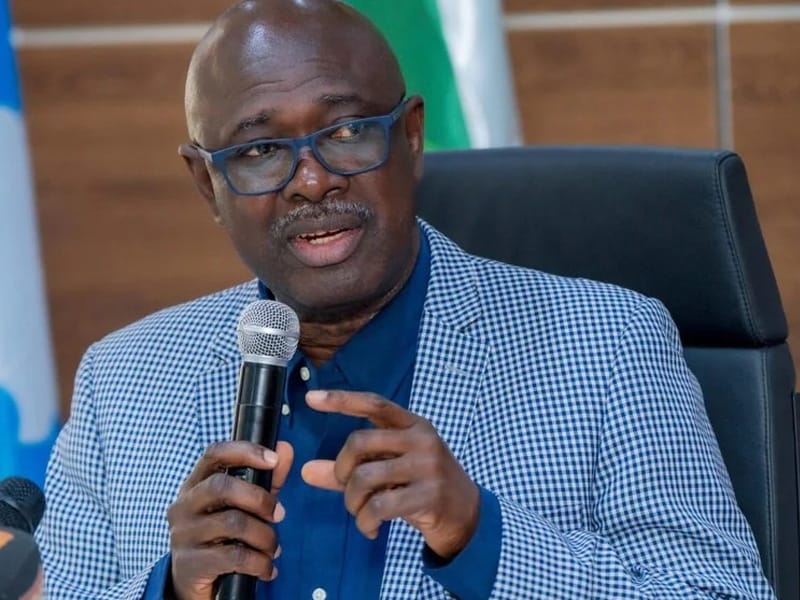
The Nigeria’s Minister of state for petroleum resources oil, Senator Heineken Lokpobiri has disclosed that in 2025 alone, 28 new field development plans worth $18.2 billion were signed, with potentials of 1.4 billion barrels of oil daily.
He made this known in Abuja yesterday during the ongoing Nigeria International Energy Summit NIES.
He further revealed that between 2024 and 2025, of the seven major FIDs announced across Africa, four were in Nigeria. “This did not happen by accident, it is the result of steady work, policy clarity, and better governance.”
“These are not rhetorics but proof that Nigeria is once again a magnet for serious business. The investment climate in Nigeria allows for free movement of capital. In line with Global best practice companies can invest and divest at will.”
“We recently enabled International Oil Companies IOCs to transfer onshore and shallow water assets to capable Nigerian companies. From Shell to Renaissance, ExxonMobil to Seplat, Eni to Oando.”
“These are not just transfers of assets, they are transfers of confidence, capability, and ownership which has resulted in additional 200,000 barrels per day. It will interest you to know that these divestments were stalled for several years, but with the leadership of President Bola Ahmed Tinubu, we were able to advance them and concluded them in record time leading to the gains made by their new operators for the benefits of all.”
“These are concrete, measurable results that send a strong signal to investors. Nigeria is offering certainty, policy transparency, incentives, and large-scale opportunities. We are also strengthening refining and downstream capacity.”
The Minister also explained that the federal government under the leadership of President Bola Ahmed Tinubu took a major decision to remove subsidy, stabilized and improved product availability. “Let me use this opportunity to applaud companies like Dangote, BUA, and other local companies who are investing in midstream and downstream capacity.” He argued.
“They are showing the strength of local industry and confidence in Nigeria’s future. We have also liberalized licensing in the industry. Before now, approvals depend on knowing the Minister. Under my watch, that does not happen. Compliance and transparency are the criteria.”
“And because of that change, license applications are happening regularly and fairly. We also launched the West African Reference Market, our equivalent of the European reference market. The vision is clear: for Nigeria to become the refining hub in the Gulf of Guinea and across Africa.”
“Recognizing that the FID is just a start for project, we noticed a gap in the service sector especially with regards to the deep offshore. A misinterpretation of the NOGIC Act gave rise to briefcase EPC companies forcing major EPCs out of Nigeria and denying qualified indigenous companies the opportunity to not only play in the sector but also grow.”
“The implications of this meant we continued to have delays to projects kick off and non-competitiveness in the EPC space, which also contributes to high cost of production. We didn’t fold our hands, we leveraged the Presidential order to work with service providers to return to the country, we are also creating an environment where they can exist side by side with serious and competent Nigerian players.”
“We are investing deliberately in our people. Through the NCDMB’s 1% fund, aligning training with the real skills the industry needs now and in the future. The Petroleum Technology Development Fund PTDF is also going beyond scholarships to build lasting capacity, with world-class university and training centers in Kaduna and Port Harcourt, respectively.”
“The goal is simple: equip Nigerians with the right skills, keep that talent at home, and deploy it to build the industry today and for the long term. “











