

SEC, NUC, Academic community collaboration will build virile capital market in Nigeria – Prof Uwaleke



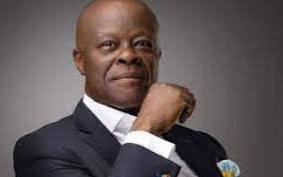
Prof. Uche Joe Uwaleke is a distinguished Financial Economist and Professor of Capital Market. He is a former Head of Accounting department, the Pioneer Director of the Institute of Capital Market Studies and the Pioneer Head of the Department of Securities and Investment Management at Nasarawa State University, Keffi.
He is the Pioneer President of the Capital Market Academics of Nigeria and was a former Commissioner for Finance, Imo State. He also held the positions of Chief Economist and Director of Research at the Securities and Exchange Commission SEC Nigeria.
Prof. Uwaleke has contributed significantly to policy and regulatory development, having served as a member of the Nigerian Stock Exchange Advisory Committee and the Governing Council of the Chartered Institute of Bankers of Nigeria. He currently chairs the SEC Committee of Experts on Capital Market Studies in Nigerian Universities and is also a member of the Daily Trust Board of Economists.
He is the Chairman, Board of Directors, Nasarawa State University Microfinance Bank, and Nasarawa State University Consults Ltd. He also serves as an Independent Non-Executive Director at Cowry Treasurers Ltd.
At the national level, he is a member of the Presidential Committee on Fiscal Policy and Tax Reforms and a member of the Governing Council of the Nigerian Economic Society.

Prof. Uwaleke is a Fellow of several prestigious professional bodies, including the Capital Market Academics of Nigeria FCMA, the Chartered Institute of Stockbrokers FCS, the Institute of Capital Market Registrars FCMR, the Institute of Chartered Accountants of Nigeria FCA, the Chartered Institute of Bankers of Nigeria FCIB, and the Chartered Institute of Taxation of Nigeria FCTI. He is the author of “10Ps of the Nigerian Capital Market” and “Essentials of Non-Interest Capital Market.”
In this interview with the Managing Editor Presidentstrides International Magazine, Prof Uwaleke discussed extensively the importance of capital market in emerging economy and introduction of a basic course in Capital Market Studies across all Nigerian universities. Excerpt.
Give overview of state of capital market in Nigeria
The Nigerian capital market today is in a phase of steady recovery and transformation. After years of volatility and structural challenges, we are beginning to see greater depth, improved regulation, and a renewed sense of investor confidence. Equities market capitalization is at about N98 trillion while bonds capitalization on the NGX is over N50 trillion. Total market cap to GDP has improved to nearly 40%. The market has benefited from market infrastructure upgrades and enhanced regulation. We are also witnessing a growing participation by institutional investors, particularly pension funds, which now play a stabilizing role.That said, the market is still not as deep or broad as it should be, given the size of our economy. Many companies still rely heavily on bank financing rather than raising funds through the market, and the retail investor base remains thin. Nonetheless, the outlook is positive. The foundation being laid through regulatory reforms, technological advancement, and financial literacy initiatives will position the Nigerian capital market as a stronger and more credible platform for capital formation and economic growth.

Ponzi scheme has been a recurrent decimal in the capital market, what actually has made it look as if it cannot be stopped
It’s unfortunate that Ponzi schemes keep resurfacing in Nigeria, but their persistence has deep roots in both economic and behavioural factors. The combination of limited financial literacy, high unemployment, and a general appetite for quick returns makes many people vulnerable to fraudulent investment promises. The digital age has also made it easier for these schemes to spread rapidly through social media before regulators can intervene. Another factor is that enforcement can sometimes be slow due to legal and jurisdictional bottlenecks. Even when regulators like the SEC issue public warnings, some promoters simply rebrand or relocate their operations online. The solution lies not just in enforcement but also in continuous education. When people understand how legitimate capital markets work — that real investment returns are earned over time and are tied to underlying assets — they become less likely to fall for scams. So, it’s a dual effort: regulators must remain vigilant and proactive, but citizens, too, must be better informed. The new push for financial literacy, including plans to introduce capital market studies in tertiary institutions, is a welcome step in that direction.
Why doesn’t the Nigerian capital market play a larger role in long-term infrastructure financing (as it does in other countries)?
That’s a very important question because it strikes at the heart of what our capital market should be doing — providing long-term financing for national development. In Nigeria, several factors have constrained the market’s ability to play that role effectively. One is the relatively shallow base of long-term investors. Our pension funds and insurance companies, though growing, still operate under conservative investment guidelines that limit their exposure to infrastructure projects. Another issue is the lack of well-structured, bankable projects. Many infrastructure proposals are not packaged in a way that meets investors’ risk and return expectations. Weak project governance, policy inconsistency, and currency volatility also make it difficult to attract long-term capital. However, there are positive developments. We’ve seen the emergence of infrastructure bonds such as Sukuk, green bonds, and specialised funds supported by the SEC and other stakeholders. If we continue along this path — strengthening the bond market, ensuring macroeconomic stability, and developing credible project pipelines — the capital market can gradually become a key driver of infrastructure financing in Nigeria, just as it is in more developed economies.
Did the 2008 global downturn permanently damage Nigeria’s capital market — has the market “fully recovered”?
The 2008 global financial crisis was a major turning point for Nigeria’s capital market. It exposed weaknesses in market structure, regulation, and investor behaviour. While the market has recovered significantly in terms of indices and overall capitalisation, I would say that the effects linger in more subtle ways. Investor confidence, particularly among retail participants, took a deep hit, and rebuilding that trust has been a gradual process. In fairness, the post-crisis years brought meaningful reforms. Regulators strengthened governance frameworks, introduced tighter disclosure requirements, and implemented technology-driven systems to enhance transparency. These measures have helped the market regain stability and credibility. However, a “full recovery” isn’t just about market performance; it’s about depth, diversity, and resilience. Until the market becomes a consistent source of long-term capital for businesses and infrastructure, and until retail participation grows sustainably, we can’t quite say the effects of 2008 are entirely behind us. The direction is right — but there’s still work to do.

New curriculum for the teaching of the capital market — how will it help tertiary students?
Thank you for this question. The recent initiative by the Securities and Exchange Commission (SEC) to set up a Committee of Experts chaired by me, is a very welcome development. The Committee’s mandate is to review the existing Securities and Investment Management curriculum developed by the National Universities Commission (NUC) and to make recommendations on how to enrich it with contemporary issues such as Non interest finance, sustainable finance, and digital assets. Beyond that, it is also tasked with advising the NUC on the introduction of a basic course in Capital Market Studies across all Nigerian universities. This effort is timely and strategic. It will ensure that capital market education in our universities is industry-relevant, practical, and globally benchmarked. Students will be better exposed to the workings of the market — from securities issuance and trading, to modern regulation, ethics, and financial innovation. Such exposure not only enhances employability in financial institutions but also raises the level of financial literacy among young Nigerians. By introducing a basic capital market course, even non-finance students can gain a working understanding of how savings are mobilised and investments channelled for national development. This will, in the long run, produce a generation of informed investors, professionals, and policymakers, while also reducing the public’s vulnerability to fraudulent investment schemes. Ultimately, this collaboration between the SEC, the NUC, and the academic community is about building a strong human capital foundation for the growth and stability of Nigeria’s capital market.
It is a forward-looking reform that links education directly with market development.
What’s changed between “today’s” capital market and “yesterday”?
A great deal has changed. The Nigerian capital market of today is much more dynamic, transparent, and technology-driven than it was a decade or two ago. In the past, trading was largely manual, information moved slowly, and access was limited to a small circle of investors. Today, with full dematerialisation of securities and electronic trading platforms, transactions happen faster. That alone has transformed market efficiency and investor confidence. Regulation has also become more sophisticated. The Securities and Exchange Commission and other regulators have strengthened disclosure standards, improved corporate governance, and enhanced enforcement. These changes have made the market more credible and resilient, especially after the lessons of the 2008 global financial crisis.We’ve also seen a shift in the nature of products and participants. The market is no longer about equities and conventional bonds. We now have Sukuk, Eurobonds, exchange-traded funds, and other innovative instruments. Market infrastructure has equally expanded to include other Exchanges beyond the NGX such as the FMDO, NASD, AFEX, NCX, and the LCFE Institutional investors — particularly pension funds — have become dominant players, providing depth and stability to the market.Perhaps the biggest change is driven by technology. The rise of fintech platforms and online brokerage services has opened up participation to a younger, tech-savvy generation. With just a smartphone, anyone can now monitor portfolios, and access market data. That level of inclusiveness was unthinkable twenty years ago.In short, today’s capital market is faster, broader, and more inclusive. It’s a more credible platform for investment and capital formation. Of course, challenges remain — we still need to deepen liquidity, expand financial literacy, and attract more long-term funds — but the progress made so far clearly shows that Nigeria’s capital market has entered a new and more promising era.
Current challenges and proposed solutions.
The Nigerian capital market, despite the progress it has made, still faces a number of pressing challenges. One major issue is the shallow nature of the market, especially in terms of depth and liquidity. We still have a situation where only a limited number of large companies are listed, and the participation of retail investors remains relatively low. This narrow base reduces market vibrancy and limits the flow of long-term funds needed to drive economic growth. To address this, there’s a need to make listing more attractive by reducing associated costs, simplifying requirements for small and medium enterprises, and creating incentives for companies to come to the market.There’s also the issue of inadequate long-term capital for infrastructure financing. Our capital market has not yet become the primary channel for funding large-scale national projects. To change this, we need to deepen the bond market, promote infrastructure funds, and strengthen collaboration between the government and private sector in creating bankable projects that attract institutional investors such as pension funds and insurance companies.
Finally, macroeconomic instability — particularly inflation, exchange rate volatility, and policy uncertainty — continues to discourage long-term investment. The market thrives on confidence, and that confidence depends largely on policy consistency. Ensuring a stable macroeconomic environment, maintaining credible monetary and fiscal coordination, and providing clarity around key economic policies will go a long way in restoring and sustaining investor trust.In summary, what the Nigerian capital market needs is a combination of strong regulation, stable policy, and inclusive participation. If we can build confidence, attract more issuers, protect investors, and channel funds into productive sectors, the market will not only deepen but also play its rightful role in driving sustainable economic development.












