





FG, REA flag off 17.7MW Ibadan mini-grid project

By Onu Okorie
Federal Government has ruled out plans to increase electricity tariffs, assuring Nigerians that its priority is to improve power supply and achieve round-the-clock electricity across the country.
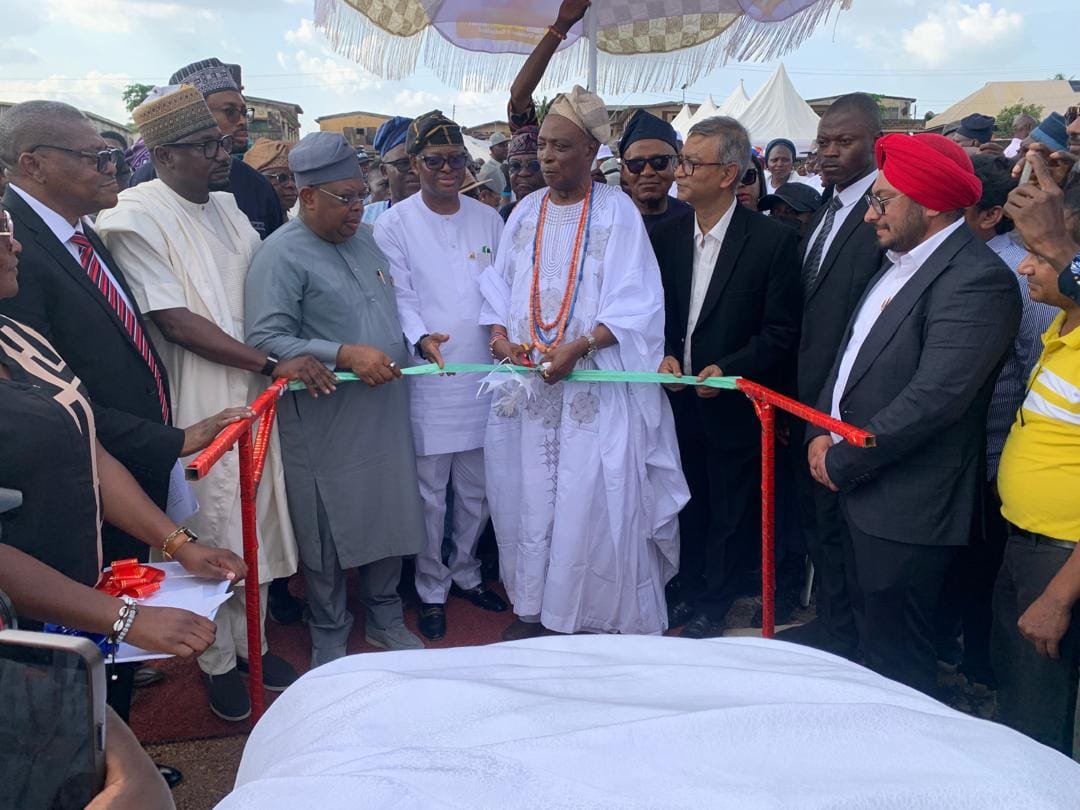
The Minister of Power, Joseph Tegbe, gave the assurance on Thursday during the groundbreaking ceremony for five interconnected mini-grid projects with a combined generation capacity of 17.7 megawatts (MW) in Ibadan, Oyo State.
Tegbe urged Nigerians to disregard reports suggesting that the government planned to increase electricity tariffs, describing such claims as misinformation.
He said the Federal Government was prioritising reliable electricity supply, beginning with three proposed energy corridors: Lagos-Ogun, Abuja-Kaduna-Kano, and Benin-Enugu-Port Harcourt.
The Ibadan project comprises the Bola, Jiboye, Molade-Adelubi, Ogo Oluwa and Sooko-Elega interconnected mini-grids, designed to improve electricity supply to communities across Akinyele, Ido, Ibadan North, Egbeda and Lagelu local government areas of Oyo State.
The projects are supported by a 17.74MW battery energy storage system and are expected to improve electricity access for households and businesses, reduce dependence on generators, extend operating hours and create opportunities for investment and employment.
Tegbe described the initiative as part of the Federal Government’s Renewed Hope Agenda to expand electricity access nationwide, noting that similar interventions supported by the Rural Electrification Agency (REA) had been implemented in communities across Kwara, Niger, Nasarawa, Plateau, Adamawa and Kaduna states.
He acknowledged the contributions of the REA, Paras Energy and Natural Resources Development Limited, the project developer, the World Bank, which provided the financing, and the Ibadan Electricity Distribution Company.
The minister also commended the Oyo State Government, traditional rulers, community leaders and host communities for their cooperation, particularly acknowledging the support of the Olubadan of Ibadanland, Oba Rashidi Adewolu Ladoja.
Tegbe, who formally flagged off the five projects on behalf of President Bola Ahmed Tinubu, said the government was also working to strengthen the national grid across the eastern and western corridors.
He identified strategic generation and transmission locations, including Funtua, Kainji, Gwagwalada, Gombe, Makurdi, Ajaokuta, Ikot Ekpene, Benin and Egbin, as part of efforts to improve grid stability and extend reliable electricity supply beyond the initial energy corridors.
According to him, the ultimate objective is to make 24-hour electricity supply a reality across Nigeria.
REA: Project to Boost Businesses, Create Jobs
In his remarks, the Managing Director and Chief Executive Officer of the Rural Electrification Agency, Dr Abba Aliyu, said the 17.7MW Ibadan project reflected the scale and ambition of a new generation of distributed renewable energy projects being developed under President Tinubu’s Renewed Hope Agenda.
Aliyu explained that the agency was increasingly focusing on deploying generation capacity where it could deliver the greatest economic impact, while leveraging private-sector investment and sustainable operating models.
He said the benefits of the project would extend beyond the additional electricity generation capacity to include increased productivity, reduced business operating costs, employment opportunities and improved livelihoods.
“This groundbreaking is about more than 17.7 megawatts of new generation capacity. It is about what that capacity will enable. Reliable electricity means longer operating hours for businesses, lower dependence on expensive self-generation, increased productivity, new investment and ultimately more jobs and economic opportunities,” Aliyu said.
He added that the Ibadan project formed part of a broader pipeline of investments being facilitated by the agency to improve electricity access and reliability across the country.
According to him, distributed energy solutions are increasingly becoming an important component of Nigeria’s electricity reliability and economic development strategy.
“Across Nigeria, we are demonstrating that distributed energy can move beyond addressing electricity access alone to becoming an important pillar of electricity reliability and economic development,” he said.
Aliyu noted that the agency’s objective was to ensure that reliable electricity translated into stronger local economies, improved business performance and expanded economic opportunities.
18 Transformers to Strengthen Distribution
Upon completion, the Ibadan project will include the deployment of 18 new transformers to strengthen electricity distribution within the beneficiary communities.
The REA is also advancing an additional 17.7MW of projects in Ibadan, targeting strategic institutions and economic centres, including the University College Hospital, the University of Ibadan and The Polytechnic, Ibadan.
The additional projects are expected to complement the ongoing intervention by creating clusters of reliable generation capacity around communities, public institutions and centres of economic activity.
The agency said the approach was designed to ensure that electricity infrastructure supported not only households but also institutions and businesses that contribute significantly to economic growth.
Olubadan, Developer Welcome Initiative
The Olubadan of Ibadanland, Oba Rashidi Adewolu Ladoja, commended the Federal Government for the intervention, saying improved electricity supply would positively affect businesses, households and livelihoods across the beneficiary communities.
He expressed appreciation to President Tinubu for infrastructure projects being implemented across Oyo State and called for their timely completion.
Also speaking, the Managing Director of Paras Energy and Natural Resources Development Limited, Yashwant Kumar, reaffirmed the company’s commitment to delivering the project efficiently and in accordance with the required standards.
Kumar said reliable electricity supply would have a transformative impact on residents and businesses within the project areas.
The Ibadan groundbreaking underscores the Federal Government and REA’s strategy of combining new generation capacity, stronger distribution networks, decentralised energy infrastructure and private-sector investment to address Nigeria’s electricity challenges.
For the REA, the success of the intervention will ultimately be measured not only by the megawatts installed but also by the economic opportunities generated through improved electricity supply, including longer business operating hours, increased productivity, job creation and greater investment in the beneficiary communities.











