





West Africa tightens electricity market rules as WAPP moves to 2nd phase

West Africa tightens electricity market rules as WAPP moves to 2nd phase
By Onu Okorie

West African power utilities are moving to strengthen financial discipline, independent market governance and cross-border grid coordination ahead of the planned launch of the second phase of the region’s electricity market early next year.
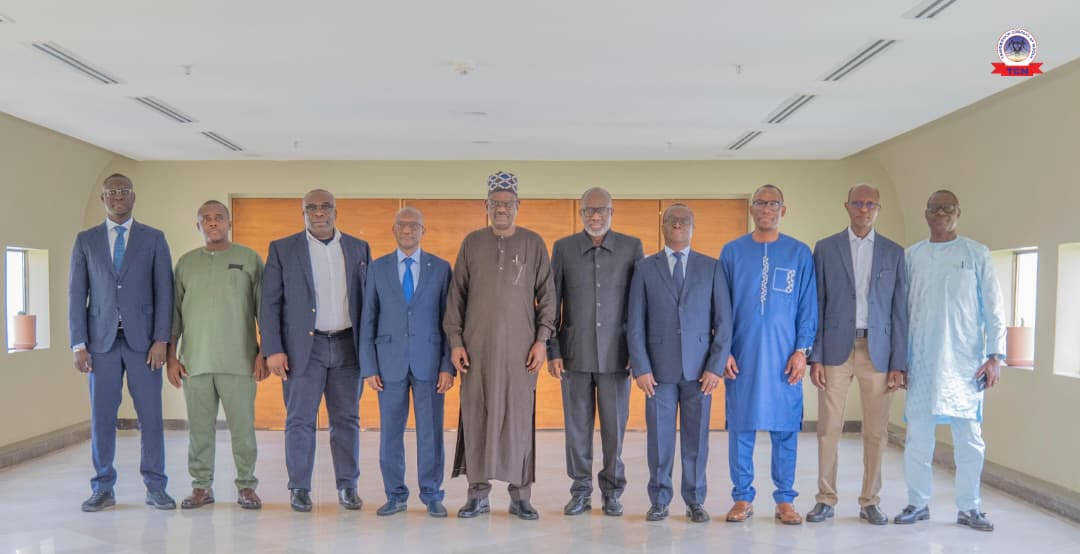
The push emerged from the 68th meeting of the West African Power Pool (WAPP) Executive Board in Lomé, where the Board also unanimously re-elected Engr. Sule Ahmed Abdulaziz as Chairman for another three-year tenure.
Abdulaziz, who is also a key figure in Nigeria’s electricity transmission sector, said the success of the emerging regional power market would depend on enforceable rules, reliable data, credible financial arrangements and independent governance rather than physical electricity interconnections alone.
The development signals WAPP’s increasing focus on turning years of investment in transmission infrastructure and grid synchronisation into a functional electricity market in which power can be traded more efficiently across participating West African countries.
At the meeting held on October 8 and 9, Abdulaziz warned member utilities that financial obligations to the regional body were fundamental to its ability to operate independently.
“Statutory contributions are not a formality; they are the basis of WAPP’s autonomy and capacity to act,” he said.
He urged utilities to meet their financial commitments while the WAPP Secretariat pursues measures to reduce operating costs without undermining critical functions.
The financing issue assumes greater significance as WAPP prepares for the next stage of the Regional Electricity Market and the progressive establishment of an Independent System and Market Operator (ISMO).
Abdulaziz recalled that the 67th Executive Board meeting approved principles for the gradual establishment of the ISMO while retaining the WAPP Information and Coordination Centre (ICC) in a transitional role to avoid disruption to regional grid operations.
According to him, the immediate challenge is to translate those decisions into a credible legal, institutional and financial framework capable of protecting both WAPP and its member utilities.
He said Executive Board meetings must produce decisions that strengthen the organisation’s capacity to respond to West Africa’s electricity requirements.
The proposed independent market operator is particularly important to WAPP’s plans to establish a competitive regional electricity market, as greater independence in system and market operations is expected to strengthen confidence among utilities, investors and other participants.
The Board consequently considered a restructuring study on the operationalisation of the ISMO, which is intended to align its structure with international best practices and reduce the risk of political interference as regional electricity trading expands.
Abdulaziz identified network synchronisation and the Regional Electricity Market as two critical areas requiring attention.
While describing the synchronisation of electricity networks as a significant technical achievement, he warned that maintaining it would require coordinated system operations, adequate security arrangements and market-ready utilities and stakeholders.
According to him, connecting national grids will not by itself deliver the expected benefits unless the commercial and institutional structures required for cross-border electricity transactions are equally strengthened.
“The regional market will only fulfil its promise if it rests on clearly understood rules, reliable data, credible financial mechanisms, and independent, effective governance,” he said.
WAPP Secretary General and Secretary of the Executive Board, Abdoulaye Dia, said implementation of institutional reforms had continued since the 67th session.
These include functional and accounting unbundling as well as arrangements for an orderly transition that will allow the ICC to maintain operational continuity during Phase Two of the Regional Electricity Market.
Dia said WAPP’s growing visibility and progress had attracted new partnerships and reaffirmed the Secretariat’s commitment to developing an integrated, reliable and competitive West African electricity system.
He said the organisation was preparing for the launch of the second phase of the regional market early next year.
However, funding remains a concern.
During consideration of member contributions and WAPP’s 2025 financial statements, Dia urged utilities with outstanding obligations to settle them, warning that predictable funding, sound financial management and collective discipline were essential to the organisation’s credibility and service delivery.
The expansion of the Pool is also continuing.
The Executive Board reviewed membership applications from four electricity companies seeking to join WAPP, including Nigeria’s Konexa.
Others are Senegal’s SOGESART — Société de Gestion de l’Énergie de Sambangalou et du Réseau de Transport d’Électricité; SOGEOH — Société de Gestion de l’Énergie des Ouvrages du Haut Bassin du Fleuve Sénégal; and HOLDEN-Niger SARL, an Independent Power Producer from Niger.
Their membership is expected to be presented for ratification at the WAPP General Assembly before the end of the year.
The Board also adopted the Charter of the Forum for Women in Energy in West Africa and a Memorandum of Understanding with the Millennium Challenge Account Côte d’Ivoire.
New representatives joining the Board include Lawrent Tossou, Managing Director of Société Béninoise d’Énergie Électrique, representing Benin; Amidou Traore, Director General of CI-ENERGIES; and Julien Sagna, representing Société de Gestion de l’Énergie de Manantali.
Abdulaziz thanked Board members for unanimously returning him as Chairman and pledged to work with members to advance WAPP’s objectives during his new three-year tenure.
His re-election comes as WAPP enters a critical stage in its evolution—from primarily coordinating interconnected national power systems towards establishing the governance and commercial mechanisms required for a functioning regional electricity market.
For Nigeria, which operates one of the largest electricity systems in the sub-region, the transition could create opportunities for expanded cross-border electricity trading. But the wider benefits will depend on whether WAPP members can enforce payment discipline, maintain secure interconnected grids and establish an independent market operator trusted by buyers, sellers and investors across the region.











