





CBN: 33 Banks raise N4.65trn in two-year recapitalisation exercise

CBN: 33 Banks raise N4.65trn in two-year recapitalisation exercise

By Onu Okorie
Central Bank of Nigeria CBN has disclosed that 33 banks met the revised minimum capital requirements at the end of the two-year recapitalisation programme, raising a combined N4.65 trillion.
The apex bank said the recapitalisation exercise, announced in March 2024, was designed to equip banks with stronger capital buffers needed to support Nigeria’s ambition of building a $1 trillion economy by 2030.
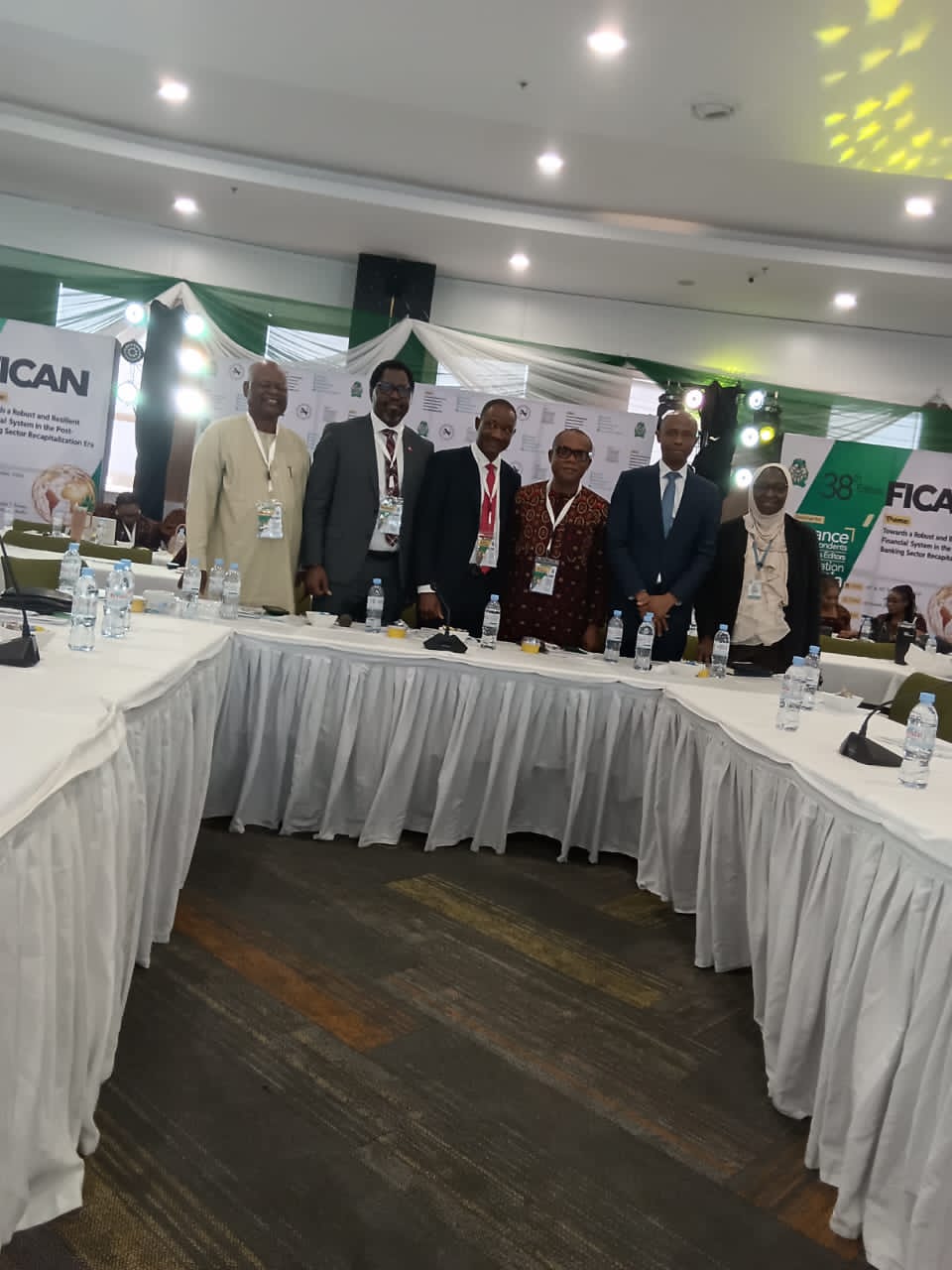
Speaking at the 38th Finance Correspondents Association of Nigeria (FICAN) Seminar in Abuja on Tuesday, the CBN Deputy Governor, Corporate Services, Dr. Muhammad Sani Abdullahi, said well-capitalised banks would be better positioned to finance long-term infrastructure, support industrial expansion, facilitate international trade and compete more effectively in regional and global markets.
He, however, stressed that stronger capital alone would not guarantee a resilient financial system without sound corporate governance and effective risk management.
Abdullahi said the CBN would sustain close regulatory oversight of banks as the industry entered the post-recapitalisation era, with greater attention to governance, asset quality, liquidity and large exposures.
Speaking on the theme, “Towards a Robust and Resilient Financial System in the Post-Banking Sector Recapitalisation Era,” he said the bank’s supervisory approach would continue to emphasise risk-based supervision, macroprudential surveillance and enhanced stress testing.
According to him, banks would be expected to maintain strong internal controls, identify risks early and ensure that lending decisions were driven by viable projects rather than capital size alone.
He added that the CBN would insist on stronger customer data protection, reliable payment services and the ability of financial institutions to recover quickly from operational disruptions.
Forex reforms narrow market gap
Beyond banking capital, Abdullahi highlighted improvements in key macroeconomic indicators, saying reforms in the foreign exchange market had significantly narrowed the gap between official and parallel market rates.
He said the gap, which averaged 68.2 per cent between January and May 2023, had fallen to below two per cent.
He recalled that the foreign exchange market had previously been fragmented, with exchange-rate gaps averaging above 60 per cent in 2022 and exceeding 100 per cent at some points that year.
According to him, autonomous sources contributed US$7.33 billion, representing nearly 68 per cent of the US$10.82 billion total foreign exchange inflows recorded in July 2026.
He added that remittances through International Money Transfer Operators reached US$950 million during the month, while net foreign portfolio inflows stood at US$6.31 billion between January and August 2026.
Abdullahi, however, cautioned that portfolio flows remained susceptible to reversals.
The CBN also disclosed that Nigeria’s gross external reserves rose to US$55.60 billion as of September 11, 2026, while end-August reserves provided 11.3 months of import cover.
Inflation moderates, economy expands
On inflation, Abdullahi said headline inflation, which climbed to 34.8 per cent in December 2024 during the early phase of policy adjustments, had moderated to 15.43 per cent in July 2026.
He also said the economy expanded by 4.43 per cent in the second quarter of 2026, driven largely by activities outside the oil sector.
Despite the improvements, the deputy governor acknowledged that households and businesses continued to face economic pressures.
He said the success of the recapitalisation programme should ultimately be measured by the quality of banking services and productive lending delivered to the economy.
Abdullahi stressed that the benefits of the reforms should extend beyond large corporations to rural communities, women, young entrepreneurs and other underserved segments.
He also urged businesses seeking credit to strengthen their corporate transparency, governance and sustainability practices, noting that such factors were becoming increasingly important in banks’ lending decisions.
CBN urges journalists to provide context
Addressing participants, the newly appointed Director of Corporate Communications and Investor Relations at the CBN, Mr. Michael Chukwuemeka Akuka, described the seminar as an important platform for improving public understanding of monetary policy and financial-sector reforms.
Akuka urged finance correspondents and business editors to go beyond headlines by seeking deeper context when reporting the CBN’s policies.
According to him, the difference between sound policy and public perception could sometimes be determined by the accuracy and context provided in a single news report.
He encouraged journalists to ask probing questions during the sessions to ensure that Nigerians received clear explanations of ongoing reforms.
Earlier, the Director of Stakeholder Engagement and Institutional Relations, Mrs. Hakama Sidi Ali, reaffirmed the CBN’s commitment to working closely with the media.
She commended finance correspondents for supporting the bank’s communication efforts over the years and urged them to extend the same cooperation to the bank’s new leadership in corporate communications.
Ali said the CBN remained united in its engagement with stakeholders and regarded journalists as critical partners in conveying accurate information about the nation’s financial system.
Abdullahi declared the two-day seminar open and commended FICAN for promoting ethics, professionalism and public understanding of financial-sector issues.
He assured participants that the CBN would continue to provide clear information and respond to legitimate public scrutiny as the banking sector entered the post-recapitalisation era.











