





Three years of reforms, as Cardoso rebuilt confidence in Nigeria’s financial system

Three years of reforms, as Cardoso rebuilt confidence in Nigeria’s financial system

By Onu Okorie
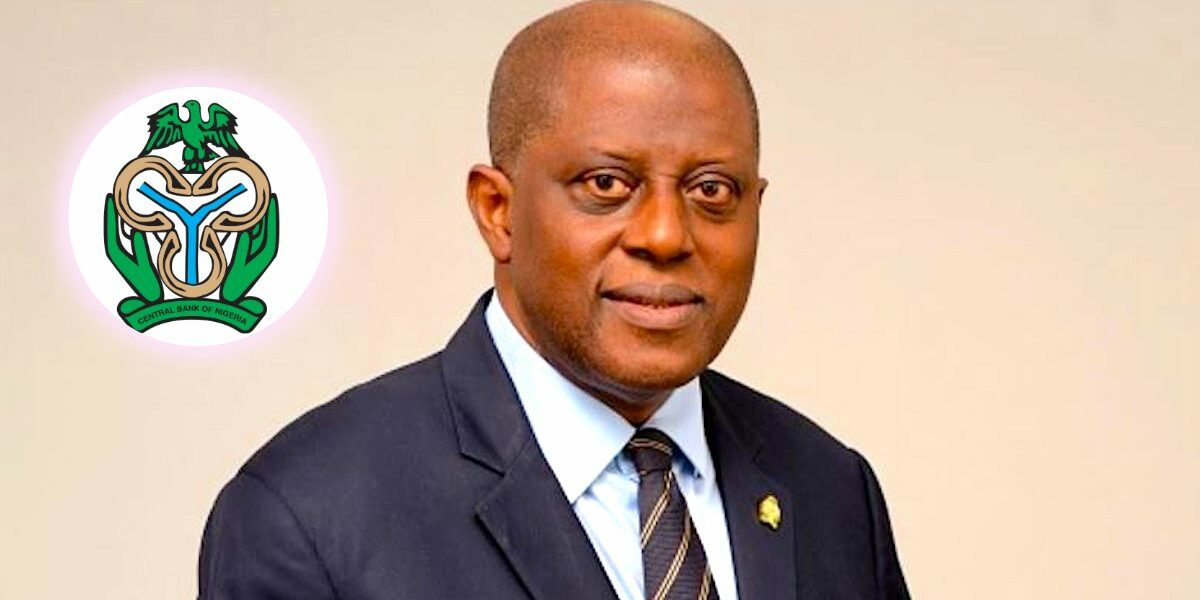
When the Governor of Central Bank of Nigeria CBN, Dr. Olayemi Michael Cardoso assumed office in September 2023, the institution was facing a difficult credibility challenge. The naira was under intense pressure, the foreign exchange market was distorted by multiple rates, inflation was rising, and businesses and investors were increasingly concerned about the direction of monetary policy. But three years down the line, as the CBN Governor celebrates three years in office, the narrative surrounding the apex bank has changed considerably, many thanks to innovative reforms that Cardoso has brought.
Appointed by President Bola Ahmed Tinubu on September 15, 2023, Dr. Cardoso however, formally assumed duty as acting governor on September 22, 2023, following the resignation of Godwin Emefiele. He was confirmed by the Nigerian Senate on September 26, 2023, for an initial five-year term. The CBN Governor was former Chairman of Citibank Nigeria and former Lagos State Commissioner for Economic Planning and Budget. He is an Alumnus of Aston University and the Harvard Kennedy School.
The clearest symbol of that shift came on June 10, 2026, when the CBN and Cardoso received international recognition at the Central Banking Awards in London. The CBN was named Central Bank of the Year 2026, with the award recognising its efforts to restore market credibility, stabilise the foreign exchange market and return monetary policy to a more orthodox, transparent and rules-based framework.
The award did not come in isolation. In 2025, Cardoso was named Central Bank Governor of the Year at the African Banker Awards in Abidjan, Côte d’Ivoire, while the CBN’s reform programme also received the Market Reform Initiative of the Year award at the Nairametrics Capital Market Choice Awards.
Together, the recognitions point to what has arguably been the defining feature of Cardoso’s tenure: an attempt to rebuild the credibility of an institution whose policies have enormous consequences for households, businesses, investors and the wider Nigerian economy.
At the centre of the CBN’s strategy has been a return to what the bank describes as orthodox monetary policy.
Rather than relying on administrative interventions and multiple distortions in the market, the Cardoso-led CBN has sought to strengthen the use of conventional monetary-policy tools, improve transparency and make policy decisions more predictable. Interest rates have consequently become a major instrument in the battle against inflation and pressure on the naira.
Higher interest rates increase borrowing costs for businesses and consumers, potentially slowing economic activity in the short term. For an economy where manufacturers already contend with high production costs and infrastructure constraints, tighter monetary conditions can be particularly challenging. But from the CBN’s perspective, restoring price and monetary stability is a necessary foundation for sustainable growth.
The bank’s argument is straightforward: without confidence in the currency and the monetary-policy framework, investment becomes more difficult, capital becomes more expensive and economic planning becomes increasingly uncertain.
Perhaps no aspect of the CBN’s reforms has attracted as much attention as the foreign exchange market. Today, Nigeria’s gross foreign reserves stand at $53.11 billion as of August 24, 2026, according to data from the CBN, which is 17-Year high. This represents the highest level the reserves have reached since 2009. The robust reserve level provides a strong buffer for the economy and supports exchange rate stability.
Nigeria’s FX market had for years been characterised by multiple exchange rates, significant distortions and uncertainty over access to foreign currency. The resulting gap between official and parallel-market rates damaged confidence and complicated decisions by investors and businesses. Under Cardoso, the CBN moved to unify the FX market and allow market forces to play a greater role in determining the value of the naira.
The adjustment was initially accompanied by considerable volatility and a sharp depreciation of the currency. For Nigerians, the consequences were immediate: imported goods became more expensive, businesses faced higher input costs and household purchasing power came under further pressure. Yet the reform also sought to address a deeper structural problem.
A foreign exchange market that does not accurately reflect demand and supply can create opportunities for arbitrage, discourage investment and make it difficult for businesses to plan. By moving towards a more market-driven system, the CBN sought to establish a single, more transparent price for foreign currency. The clearing of billions of dollars in delayed foreign-exchange obligations also became an important part of the credibility-building exercise.
For international investors, the message was significant: the central bank was prepared to confront accumulated obligations and clean up the market rather than allow unresolved FX liabilities to continue undermining confidence.
Despite the progress recorded in market reforms, inflation remains one of the most important tests of the CBN’s performance. The monetary authority can influence inflation, but it cannot single-handedly control all the forces driving prices in Nigeria. Food shortages, insecurity affecting agricultural production, transport costs, exchange-rate movements, energy costs and fiscal pressures can all contribute to inflation. This distinction is important in assessing the Cardoso years.
The CBN’s tighter monetary stance has been aimed at containing inflationary pressures and preventing expectations from becoming entrenched. But monetary policy cannot instantly increase food production, repair roads, reduce logistics costs or solve structural supply constraints.
Consequently, the battle against inflation has been one of the most difficult elements of the reform programme.
For ordinary Nigerians, the ultimate measure of monetary-policy success is not necessarily an award in London or improved investor sentiment. It is whether the cost of food, transport, housing and other essentials becomes more manageable. That is where the CBN’s achievements will continue to face their toughest public test.
Beyond foreign exchange and interest rates, the CBN has also turned its attention to the banking sector.
Bank recapitalisation has become a central component of the regulatory agenda, with the objective of ensuring that Nigerian banks have stronger capital buffers and greater capacity to support a growing economy. The CBN has simultaneously tightened regulatory oversight, including its supervision of financial holding companies.
The reforms reflect a recognition that monetary stability cannot exist in isolation from financial-sector stability.
Banks sit at the centre of the Nigerian economy. They mobilise savings, provide credit, facilitate payments and act as a major channel through which monetary policy affects businesses and households.
A stronger banking system therefore gives the economy greater capacity to withstand shocks while providing institutions with the balance-sheet strength required to finance investment.
One of the most consequential changes under Cardoso has been philosophical. The CBN has increasingly emphasised rules, transparency and market mechanisms over discretionary interventions.
That transition is important because central-bank credibility is built not only through the policies an institution announces but also through the consistency with which those policies are implemented.
Investors want to know the rules. Businesses want to know whether they can obtain foreign exchange. Banks want clarity on capital and regulatory requirements. Households want confidence that their savings and purchasing power will not be destabilised by sudden policy reversals.
The awards received by Cardoso and the CBN suggest that international observers have noticed the change in direction.
The Central Bank of the Year 2026 award, in particular, represents recognition of the institution’s efforts to restore market credibility and strengthen the foundations of monetary policy.
Three years into Cardoso’s tenure, the CBN has clearly undergone a significant institutional and policy transformation.
The foreign exchange market has been restructured. Legacy FX obligations have been addressed. Monetary policy has moved towards a more orthodox framework. Banking-sector recapitalisation has been advanced, while regulatory oversight has been strengthened.
Most importantly, the CBN has sought to restore the credibility of its policy signals.
The international awards are evidence that this effort has gained recognition beyond Nigeria. But awards, ultimately, are milestones rather than the destination.
The real verdict on the Cardoso years will be determined by whether today’s reforms produce a more stable naira, lower and more predictable inflation, deeper financial markets, stronger banks and an economy in which businesses can plan with greater confidence.
For now, the CBN’s trajectory over the past three years represents a significant attempt to reset Nigeria’s monetary architecture. The challenge ahead is turning that institutional reset into improvements that Nigerians can feel in their daily lives.











