






When Government Chooses Who to Save
The Oyo school abductions finally drew presidential fury and a national mobilisation. Across the border in Kwara and Kogi, Yoruba communities have been bleeding for years in near silence as Presidentstrides International Magazine raises an urgent question: whose lives trigger the full weight of the Nigerian state?

On the night of Friday, May 16, 2026, armed bandits descended on the quiet farming communities of Ahoro-Esinele and Yawota in Oriire Local Government Area of Oyo State and did what terrorists do — they chose the most defenceless targets they could find: schools. Three of them. By morning, the scale of the horror was clear.
About 30 students and teachers had been kidnapped from Community Grammar School, Baptist Nursery and Primary School, and L.A. Primary School, while two persons were killed in the assault. Among those abducted were children as young as two years old, alongside seven teachers and at least 39 students. The Christian Association of Nigeria in Oyo State confirmed the figure.
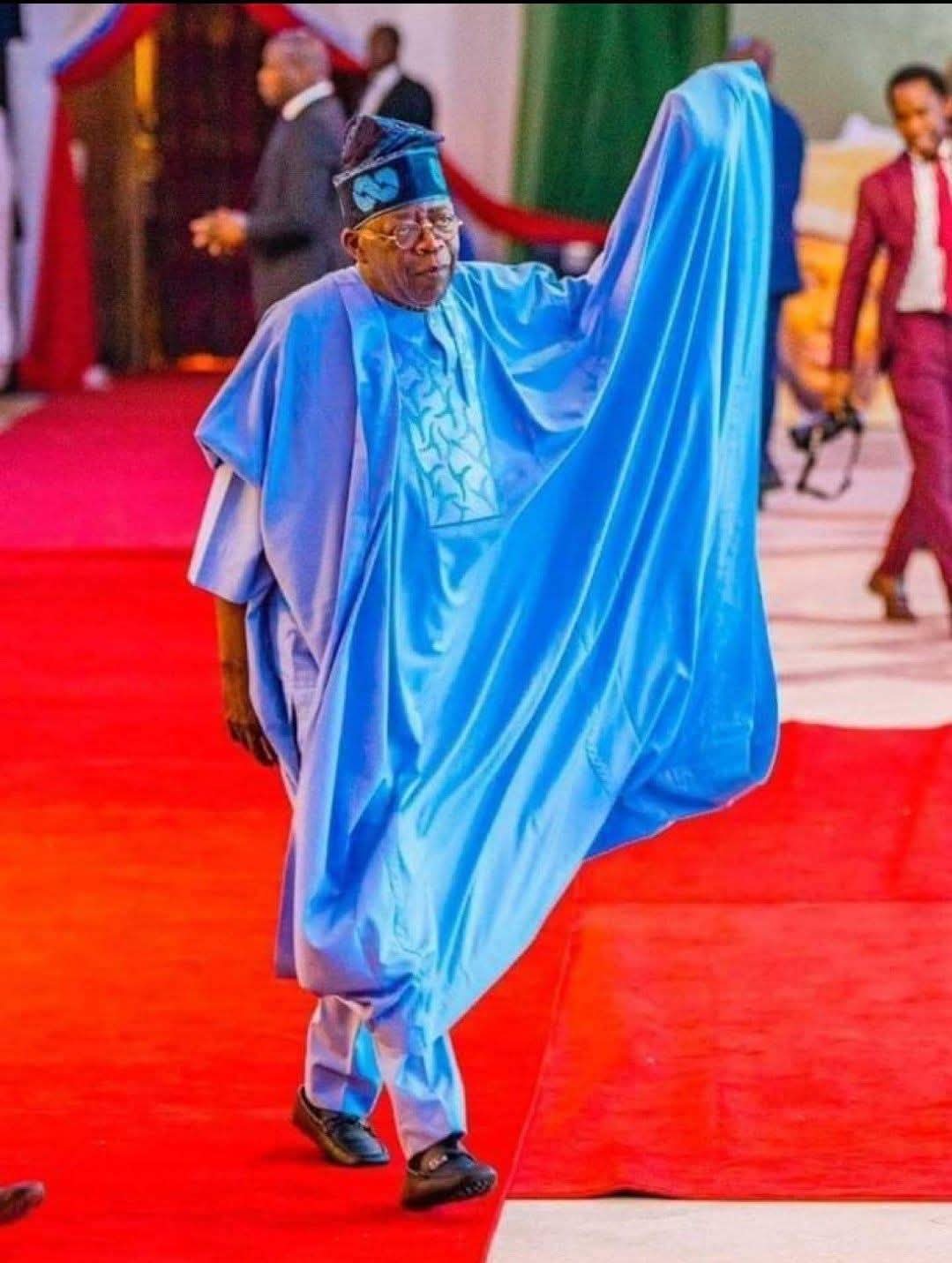
The response from Abuja was swift and unambiguous. President Bola Tinubu expressed sadness, commended the steps taken by Governor Seyi Makinde, and pledged that the Federal Government would work with the Oyo State government to rescue all the victims. The Inspector-General of Police was reportedly personally leading what the presidency described as a “tech-driven operation.”
Then, on Monday, May 19, a video that would chill the nation’s blood went viral. It showed one of the abducted teachers being beheaded. The victim was later identified as Michael Oyedokun, a mathematics teacher. National outrage boiled over. Politicians from across party lines issued statements. Civil society groups demanded emergency action. The IGP flew to Oyo. The presidency issued fresh vows.
Nigeria, it seemed, had finally woken up to the banditry crisis.
But for communities in the Yoruba-speaking fringes of Kwara and Kogi States, the question burning in their hearts is a different one: Where was this outrage when it was us?
On the night of February 3, 2026 — barely three months before Oyo’s nightmare — hundreds of heavily armed extremist militants swept into the villages of Woro and Nuku in Kaiama Local Government Area of Kwara State. They moved door-to-door on motorbikes, executing residents after villagers rejected their demand to adopt their version of Sharia law. The attackers torched buildings and kidnapped several people. By all accounts, it was a massacre — one of the deadliest single-night attacks in Nigeria’s recent history.
While the Nigerian Police Force said 75 persons were confirmed killed in the assault on Woro and Nuku communities, local sources and international observers put the death toll significantly higher. The United States Mission in Nigeria described the attack as “horrific,” saying more than 160 people were feared dead, with many still unaccounted for.
This was not an isolated event but the worst peak of a prolonged, grinding campaign of violence against Yoruba communities in Kwara State that had been building for years with insufficient state response. Barely months before the February massacre, bandits had launched a deadly attack on Oke-Ode community in Ifelodun Local Government Area, killing no fewer than 12 persons including the Baale of Ogbayo. Socio-cultural group Think Yoruba First had called on the president to declare a state of emergency — and been met with silence.
The horror cut deeper still. In January 2026, herdsmen stormed the Aafin community in the Ile-Ire district of Ifelodun Local Government Area and abducted Oba S. Y. Olaonipekun along with his son. Oba Kamilu Salami, the Ojibara of Bayagan-Ile community in the same LGA, was kidnapped in December 2025 and spent 25 days in captivity. Yoruba obas — sacred custodians of their people’s culture and dignity — were being seized from their palaces. The unthinkable was becoming routine.
Many of our traditional rulers have been killed under Tinubu’s watch by Fulani extremists. Yet the President appears satisfied, even when his own kinsmen are being slaughtered and abducted.
— Ìgbìnmó Májékóbájé Ilé-Yorùbá, Yoruba socio-cultural group, February 2026
The Yoruba socio-cultural group Ìgbìnmó Májékóbájé Ilé-Yorùbá accused President Tinubu of aiding and emboldening Fulani extremists amid a wave of killings and kidnappings targeting Yoruba traditional rulers across Kwara, Ondo, Ekiti, Oyo, Osun, and Ogun states, alleging that many traditional rulers had been murdered under the President’s watch while he remained “conveniently silent.”
President Tinubu did eventually respond to the February Kwara massacre — condemning the killings and describing the assailants’ actions as “cowardly and beastly.” He held a closed-door meeting with Kwara Governor AbdulRahman AbdulRazaq at the State House, and an army battalion was deployed to Kaiama. But the response came days after the blood had dried, and critics noted it lacked the urgency, the personal presidential mobilisation, and the round-the-clock media briefings that characterised the Oyo response.
Kogi’s Silent War: Yagba, Kabba, and the Deserted Villages
Travel southeast from Kwara into the Yoruba-speaking local government areas of Kogi State — Yagba East, Yagba West, Ijumu, Kabba-Bunu — and you find communities that have lived under siege for years, largely invisible to the national conversation on insecurity.
In Ponyan, Yagba East, a prominent farmer was abducted, sparking protests from locals who accused authorities of neglect. Residents of nearby Okunran and Oke-Ere communities have since fled their homes following repeated night invasions and ransom-driven kidnappings. Many villages in Ijumu and Yagba East remain deserted as schools and farms have shut down over fear of renewed attacks.
The suffering of royal families has mirrored that of ordinary farmers. Oba Dada Ogunyada, the Obalohun of Okoloke in Kogi State, was kidnapped from his palace and held hostage for 28 days before being released after a reported ransom payment of N50 million. For an oba to be dragged from his palace and held for ransom speaks to a total collapse of the social order — and the near-total absence of state protection for these communities.
In Kabba-Bunu LGA, heavily armed gunmen have repeatedly struck rural communities, targeting travellers and local farmers. In March 2025, bandits invaded the Tata-Bunu community, abducting five villagers before they were rescued by local hunters. It is hunters — not soldiers, not police — who are frequently the last line of defence for Yoruba communities in these border zones.
Analysts note that the current wave of insecurity in these Kogi communities may be partly driven by bandits fleeing security operations in the core North, settling in forests, and exploiting the borderland terrain shared between Kogi, Kwara, and Oyo states. Illegal and unregulated mining activities in mineral-rich forests have also emerged as a driver of violence, attracting criminal networks to Yagba, Kabba-Bunu, and Ijumu LGAs.
The Pattern of Selective Outrage
The contrast in official responses is not lost on those who study Nigerian security policy. When bandits kidnap schoolchildren in Oyo, the IGP boards a plane, the presidency issues multiple statements within 48 hours, and the nation’s front pages scream for action. When communities in Kwara’s Yoruba belt are massacred by the dozens, or when an oba in Kogi spends 28 days in a bandit’s den, the state’s response is — at best — delayed, muted, and provisional.
A pan-Yoruba group raised the alarm about what it described as a daily cycle of kidnappings and killings across Kwara and Kogi, criticising state governors for allegedly failing to justify the security votes allocated to them. The group charged that despite the funds, insecurity continues to worsen, and that “vulnerable women and children, alongside their husbands, are subjected to slavery” while political leaders remain unable to guarantee peace.
Analysts note a disturbing trend: insecurity is rapidly spreading into the South-West, an area once considered relatively safer compared to other parts of the country. Reports of the Lakurawa terrorist group and other armed organisations establishing footholds in the region have heightened fears that criminal networks are expanding their operations unchecked. The Oyo attack, in this reading, was not a sudden incursion but the arrival of violence that had been creeping southward from Kwara and Kogi for years — largely unseen because those communities did not generate sufficient political noise.
The problem is structural. Nigeria’s security architecture has long operated with an implicit geography of urgency. The northern states, where banditry and insurgency have claimed hundreds of thousands of lives, have at various times commanded emergency deployments, emergency declarations, and international military cooperation. The Middle Belt states — Benue, Plateau — have seen repeated massacres that forced at least some presidential attention. But the borderland communities of Kwara and Kogi — too south to be framed as “northern insecurity,” too peripheral to generate the political capital of a Yoruba Southwest — have fallen into an administrative no man’s land.
Why the Fight Must Be All-Inclusive
The Oyo abductions have done one thing of undeniable value: they have made the conversation on insecurity impossible to avoid, even for Nigerians who had the luxury of treating it as someone else’s problem. But the lessons drawn from the crisis must go further than securing Oriire LGA.
First, the operational reality: insecurity does not respect political boundaries. The escape routes of the Oyo bandits were reported to run through the National Park axis, straddling the Oyo-Kwara border. Patrol teams comprising Amotekun operatives were deployed through Igbeti towards Oloka and adjoining communities. The geography of bandit movement connects Oyo’s forests to Kwara’s ravines and Kogi’s mineral-rich borderlands. A security strategy that addresses one state while ignoring its neighbours is a strategy that will fail.
Second, the human reality: every life lost to banditry — whether in Oriire, in Kaiama, in Yagba West, in Kabba-Bunu — carries equal moral weight. The beheading of teacher Michael Oyedokun rightly provoked national horror. But the massacre of 162 villagers in Woro, the kidnapping of Yoruba obas from their palaces, the desertion of entire communities in Kogi — these horrors deserve the same sustained national grief, the same presidential fury, the same mobilisation of state power. A government that responds only when the victims are politically visible is not governing — it is managing optics.
Third, the policy reality: as President Tinubu himself acknowledged in his statement on the Oyo abductions, the cases of kidnapping make ever more imperative the establishment of state police to serve underserved areas, and he called on the National Assembly to accelerate the enactment of the relevant law. That argument applies with even greater force to the borderland communities of Kwara and Kogi, where the absence of locally-rooted, community-trusted security forces has allowed bandits to operate with near-impunity for years.
Fourth — and most critically — the intelligence reality: a coordinated, national-level threat requires a coordinated, national-level response. As security analysts have noted, mass abductions escalated sharply across north-central Nigeria in late 2025, with over 400 people kidnapped across four states in November alone — surpassing even the scale of the Chibok girls’ abductions. The Oyo attack is one node in this expanding network of violence, not an isolated event. Fighting it piecemeal, state by state, only when the cameras are rolling, is a guarantee of continued failure.
There is a version of Nigerian governance in which no community’s suffering is treated as a niche problem, in which the weight of the state does not shift based on political geography or the media cycle, in which the oba kidnapped in Kogi and the mathematics teacher murdered in Oyo are both held in equal national grief — and both mourned with equal determination to prevent the next killing.
Nigeria is not yet that country. But the demand to become it — loudly, insistently, from every corner of the nation that has bled and been ignored — is perhaps the most urgent political task of this moment.
The children of Oriire LGA deserve to come home. So do the survivors of Woro. So do the deserted communities of Yagba. So does every community that has buried its dead quietly, paid its ransoms in shame, and wondered whether it was simply not important enough for Nigeria to save.











